-
Who We Are
- What We Do
Series: Global Macro StrategyA Framework for Chair Warsh
By Frank Flight
We outline a framework to understand the implications of a Kevin Warsh led Federal Reserve. First we lay out what is known about his predispositions on policy rate setting, balance sheet policy, the role and function of the Federal Reserve as well as central bank independence. We then try to connect the dots between Warsh’s recent policy views and Scott Bessent’s “Gain of Function” critique to understand where the current administration and Kevin Warsh find common ground, to understand what that implies for their view of the optimal policy path. We then map this optimal policy path onto the current macro landscape and institutional structure of the Federal Reserve to understand what is institutionally feasible.
- Warsh will likely present an argument for rate cuts framed around a productivity shock.
- Warsh is likely to outline an aspirational, medium term balance sheet proposal centered on “QT for Rate Cuts”. We don’t see an imminent policy shift.
- The economic data and committee consensus will inform Chair Warsh’s voting pattern, and FOMC decisions.
- We expect Powell to stay on as a Governor for some time after his term ends.
Governor Warsh: A History of Policy Positions and Predispositions
Kevin Warsh’s communications whilst he was a Fed governor (2006-2011) lean hawkish insofar as he regularly cited more concern around the upside risks to inflation than downside risks to the labor market. Fed transcripts show that he highlighted concerns around inflation risk beyond those reflected in Fed staff forecasts and multiple speeches emphasized the risks associated with keeping policy too easy for too long.
Warsh has stressed that prolonged reliance on low rates risks distorting asset prices, encouraging leverage, and weakening incentives for financial institutions to restore sound fundamentals. He repeatedly highlighted the danger of allowing crisis tools to become semi-permanent features of the policy framework and articulated the importance of clear exit strategies once conditions stabilize, even if markets resist, due to concerns around medium term inflation expectations. Taken together Warsh’s concerns on the medium-term impact of central bank easing post GFC imply a hawkish reaction function given that inflation at the time was below target and the unemployment rate was well above any definition of full employment.
Furthermore a Bloomberg analysis highlights 13 speeches in which he specifically expressed concern with respect to the upside risks to inflation during his time on the FOMC, which is striking because inflation – as measured by core PCE – was rarely above 2.5% during that period but the unemployment rate reached as high as 10%. We note this not to adjudicate the appropriateness of those concerns, but to illustrate that Warsh’s focus on inflation strikes us as hawkish given the deviation of his communications from what a more Keynesian output gap framework would imply with respect to the risks around inflation particularly in the post GFC period.
“Independence is not conferred; it is earned — earned by a demonstrated commitment to restraint and focus.” – Kevin Warsh, (2008)
Turning to the balance sheet more specifically, in a series of speeches: The Federal Funds Rate in Extraordinary Times (2008), Financial Market Turmoil and the Federal Reserve: The Plot Thickens (2008), Longer Days, Fewer Weekends (2009), An Ode to Independence (2010), and Rejecting the Requiem (2010), Warsh articulates four core concerns underlying his skepticism toward prolonged balance-sheet expansion and unconventional monetary policy. First, he argues that as policy rates approached the effective lower bound, the balance sheet became the Fed’s primary policy tool, despite being less transparent and less well understood than conventional rate policy. Second, he contends that sustained balance-sheet expansion significantly enlarged the central bank’s footprint in financial markets. Third, he warns that large-scale purchases of government securities risks mission creep, blurring the line between monetary and fiscal policy and exposing the Fed to political pressure. Finally, he cautions that maintaining policy accommodation for too long risks undermining the credibility of the Fed’s commitment to price stability and, ultimately, de-anchoring inflation expectations.
Despite Warsh’s historically hawkish communication and recent public criticism of the Fed, he never dissented from a policy decision (link) and has since characterized his criticism of the Fed as a function of his respect for and the importance of the institution and its independence. Furthermore he was a key player in coordinating the response to the GFC, working closely with Chair Bernanke, Secretary Paulson and Wall Street leaders. Warsh’s nomination to become Chair of the Federal Reserve has seen support from both sides of the political spectrum, notably Jason Furman (Obama era CEA chair) and former Wall Street executives that noted his steady hand during the GFC, reflecting his experience, tenure and temperament, all of which we think makes him a credible appointee.
Chair Warsh: An Optimal Policy Setting
Warsh’s more recent policy guidance – for example, his 2025 lecture: Commanding Heights: Central Banks at a Crossroads and WSJ op-ed naturally takes on greater emphasis given its recency but also likely threads the needle between his long standing beliefs, current economic realities and a policy prescription outlined in his interviews for the role that was amenable to President Trump and Secretary Bessent.
We think Warsh’s pitch for an optimal policy framework is likely a combination of lower policy rates, (offset by) a smaller balance sheet, a higher bar for future intervention and policy making independence.
“He thinks you have to lower interest rates.” – President Trump re Kevin Warsh, Dec-25 (link)
We expect Warsh to continue to make the case for rate cuts via two key channels. Firstly we expect to hear focus on an AI driven productivity shock as a theoretically consistent framework for reducing the policy rate, despite strong growth and fiscal easing, as labor market slack soaks up inflationary pressures from strong growth. This is concept that Greenspan emphasized in the 90s, leaning into the idea that productivity gains meant the economy could achieve a higher run rate, without creating inflation. We first highlighted this as a likely argument for rate cuts from the next Fed chair in our note Verif-AI-ing the Macro Consensus.
The second channel via which we expect Warsh to push for rate cuts is via a “financial conditions neutral” balance sheet rundown being offset by lower policy rates. This is a novel idea in which ongoing quantitative tightening – which would likely see greater term premium and instability in risk assets, is offset by the easing impulse from lower policy rates, keeping financial conditions unchanged.
“If the printing press could be quiet, we could have lower policy rates” Warsh 2025 (link)
We think Warsh’s views on the balance sheet likely still stand, as well as his views that “The Fed has acted more as a general-purpose agency of government than a narrow central bank” (link). All of which implies a higher bar for future QE, likely limited to crisis situations – and balancing the ability to make monetary policy decisions independently of the White House with greater emphasis on accountability with respect to the breadth of the Fed’s mandate and tools.
From his past and current speeches, it seems that Warsh fundamentally believes that the size of the Fed’s balance sheet represents mission creep – a foray in fiscal policy and that he would resist calls to use the Fed’s balance sheet to improve the funding position of the US Treasury, which is consistent with Scott Bessent’s “Gain of Function” critique of the Federal Reserve, but less consistent with previously stated goals of the administration to lower 10 year rates.
“Economics teaches a couple lessons: lowering the near-term cost of debt tends to increase its quantum; and, on the current trajectory, the high debt burden threatens to undermine future economic growth.” – Warsh 2025 (link)
Optimal vs Reality: Practical Policy Implications
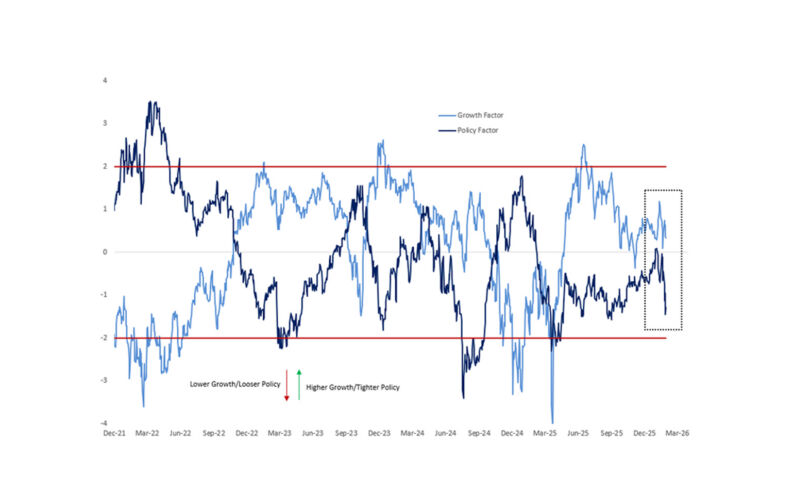
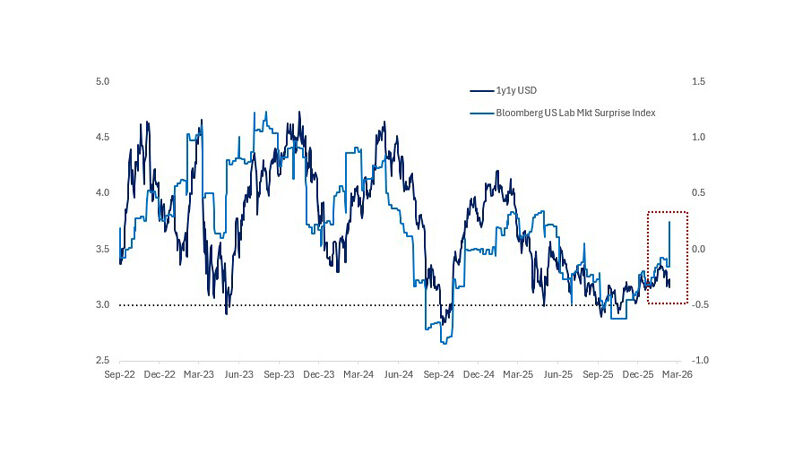
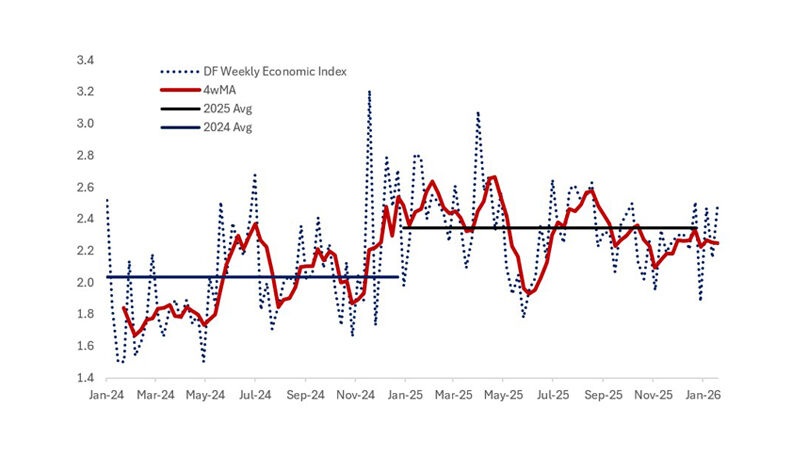
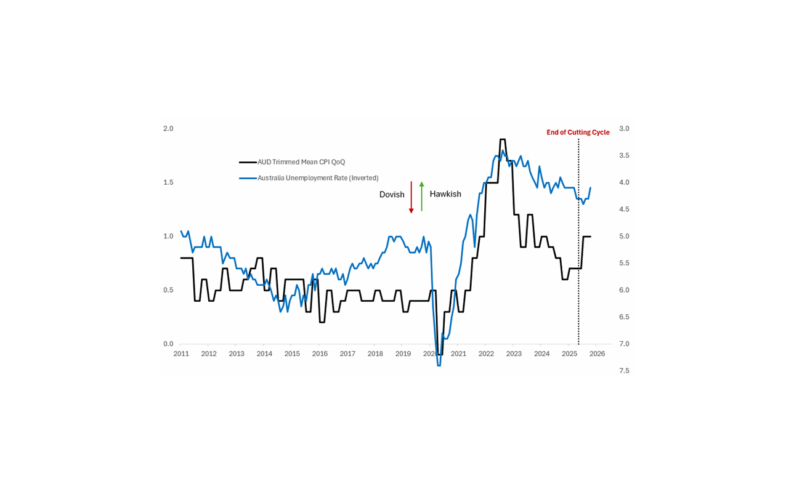
The fundamental constraint that presumptive Chair Warsh faces is that all the major policy decisions require a majority from the 12 voting members of the FOMC. It is therefore reasonable to expect a healthy dose of skepticism from the rest of the committee for any wholesale or imminent policy changes with respect to rates or balance sheet policy. With inflation markets pricing an acceleration through Q1, a significant fiscal stimulus and our above consensus growth forecast of 3%, we are skeptical that any new chair would be able to push through imminent rate cuts, unless the data breaks decisively in a dovish direction. Furthermore, the argument that a productivity shock allows for rate cuts will likely be met with the pushback from hawks that a productivity shock also tends to raise neutral rates and risk appetite and hence warrants caution. The data, rather than the chair is likely to drive the policy direction.
The composition of the voting members of the FOMC we think will remain quite similar to its current status, as we expect Miran to be replaced by Warsh and Powell to remain on the board for some time after his term as chair ends. We think that Powell’s robust pushback to the DOJ subpoena represented a turning point in his strategy to defend Fed independence and that he now sees this as the defining feature of his legacy. This would mean that the rotation of voting members skews hawkish as Miran is replaced by a much more balanced Warsh, and no further spots open on the board of governors.
Furthermore we think that Warsh’s historical hawkishness will mean that, in time, if the data obviously requires it, and if the committee is on board with it, rate hikes cannot be ruled out under a Warsh Fed in 2027.
Warsh’s QT-for-rate-cuts suggestion is likely to be hard to implement for a number of reasons. Firstly, the Fed has reduced its balance sheet from $8.97 trillion to $6.5 trillion already and the committee has just voted to end QT in light of a judgement that reserves had reached ample levels. Additionally, signs of funding stress emerged towards the end of last year, prompting the FOMC to inject liquidity for reserve management purposes. Transitioning away from an ample reserves framework would necessitate a new (or old) rate setting framework. A simple interpretation of Warsh’s QT-for-rate-cuts suggestion would likely drain private sector reserves to such an extent that reserves would become scarce, putting significant pressure on funding markets and likely driving up short term interest rates. The Fed could of course intervene regularly via open market operations (in the way policy was set pre-GFC) but this shift back to a pre-08 monetary framework would necessitate an entire overhaul of the conduct of monetary policy and could impair the ability of the Fed to act as a lender of last resort in a crisis (as highlighted by Bill Dudley here). Its not clear that the rest of the FOMC – in its current composition – would see great risk reward in this strategy any time soon.
Where Chair Warsh could have an immediate impact on the conduct of monetary policy relates to what he referred to as Central Bank Fast Food (link). This would likely see forecasts de-emphasized (to avoid becoming prisoner to them), less focus on month to month volatility in economic data, moving away from what Warsh has referred to as “breathlessly awaiting trailing data from stale national accounts – subject to significant, subsequent revision”, as he sees it as: “is evidence of false precision and analytic complacency” (link). Relatedly – Warsh may seek to move away from the forward guidance that has become a global staple of DM monetary policy, preferring the Fed to operate at a greater distance from its audience.
Conclusion
We think Chair Warsh will present an argument for rate cuts based on productivity and outline an aspirational medium term balance sheet proposal. We think that the ultimate policy decision will be a function of the economic data and committee consensus. And we think that the economic data will inform Chair Warsh’s policy positions, particularly given his historical focus on inflation risks. The influence of a new chair on committee consensus is likely to be balanced by our view that Powell will remain on the board as a governor for some time, and that Warsh’s influence as chair, like central bank independence is not conferred; it is earned – earned by a demonstrated commitment to restraint and focus.
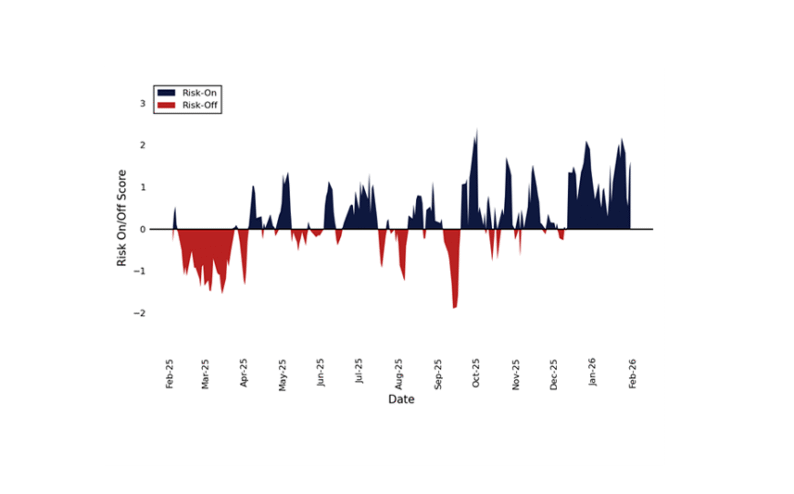
For markets the most obvious implication is that concerns over Fed independence are diminished by a credible pick for Fed chair, this is broadly good for the dollar. We think Warsh’s small balance sheet tendency means that the Fed Put is somewhat deeper out of the money but remains present in the event of a real crisis, and that less forward guidance means that implied volatility is likely to be somewhat more elevated with time. For front end rates, the data remains the main game in town.
Sources
Bloomberg News (2011). Warsh Warned Repeatedly of Inflation Risks During Crisis Era. Bloomberg.
https://www.bloomberg.comDudley, W. (2019). Warsh Has a Fairy Tale View of Fed Rate Policy, Bloomberg Opinion, August 2025.
https://www.bloomberg.com/opinion/articles/2025-08-13/kevin-warsh-and-the-fairy-tale-view-of-federal-reserve-policyTrump, D. J. (2025). Remarks on Kevin Warsh, December 2025. Public statements reported in the financial press.
https://www.wsj.comWarsh, K. (2008). The Federal Funds Rate in Extraordinary Times. Speech at the Federal Reserve Bank of New York, 21 April.
https://www.federalreserve.gov/newsevents/speech/warsh20080421a.htmWarsh, K. (2008). Financial Market Turmoil and the Federal Reserve: The Plot Thickens. Speech, 13 November.
https://www.federalreserve.gov/newsevents/speech/warsh20081113a.htmWarsh, K. (2010). An Ode to Independence. Speech, 26 February.
https://www.federalreserve.gov/newsevents/speech/warsh20100226a.htmWarsh, K. (2010). Rejecting the Requiem. Speech.
https://www.federalreserve.gov/newsevents/speech/warsh20101108a.htmWarsh, K. (2025). Commanding Heights: Central Banks at a Crossroads. Public lecture. https://www.hoover.org/sites/default/files/research/docs/Commanding%A%20April%2025%202025%20DC.pdf
Warsh, K. (2025). The Federal Reserve’s Broken Leadership. Wall Street Journal (Opinion).
https://www.wsj.com/opinion/the-federal-reserves-broken-leadership-43629c87Copyright © Citadel Enterprise Americas LLC or one of its affiliates. All rights reserved.
Legal Entities Disseminating this Material: This material is disseminated in the United Kingdom by Citadel Securities (Europe) Limited (“CDGE”) authorized and regulated by the Financial Conduct Authority (“FCA”) (Registered company number: 05462867); in the European Union by Citadel Securities GCS (Ireland) Limited (“CSGI”) and its Paris Branch authorized and regulated by the Central Bank of Ireland (“CBI”) (Registration Number: C173437); in Hong Kong by Citadel Securities (Hong Kong) Limited (“CDHK”) licensed by the Securities and Futures Commission of Hong Kong (“SFC”), in Japan by Citadel Securities Japan Co., Ltd (“CSJC”) registered as a Type 1 financial instruments business operator with the Japan Financial Services Agency (“JFSA”); and in the United States of America by Citadel Securities LLC (“CDRG”) registered with the Securities Exchange Commission (“SEC”), Financial Industry Regulatory Authority (“FINRA”), and Securities Investor Protection Corporation (“SIPC”), Citadel Securities Institutional LLC (“CSIN”) registered with the SEC, FINRA, and SIPC, or Citadel Securities Swap Dealer LLC (“CSSD”) registered with the SEC, Commodities Futures Trading Commission (“CFTC”), and National Futures Association (“NFA”). Unless governing law permits otherwise, you must contact a Citadel Securities entity in your home jurisdiction if you want to use our services in effecting a transaction in any financial instruments or securities, including derivatives.
FOR INSTITUTIONAL USE ONLY; FOR PROFESSIONAL CLIENTS AND ELIGIBLE COUNTERPARTIES ONLY. This material is not intended as and does not constitute investment research. Contents of this material will be strictly limited to non-specific, generic information (i.e. macro events/topics) and are not subject to the Markets in Financial Instruments directive (MiFID II) or FINRA research rules. This material does not constitute an offer, solicitation, invitation, or inducement to purchase, acquire, subscribe to, provide, or sell any financial instrument or otherwise engage in investment activity. Please see additional important disclosures, including disclosures that may be relevant to your country of residence or business at www.citadelsecurities.com/GlobalSalesTrading.
Explore
Market Insights - What We Do