
-
Who We Are
- What We Do
Quantitative Trading
View Open RolesQuantitative traders combine quantitative reasoning, market judgment and technology to make trading decisions and manage risk in real time. Across teams and asset classes, they use data, models and live market information to price risk, provide liquidity, improve trade selection and execution, and refine trading strategies.

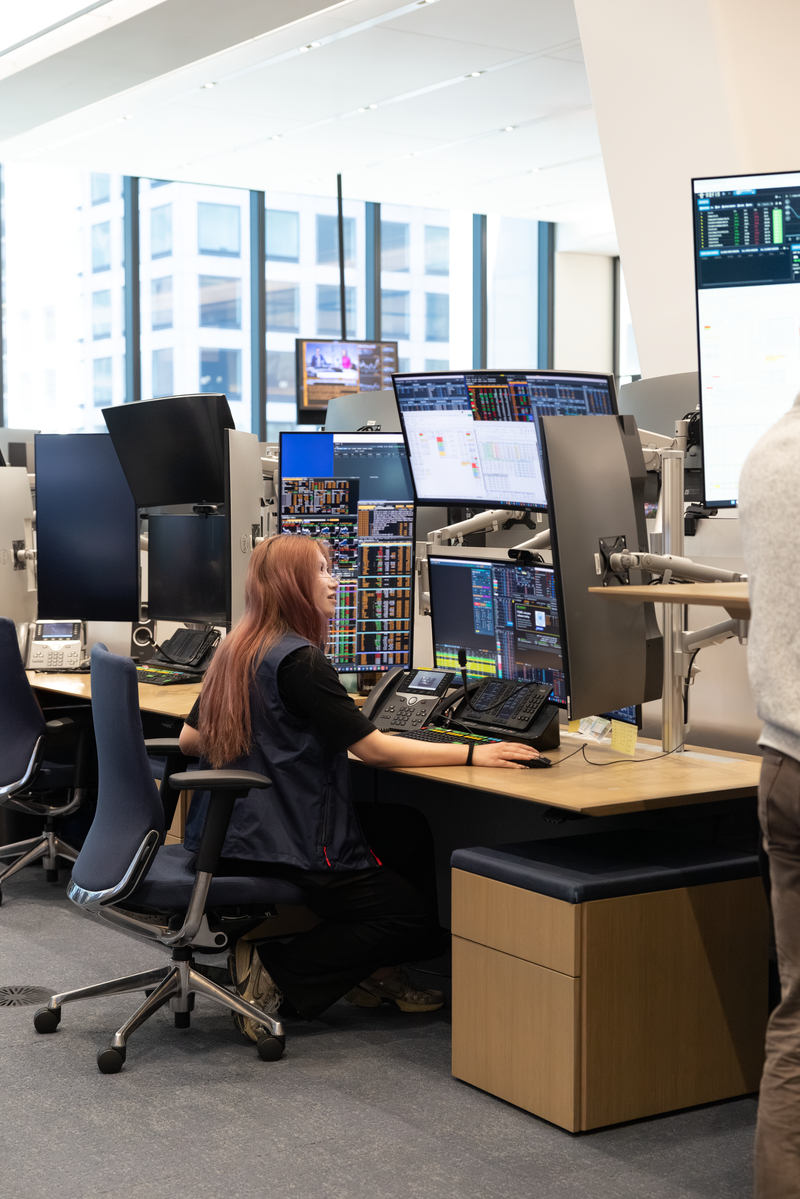
Where Quantitative Analysis Meets Live Markets
The role sits where analysis becomes a decision. A quantitative trader might investigate a market relationship, test an idea against historical or live data, improve a pricing or execution model, monitor how a strategy behaves or decide how to respond as new information changes the risk in front of the desk.
The work varies by team, strategy and asset class. But the core discipline is consistent: structure unfamiliar problems, make reasoned decisions with incomplete information and update those decisions as the evidence changes. Quantitative traders work closely with quantitative researchers and engineers because strong trading decisions depend on the interaction between research, technology and market context.
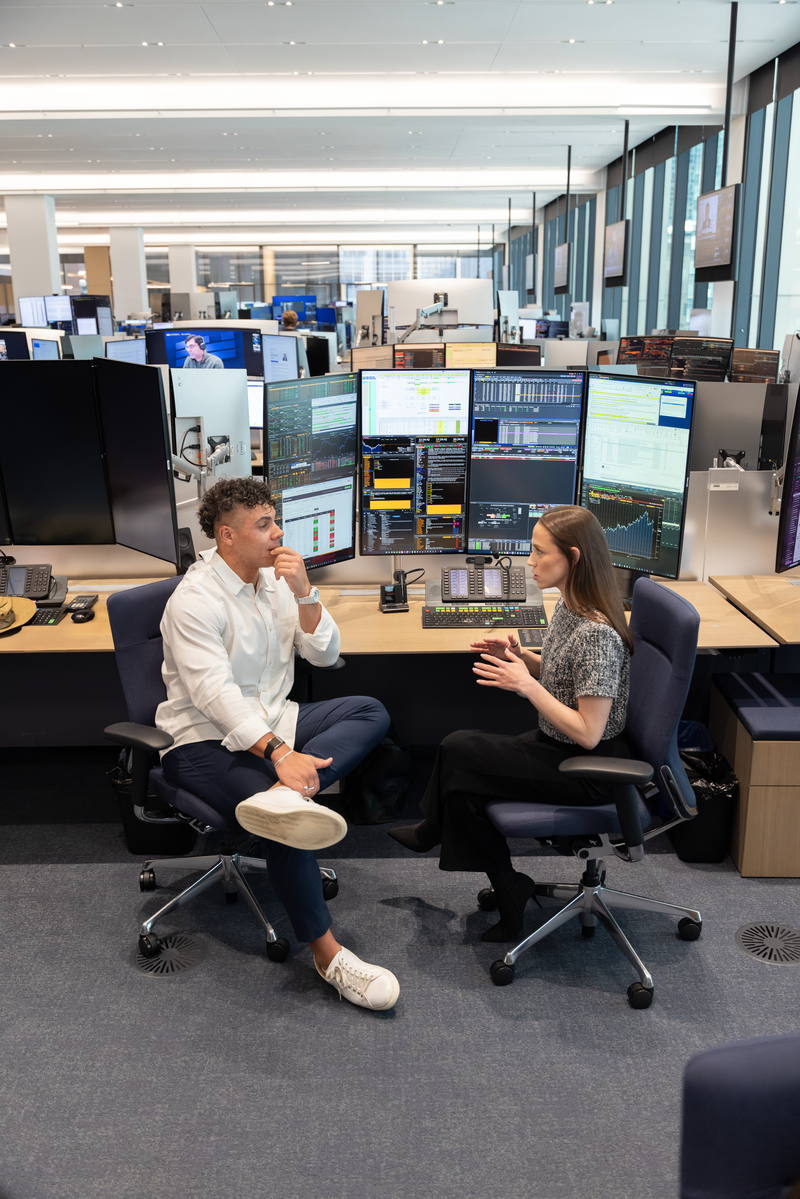
What Quantitative Traders Do at Citadel Securities
- Price and manage risk. Use quantitative tools and market context to evaluate prices, absorb risk, provide liquidity and adjust as conditions move.
- Analyze markets and trading behavior. Use data, statistics and quantitative methods to test ideas, understand market relationships and identify where a strategy or execution process can improve.
- Develop and refine trading strategies. Work with quantitative researchers to evaluate models, signals and strategy logic. Then use trading outcomes and market behavior to sharpen the next iteration.
- Improve trade selection and execution. Study trading metrics, market structure and outcomes to understand when and how to trade more effectively.
- Build and use quantitative tools. Work extensively with data and technology. Depending on the team, that can include writing code, analyzing large datasets, automating workflows or translating trading logic into algorithms and tools.
- Make decisions amid uncertainty. Identify what matters, make a reasoned call with incomplete information and change course when new evidence warrants it.
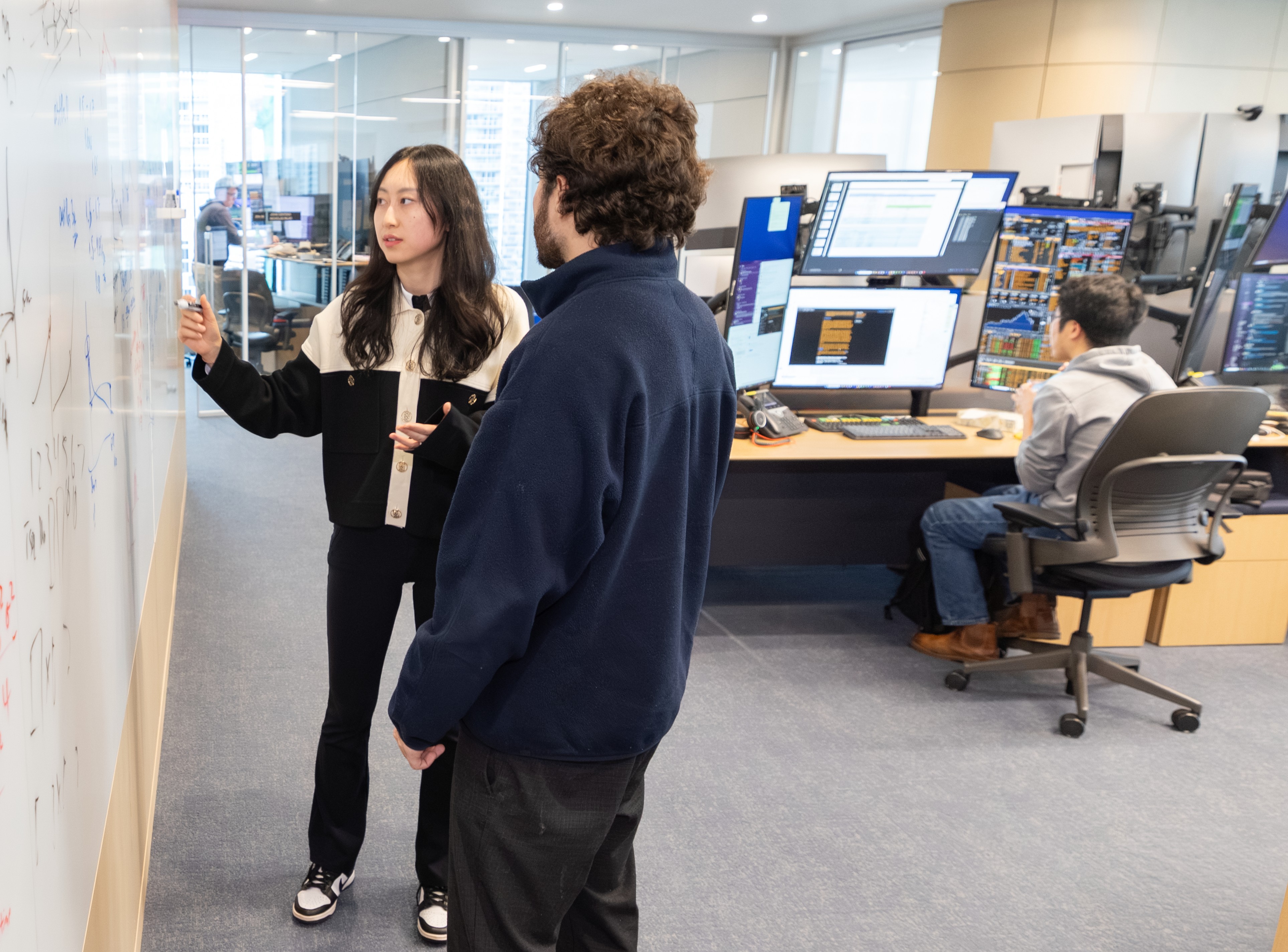
Skills That Matter
- Quantitative reasoning. Strong foundations in mathematics, probability and statistics, with the ability to apply them to unfamiliar problems.
- Structured problem-solving. Break a problem into parts, identify assumptions and compare approaches rather than rely on memorized patterns.
- Decision-making. Use sound judgment when information is incomplete and adapt as new information arrives
- Curiosity. Ask why something works, not only whether it works.
- Communication. Make reasoning easy for others to follow and be willing to revise it when challenged.
- Interest in markets and technology. Be interested in how prices are set and how quantitative tools support trading decisions.
Candidates come from backgrounds including mathematics, statistics, computer science, engineering and physics. Prior finance experience is not required.
Learn the
Fundamentals
Early-career training is designed to build the market, trading and research fundamentals you need to contribute, then deepen that knowledge through work with your desk.
Markets and Asset Classes
Build fluency in how different products trade, how prices are formed and how risk behaves across equities, ETFs, options, fixed income, commodities and currencies.
Quantitative Research
Learn how to structure a research question, work with data, evaluate evidence and translate findings into a trading decision.
Trading and Risk-Taking
Develop intuition through mock trading, pricing and decision-making exercises where information is incomplete and conditions change.
Technology and Data
Build practical skills in data analysis, visualization, algorithms and coding, and understand how technology supports pricing, execution and risk management.
For Interns:
Learn Across the PlatformInterns are trusted members of their teams and work on real projects under the guidance of experienced traders. The program combines structured learning with direct exposure to different desks and trading styles.
- Two desk rotations. Spend five weeks per rotation gaining exposure to different asset classes, strategies and ways of approaching markets.
- Learning series. Explore trading styles across asset classes and learn from senior traders through projects, case studies and technical instruction.
- Mock trading and risk-taking. Practice decision-making through electronic equity and ETF trading, open-outcry style exercises, game theory challenges and other risk-taking simulations.
- Projects and mentorship. Work on problems tied to trading efficiency, pricing, research or new trading tools, with guidance from traders and other specialists.
- Leadership and community. Learn about the business and the industry through access to senior leaders, while building relationships across the intern class and the firm.
How Careers Can Grow
Growth is driven by the scope and impact of the problems you can own. As judgment and context deepen, traders can take on larger risk decisions, broader products or strategies, new markets and more complex problems. Careers can also broaden across asset classes and trading styles or develop toward quantitative research, desk leadership and broader business responsibility.
See the role in practice

Emily | From a pricing question to something the desk can use

Sriram | From quote sizing to a strategy change at scale
Emily | From a pricing question to something the desk can use
Sriram | From quote sizing to a strategy change at scale
What We Look For in Quantitative Trading Candidates
The interview process is designed to understand how you reason, not whether you have memorized finance terminology or a library of puzzle answers. Candidates may be asked to work through probability or mathematical problems, interpret data, estimate uncertain quantities, discuss research or programming and adjust an answer when new information is introduced.
Strong candidates explain assumptions, ask useful questions, make their reasoning visible and stay engaged when the problem changes.
Read the Quantitative Trading Interview Guide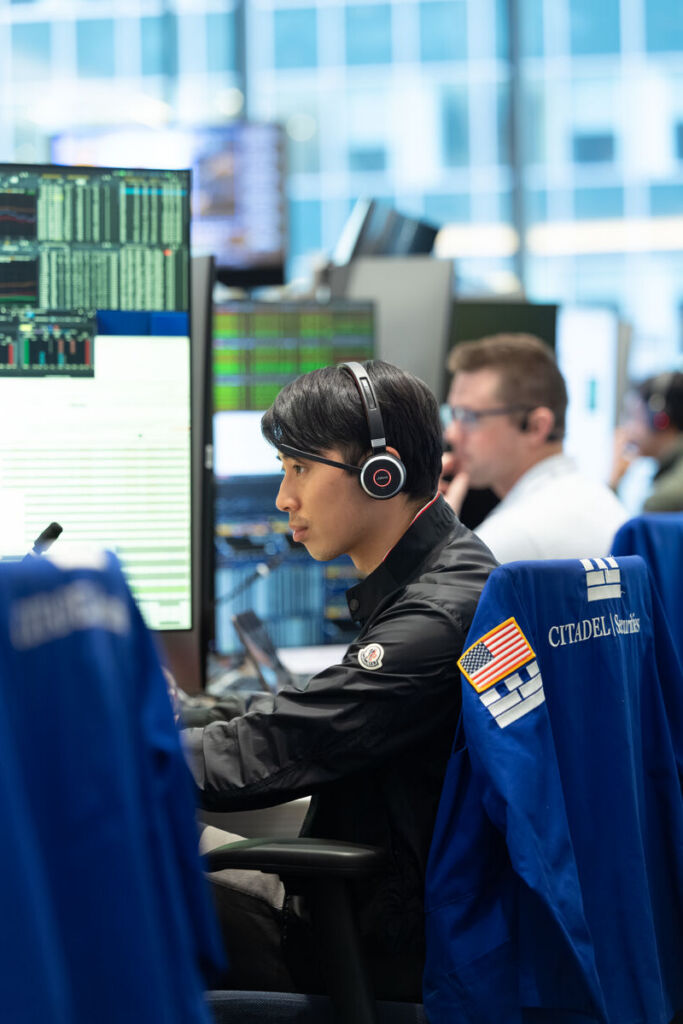
Explore opportunities
View Quantitative Trading OpportunitiesOpenings vary by team, location and experience level.
- What We Do