
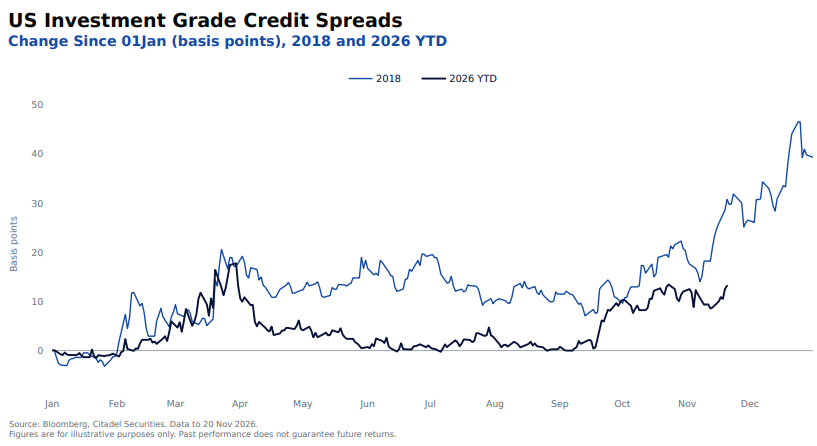
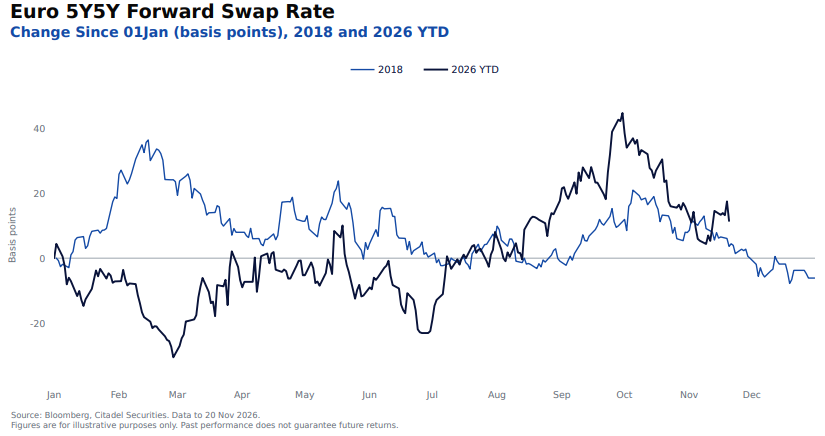
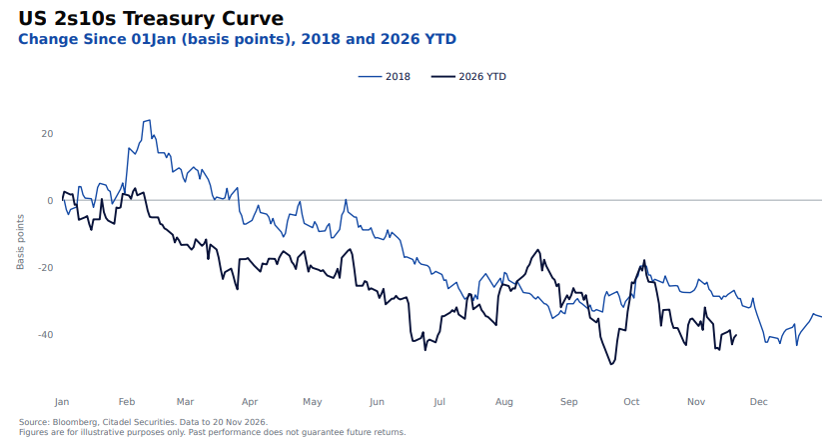
By the autumn of 2018, a striking divergence had emerged between the apparent resilience of the US economy and the increasingly pessimistic message embedded in financial markets. Eight years later, a remarkably similar tension is taking shape, with the resemblance extending well beyond the trajectory of asset prices to the underlying economic forces driving them.
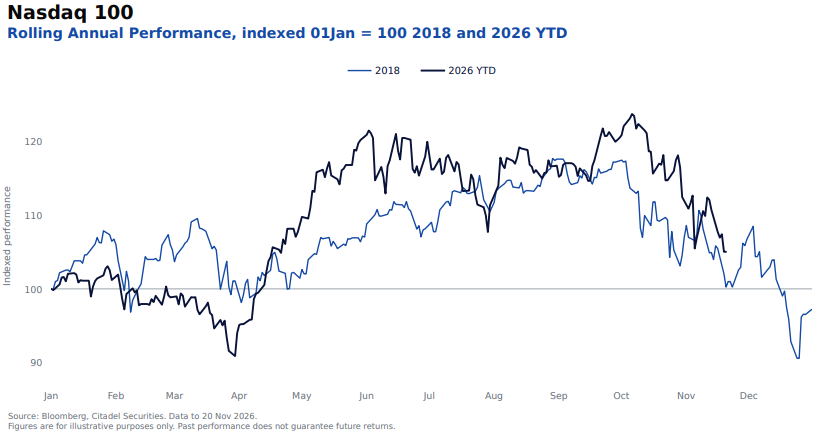
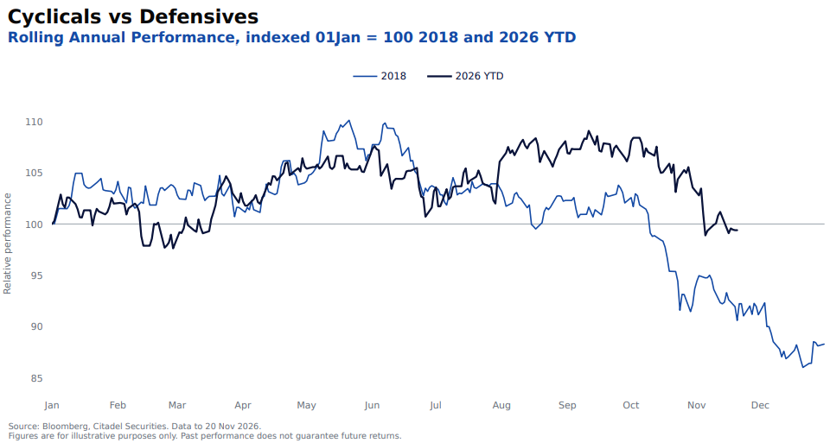
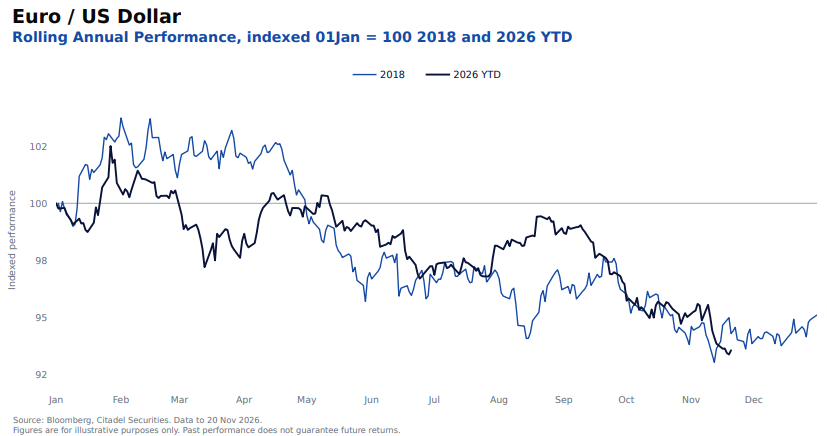
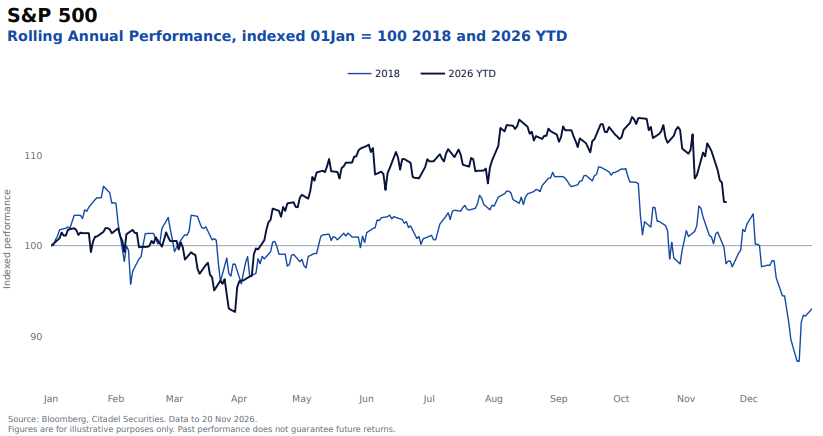
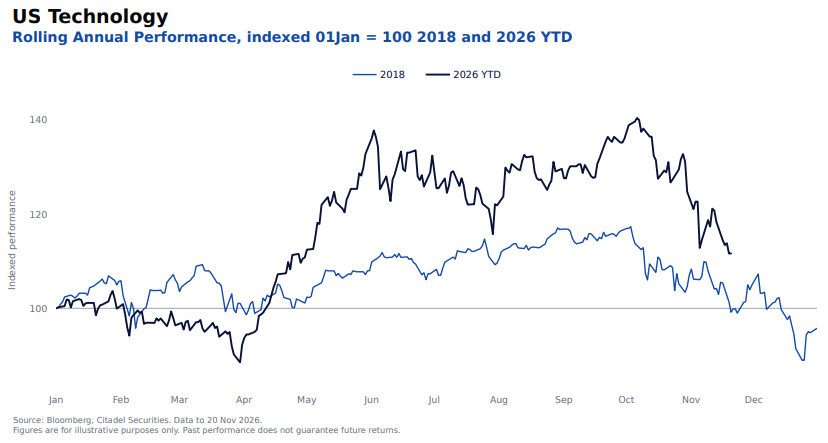
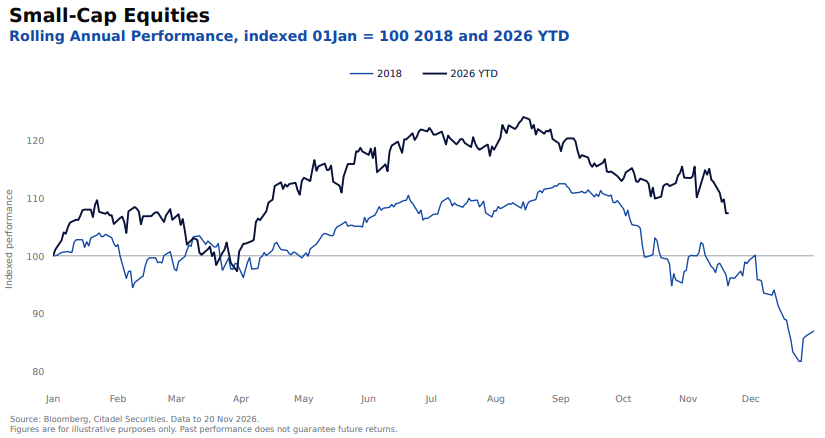
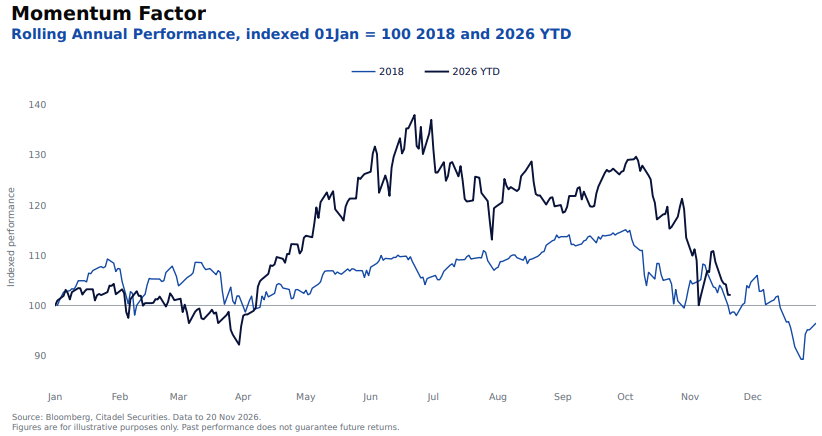
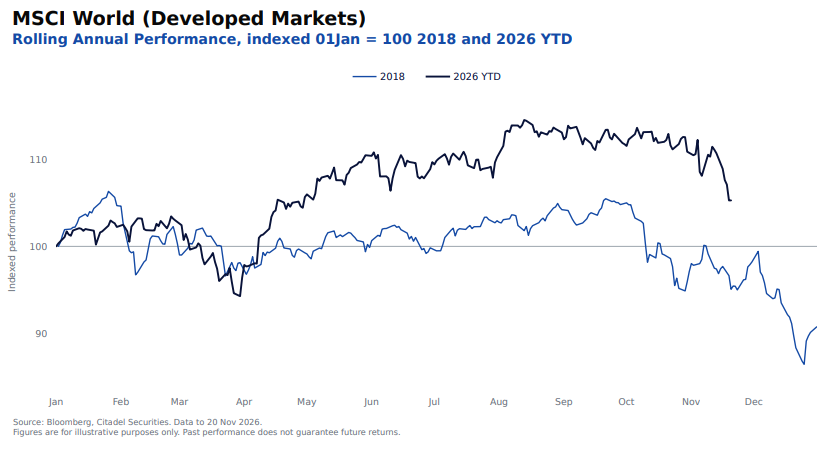
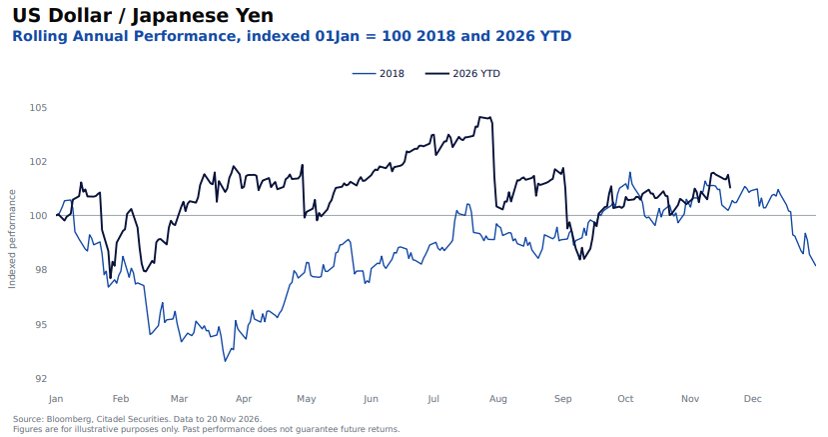
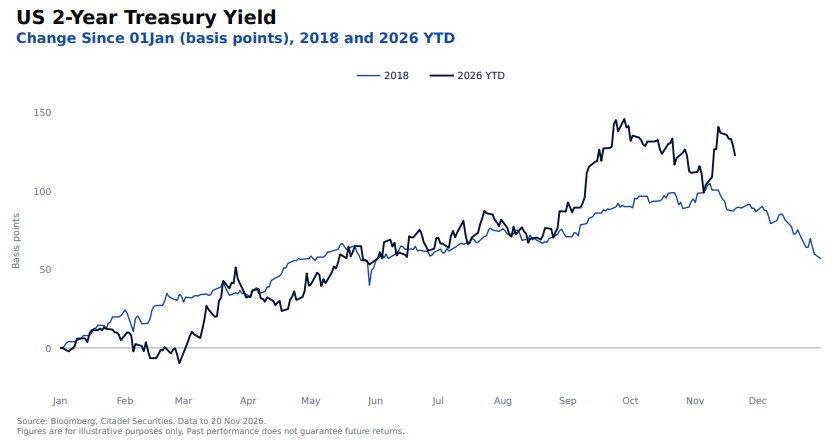
In both periods, US exceptionalism and resilient domestic activity obscured a deterioration in the forward growth outlook, compounded by the trade war with China then and the war with Iran today. The weakness was apparent in the relative performance of cyclical and defensive equities well before it became evident in aggregate economic data, accompanied by dollar strength and a flattening Treasury curve. Meanwhile, the broader US equity market initially appeared comparatively insulated from these developments, until the deterioration eventually spread to technology stocks and the Nasdaq, drawing the S&P 500 into a more pronounced correction towards year-end.
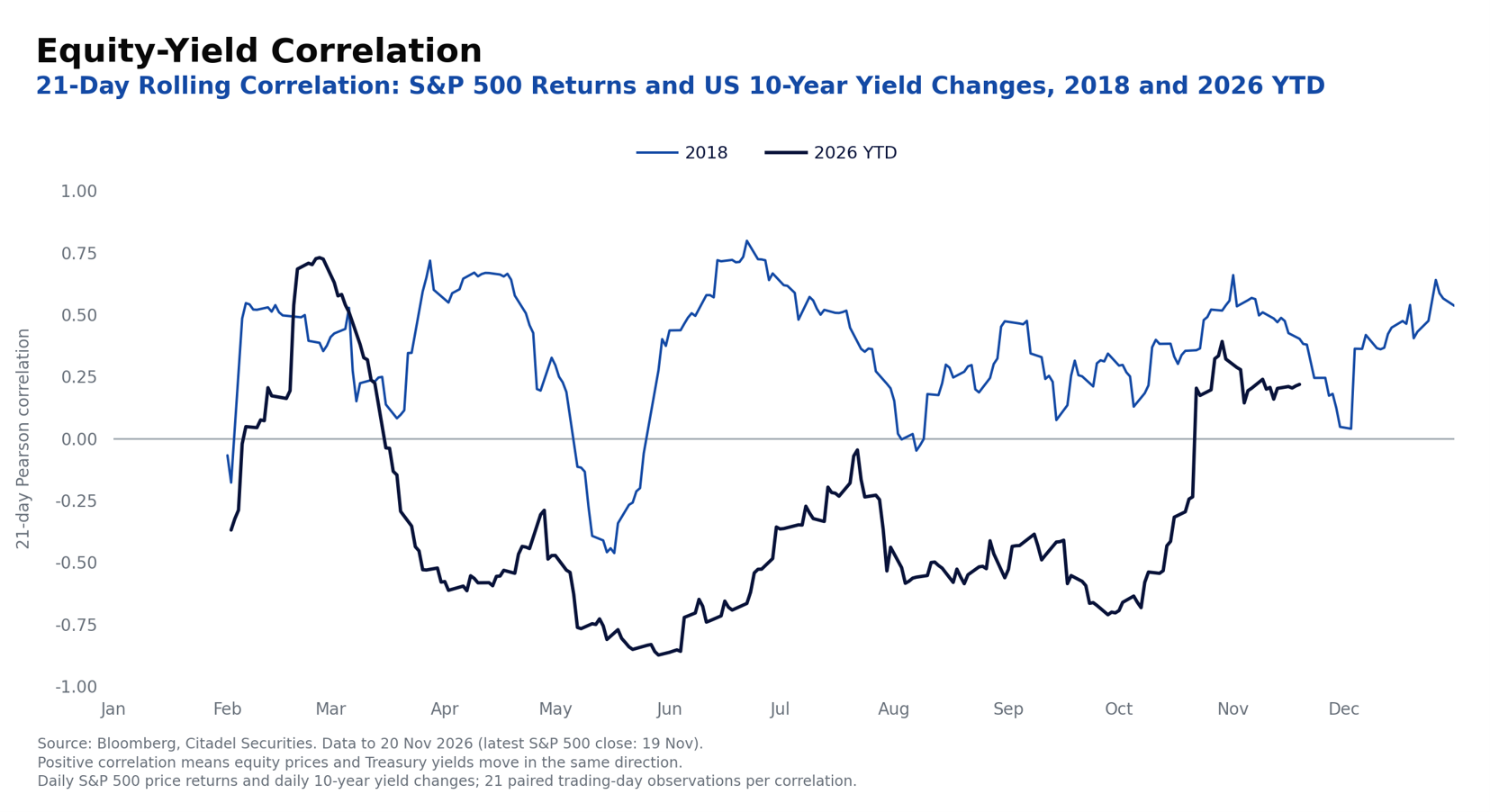
Perhaps the most consequential parallel lies in the monetary policy backdrop, with the Fed becoming increasingly hawkish even as financial markets began to question the durability of the expansion. In December 2018, Powell maintained that balance-sheet runoff would remain on "autopilot", notwithstanding the deterioration in financial conditions and growing evidence of a global slowdown. The breadth and intensity of the recent hawkish shift among Fed speakers carries a familiar resonance. Yet the ferocity of the recent equity correction sits in contrast with Treasury yields that remain close to their highs. In 2018, the eventual recognition of a deteriorating growth outlook precipitated a substantial rally in fixed income.
The comparison also lends some historical perspective to our continued and substantial caution towards the AI theme, where extraordinary expectations for investment and earnings growth have become an increasingly important source of economic vulnerability. There is a natural temptation to regard the recent correction as having already discounted much of the deterioration in the outlook, but the experience of 2018 offers little reassurance on that front. The weakness in market internals preceded the broader adjustment in equities by several months, while the eventual correction proved considerably more extensive than the initial deterioration might have suggested.




Copyright © Citadel Enterprise Americas LLC or one of its affiliates. All rights reserved.
Legal Entities Disseminating this Material: This material is disseminated in the United Kingdom by Citadel Securities (Europe) Limited (“CDGE”) authorized and regulated by the Financial Conduct Authority (“FCA”) (Registered company number: 05462867); in the European Union by Citadel Securities GCS (Ireland) Limited (“CSGI”) and its Paris Branch authorized and regulated by the Central Bank of Ireland (“CBI”) (Registration Number: C173437); in Hong Kong by Citadel Securities (Hong Kong) Limited (“CDHK”) licensed by the Securities and Futures Commission of Hong Kong (“SFC”), in Japan by Citadel Securities Japan Co., Ltd (“CSJC”) registered as a Type 1 financial instruments business operator with the Japan Financial Services Agency (“JFSA”); and in the United States of America by Citadel Securities LLC (“CDRG”) registered with the Securities Exchange Commission (“SEC”), Financial Industry Regulatory Authority (“FINRA”), and Securities Investor Protection Corporation (“SIPC”), Citadel Securities Institutional LLC (“CSIN”) registered with the SEC, FINRA, and SIPC, or Citadel Securities Swap Dealer LLC (“CSSD”) registered with the SEC, Commodities Futures Trading Commission (“CFTC”), and National Futures Association (“NFA”). Unless governing law permits otherwise, you must contact a Citadel Securities entity in your home jurisdiction if you want to use our services in effecting a transaction in any financial instruments or securities, including derivatives.
FOR INSTITUTIONAL USE ONLY; FOR PROFESSIONAL CLIENTS AND ELIGIBLE COUNTERPARTIES ONLY. This material is not intended as and does not constitute investment research. Contents of this material will be strictly limited to non-specific, generic information (i.e. macro events/topics) and are not subject to the Markets in Financial Instruments directive (MiFID II) or FINRA research rules. This material does not constitute an offer, solicitation, invitation, or inducement to purchase, acquire, subscribe to, provide, or sell any financial instrument or otherwise engage in investment activity. Please see additional important disclosures, including disclosures that may be relevant to your country of residence or business at www.citadelsecurities.com/GlobalSalesTrading.


