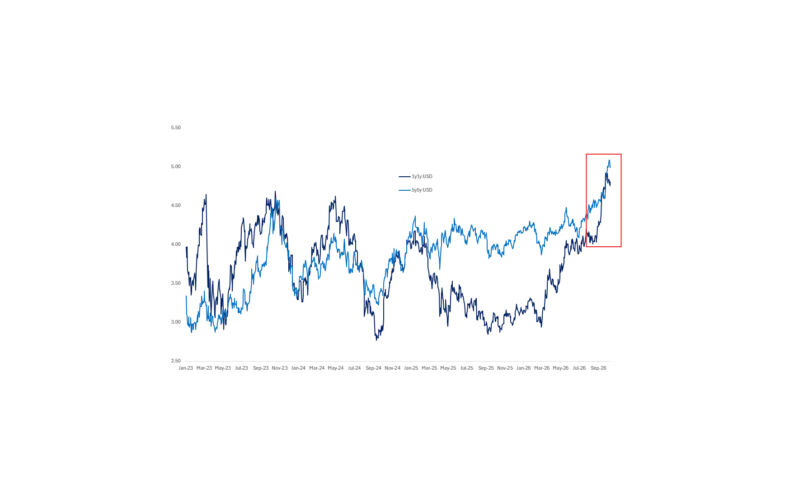
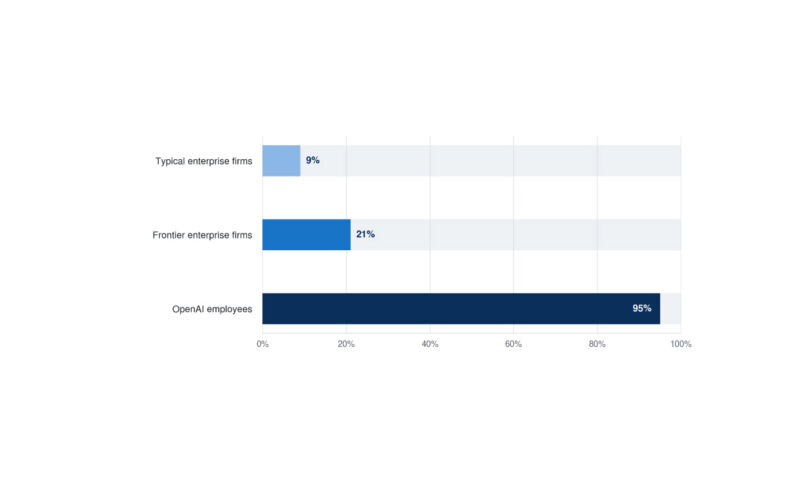
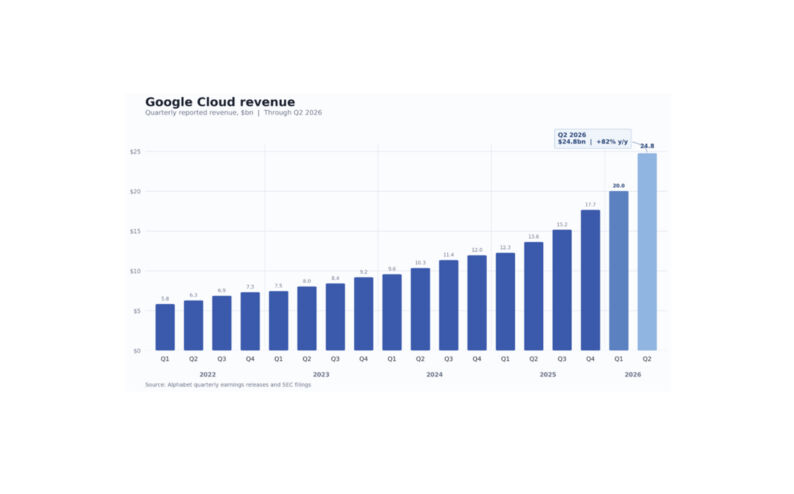
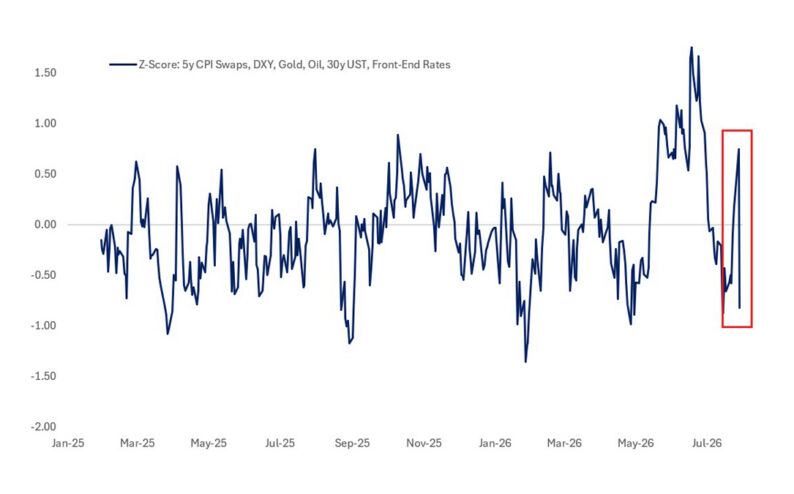
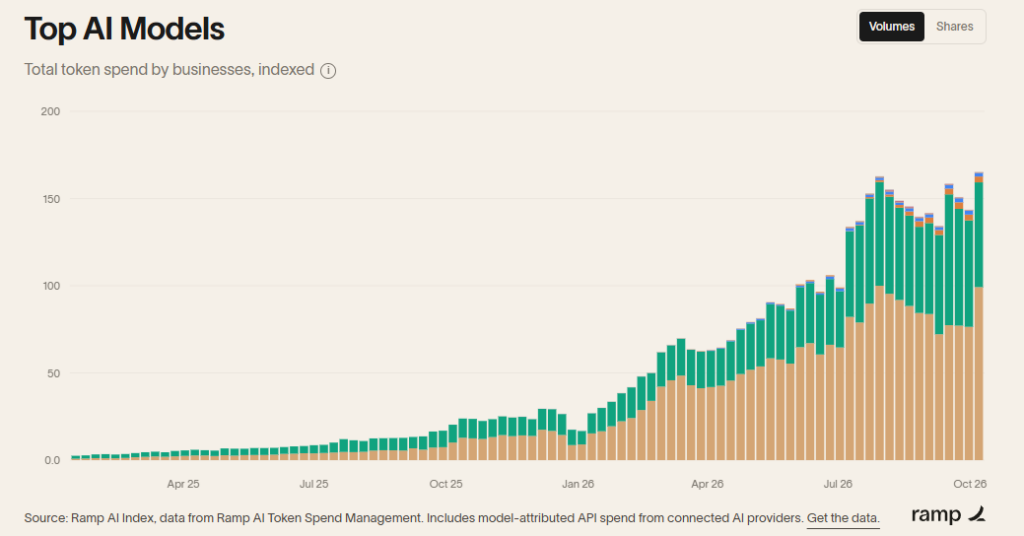
THE SHARP SELL-OFF IN EQUITIES SUGGESTS INVESTORS ARE BECOMING MORE DEMANDING ABOUT THE RETURNS UNDERPINNING THE AI BUILDOUT…and less willing to assume that extraordinary spending will translate into equally extraordinary profits. In my mind, higher yields have made those questions more urgent, whilst the scale of investment commitments has made the answers more consequential. The scrutiny spans the entire chain…whether customers generate sufficient productivity gains, whether model developers retain enough pricing power and whether infrastructure revenues adequately compensate for financing costs and depreciation. Capex itself has become a two-sided risk: spending cuts raise questions about the durability of the investment cycle…whilst further increases raise questions about financing, execution, and the eventual returns. Meta’s latest results illustrate the scale of the commitment: Q3 revenues grew 26% YoY, yet $34.9bn of capex (including finance-lease principal payments) exceeded $32.8bn of operating cash flow…leaving quarterly free cash flow at -$2.1bn. Its full-year guidance implies another ~$49–59bn of spending in Q4. The eventual returns may justify that expenditure…but investors need greater confidence that the capacity can be financed, delivered, and monetised on the promised timetable. I remain of the view that demand for intelligence is strong, but the economics require more discrimination. Ramp’s data are instructive…token spending was virtually flat through August and September even as volumes increased, with falling prices and improving efficiency explaining much of the divergence. Spending subsequently reached a new high in early October, albeit with slower growth. These observations come from Ramp’s customer base rather than the entire economy…but they caution against interpreting weaker dollar-spending growth as an equivalent slowdown in usage. DeepSeek’s DeepInfer release illustrates how software improvements can increase the useful output from existing hardware…adding uncertainty around how much incremental capacity will be required to serve future AI demand, even as cheaper inference encourages greater usage. Cheaper intelligence improves customer economics and expands the range of viable applications. For suppliers, profitability depends on how quickly costs fall relative to prices, how much additional usage follows, and the investment required to serve it. A successful technology can create enormous economic value whilst leaving some of its producers earning disappointing returns. This continues to favour diversified platforms with established cash flows and several routes to monetisation…although even their shareholders need to distinguish between funding the next stage of growth and earning an attractive return from it.
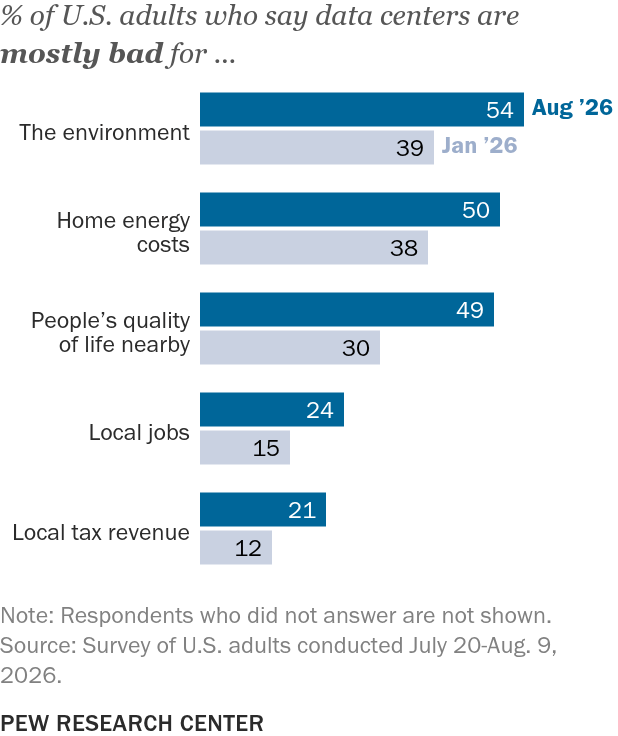
THE INDUSTRY IS CONFRONTING THESE ECONOMIC QUESTIONS WITH LIMITED POLITICAL GOODWILL. A Reuters/Ipsos poll this month found that 69% of Democratic registered voters supported limits on datacentre construction, alongside 43% of Republicans…a reminder that opposition extends across party lines. The November midterms could bring greater congressional scrutiny, whilst state and local elections matter directly for permitting and the conditions attached to development. A sweeping federal restriction or even just additional compliance requirements, local construction limits and prolonged approvals could all make deployment slower and more expensive. For leveraged projects, delays can mean additional interest expense before revenues arrive and potentially a different competitive landscape by the time the capacity becomes operational. It’s important to remember that scarcity today provides limited assurance about the returns on capacity delivered several years from now. Projects could be delayed by power constraints and permitting, only to arrive into a market where efficiency has improved, competing supply has increased and pricing is less favourable than originally assumed. The cyber news this week also adds to the political risk. AI-assisted researchers helped uncover critical vulnerabilities in the widely used PHP software that had existed for more than a decade, whilst Amazon has identified exploitation attempts and warned that AI is shortening the time required to turn vulnerability information into working attacks. The technology is improving our ability to identify weaknesses whilst also making them easier to exploit. These are serious engineering and security problems requiring stronger controls, faster patching, and continued investment in defensive capabilities. My concern is that legitimate security concerns become a justification for broad restrictions that impede productive deployment. The economic costs of the political response could extend well beyond the vulnerabilities being addressed – another risk to the timing of returns when so much prospective growth depends on the pace of AI adoption.
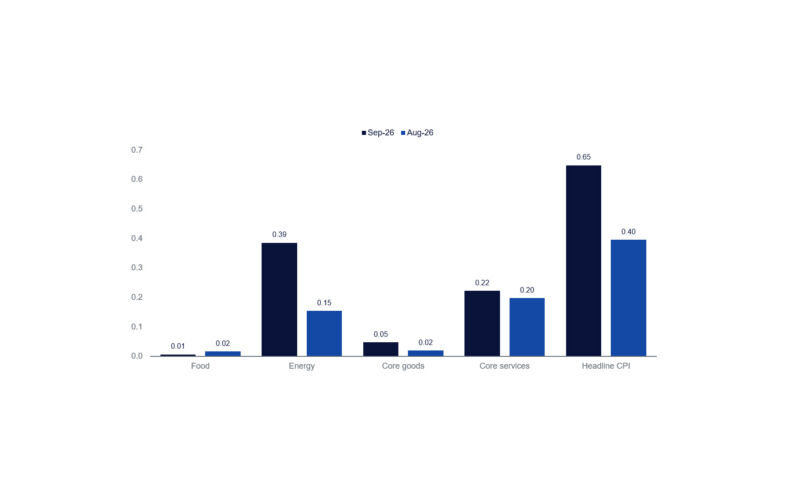
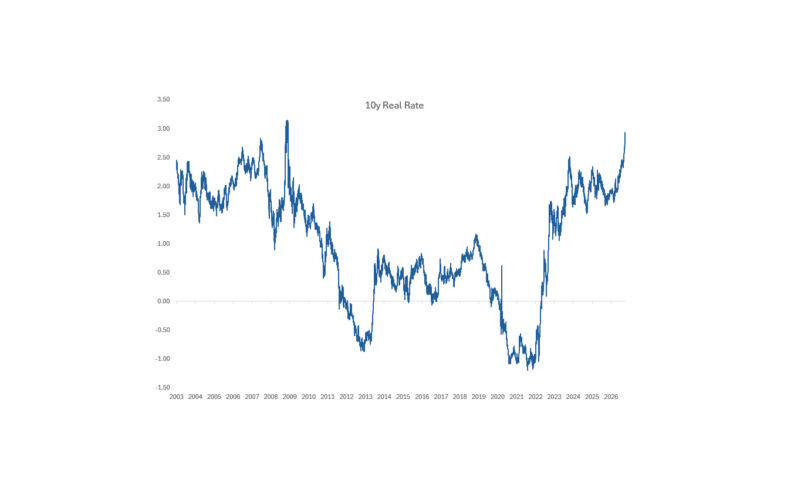
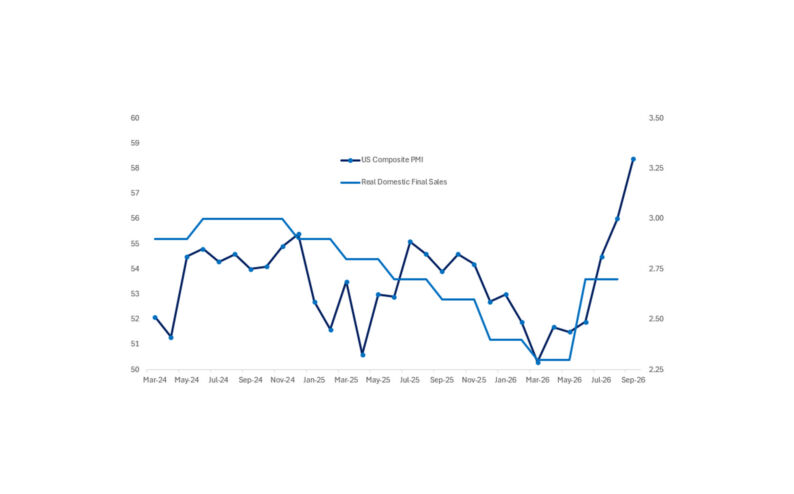
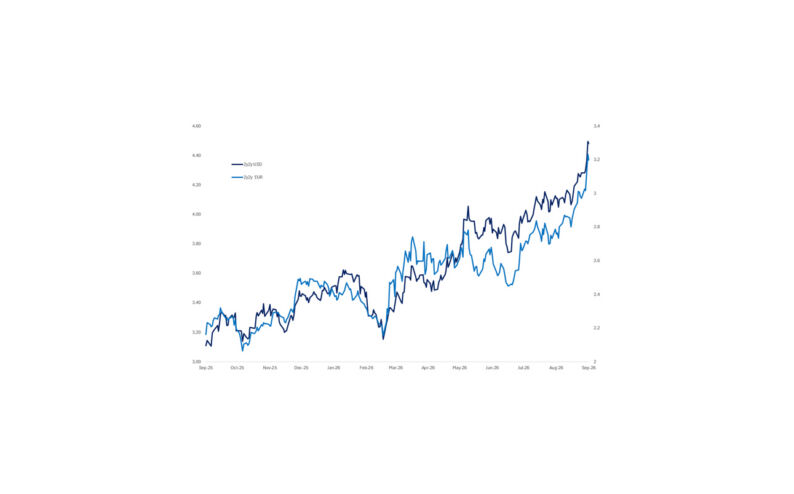
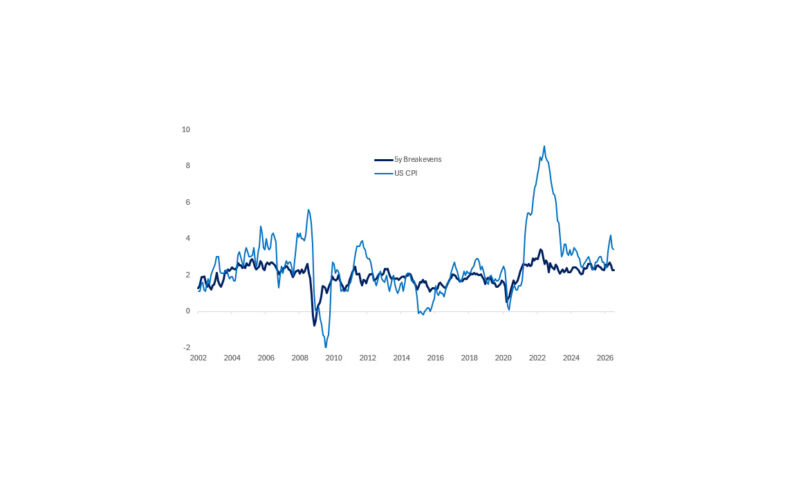
THESE DEVELOPMENTS ARE ARRIVING AFTER A SUCCESSION OF POLICY CHOICES THAT HAVE MADE THE ECONOMY MORE EXPENSIVE TO FINANCE AND OPERATE. Procyclical fiscal easing has supported demand and increased borrowing requirements, whilst tariffs have added costs and uncertainty…compounding the challenge of bringing inflation sustainably back to target. Stronger growth and productive investment also explain part of the increase in real yields; some of the higher cost of capital reflects better opportunities to deploy it. Nevertheless, the cumulative burden matters…higher rates progressively reach borrowers as debt refinances, higher input costs squeeze margins or reach consumers, and persistent inflation makes monetary accommodation more difficult. An economy can absorb these pressures whilst investment, earnings and confidence remain strong…but resilience should not be confused with the costs disappearing. Moreover, the energy shock continues with Brent trading above $117/bbl. this week as attacks in Saudi Arabia and around Gulf shipping renewed concerns about disruption, despite resilient regional crude exports. Sustained energy costs absorb purchasing power and raise operating expenses. An AI-led investment slowdown alongside renewed energy disruption would leave the Fed confronting weaker prospective growth and an uncomfortable inflation backdrop. It also seems that the midterms will not clear the geopolitical risk with reports of preparations for possible renewed strikes against Iran after the election. Divided government would also create uncertainty about Washington’s capacity to respond to the fiscal trajectory. These risks are now beginning to reinforce one another. An equity correction can be absorbed…but a sustained retrenchment in investment and financing would threaten the growth, earnings and household wealth that have helped the US economy withstand higher costs. Even lower Treasury yields would provide limited relief to borrowers whose credit spreads widen sufficiently to offset them…risk-free yields can fall whilst the cost of financing risk rises. In sum, these concerns have been accumulating for some time, but the strength of the growth and AI narrative has allowed markets to look past them…but as confidence in that narrative weakens, those pressures become harder to absorb. With so much of the economy and stock market now levered to the AI trade, there is precious little margin for error just as the other risks threaten to bite.
Copyright © Citadel Enterprise Americas LLC or one of its affiliates. All rights reserved.
Legal Entities Disseminating this Material: This material is disseminated in the United Kingdom by Citadel Securities (Europe) Limited (“CDGE”) authorized and regulated by the Financial Conduct Authority (“FCA”) (Registered company number: 05462867); in the European Union by Citadel Securities GCS (Ireland) Limited (“CSGI”) and its Paris Branch authorized and regulated by the Central Bank of Ireland (“CBI”) (Registration Number: C173437); in Hong Kong by Citadel Securities (Hong Kong) Limited (“CDHK”) licensed by the Securities and Futures Commission of Hong Kong (“SFC”), in Japan by Citadel Securities Japan Co., Ltd (“CSJC”) registered as a Type 1 financial instruments business operator with the Japan Financial Services Agency (“JFSA”); and in the United States of America by Citadel Securities LLC (“CDRG”) registered with the Securities Exchange Commission (“SEC”), Financial Industry Regulatory Authority (“FINRA”), and Securities Investor Protection Corporation (“SIPC”), Citadel Securities Institutional LLC (“CSIN”) registered with the SEC, FINRA, and SIPC, or Citadel Securities Swap Dealer LLC (“CSSD”) registered with the SEC, Commodities Futures Trading Commission (“CFTC”), and National Futures Association (“NFA”). Unless governing law permits otherwise, you must contact a Citadel Securities entity in your home jurisdiction if you want to use our services in effecting a transaction in any financial instruments or securities, including derivatives.
FOR INSTITUTIONAL USE ONLY; FOR PROFESSIONAL CLIENTS AND ELIGIBLE COUNTERPARTIES ONLY. This material is not intended as and does not constitute investment research. Contents of this material will be strictly limited to non-specific, generic information (i.e. macro events/topics) and are not subject to the Markets in Financial Instruments directive (MiFID II) or FINRA research rules. This material does not constitute an offer, solicitation, invitation, or inducement to purchase, acquire, subscribe to, provide, or sell any financial instrument or otherwise engage in investment activity. Please see additional important disclosures, including disclosures that may be relevant to your country of residence or business at www.citadelsecurities.com/GlobalSalesTrading.