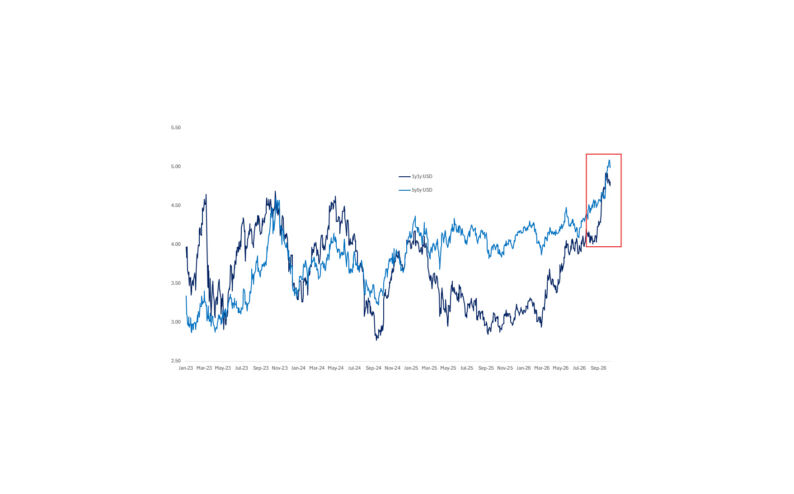
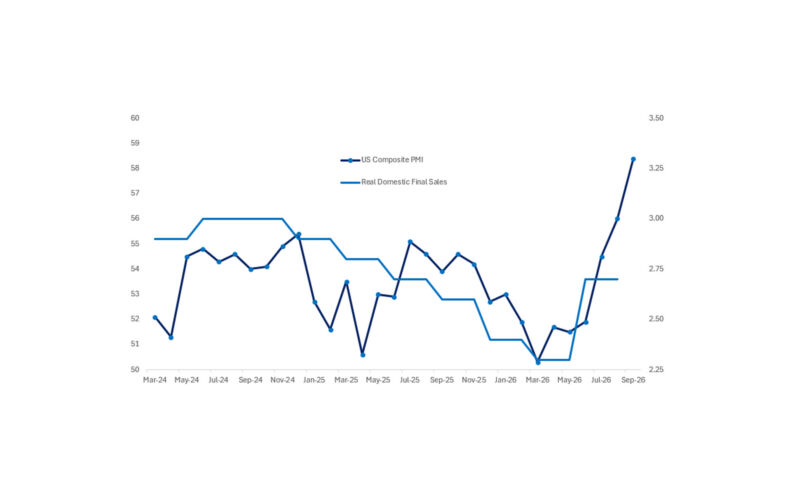
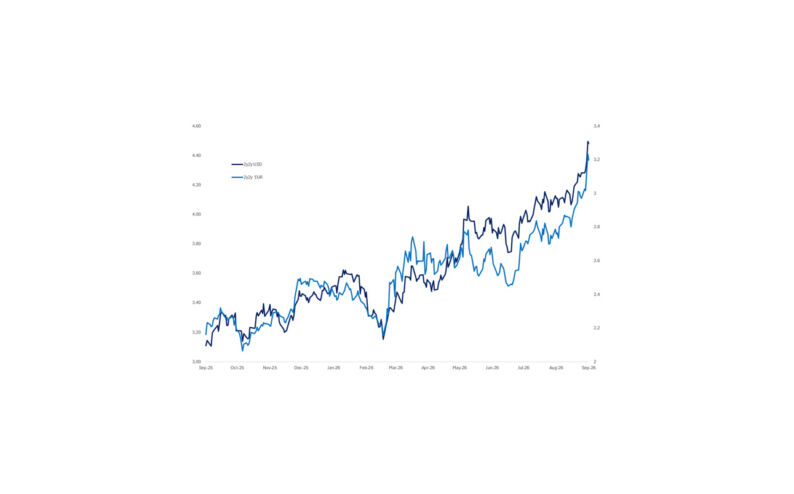
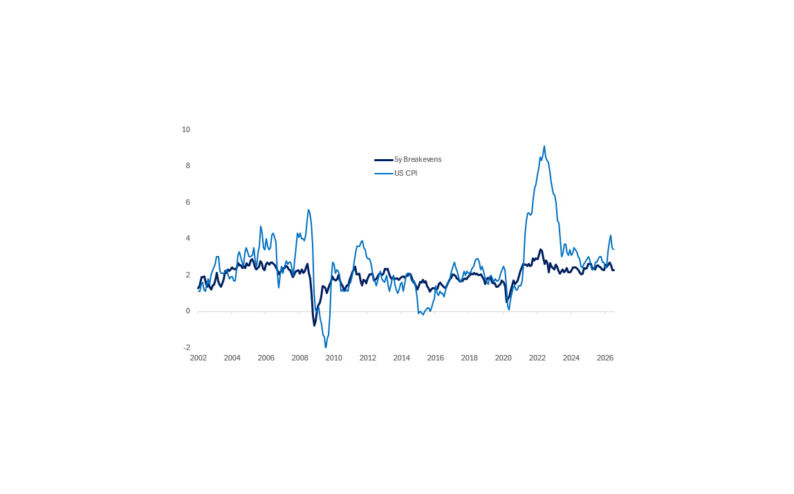
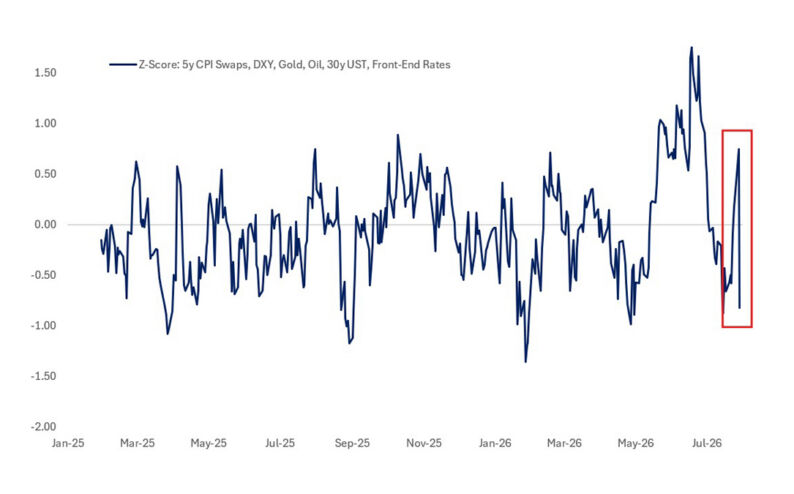
THE BOOM IS RAISING THE REAL PRICE OF CAPITAL. The most revealing aspect of the Treasury sell-off is its composition…49bp of September’s 54bp rise in 10y yields came from real yields, which finished within spitting distance of 3%, whilst breakevens widened just 5bp. Investors are essentially demanding a higher return after inflation, not simply more protection against it. That is a different emphasis from the concerns I raised after July’s FOMC, when widening breakevens, weaker equities and a weaker dollar called the clarity of the Fed’s reaction function into question. In my mind, the latest move is consistent with markets repricing the strength and persistence of growth…and the real rates required to accommodate it. Procyclical fiscal easing, loose financial conditions and a once-in-a-generation AI-investment boom were always a recipe for strong demand. As mentioned last week, fiscal policy remains central…government borrowing supports activity whilst adding to the debt markets must absorb, with AI competing for capital alongside it. The data reinforce this: Q2 real private domestic final demand was revised up to 4.6% annualised, August real consumption rose 0.6% MoM, and September’s manufacturing ISM eased to 54.5 whilst new orders strengthened to 55.3. Friday brought a payroll miss, negative revisions, softer wages, and higher unemployment rate…but the 3m NFP average remains positive at 51k. Ultimately, stronger prospective returns encourage investment…but financing it alongside persistent deficits requires more saving or a higher real return to attract it. Persistent demand and competition for capital make me wary of calling a durable top in yields simply because inflation improves…but I am equally wary of extrapolating the sell-off indefinitely. Further upside requires fresh repricing of growth, policy, or term premia. For equity markets, stronger growth can support earnings even as discount rates compress valuations…the question becomes whose prospective returns improve enough to absorb the higher financing cost. Meanwhile, rate-sensitive sectors are already feeling the strain…US 30yr fixed mortgage rates rose 25bp last week to average 7.28%, their largest weekly increase since October 2022…further squeezing purchasing power in an already weak housing market. The boom can justify a higher real cost of capital…but it cannot make that cost irrelevant.
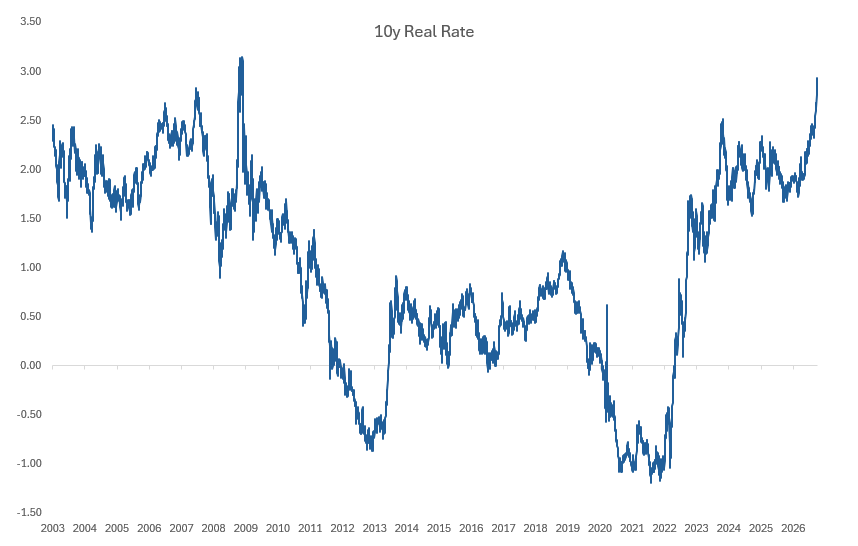
Source: Bloomberg, Citadel Securities
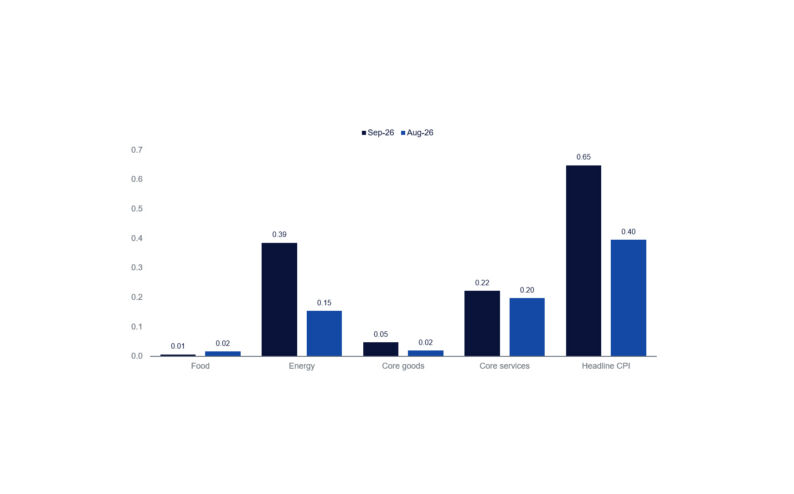
STABLE BREAKEVENS ARE CONSISTENT WITH EXPECTATIONS THAT THE FED WILL DELIVER THE HIGHER REAL RATES NEEDED TO CONTAIN INFLATION…rather than evidence that the problem is solved. August’s 0.2% MoM core PCE print offered tactical relief, but annual core inflation remained at 3.0%, whilst September’s manufacturing ISM prices-paid index jumped 6.8 points to 77.9. Markets are discounting 3–4 further hikes this cycle…reasonable, in my view, given sticky inflation, resilient growth, and financial conditions that continue to be accommodative despite the Treasury sell-off. My concern is that fiscal support and strategic AI investment make parts of demand less rate-sensitive, whilst de-globalisation and physical constraints limit the goods disinflation available to offset sticky services inflation. AI’s productivity dividend may help…but the expenditure comes first. NY Fed’s Williams highlighted that AI-related demand is still outrunning supply, with higher input costs beginning to affect other products even as housing inflation has eased. So, further tightening does not require inflation to accelerate…it may be enough for it to decline too slowly whilst demand remains resilient. On communications, St Louis Fed’s Musalem argued that a clear reaction function lets markets anticipate the Fed rather than wait for explicit guidance. Having stepped back from forward guidance, Chair Warsh now faces a market signalling a higher destination for policy. That is information rather than an instruction…but confirmation in the data would give the Fed reason to validate it, albeit not necessarily at the same pace.
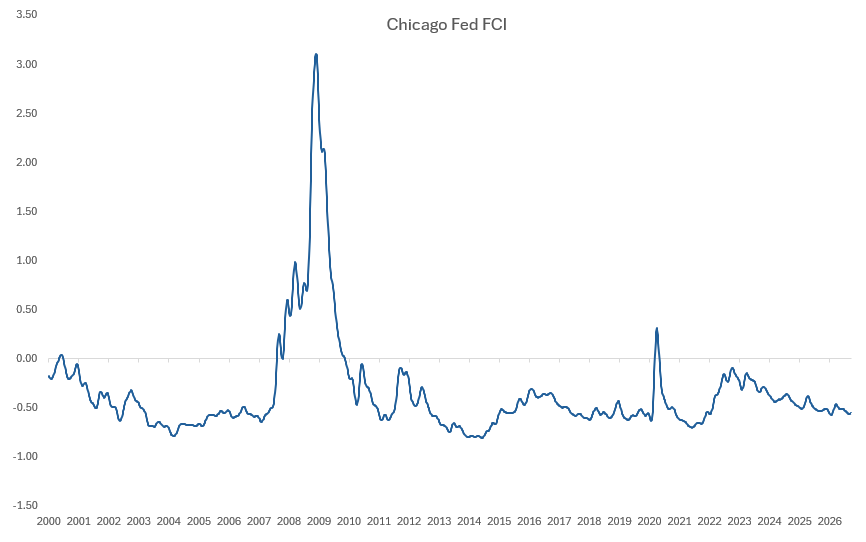
Source: Chicago Fed
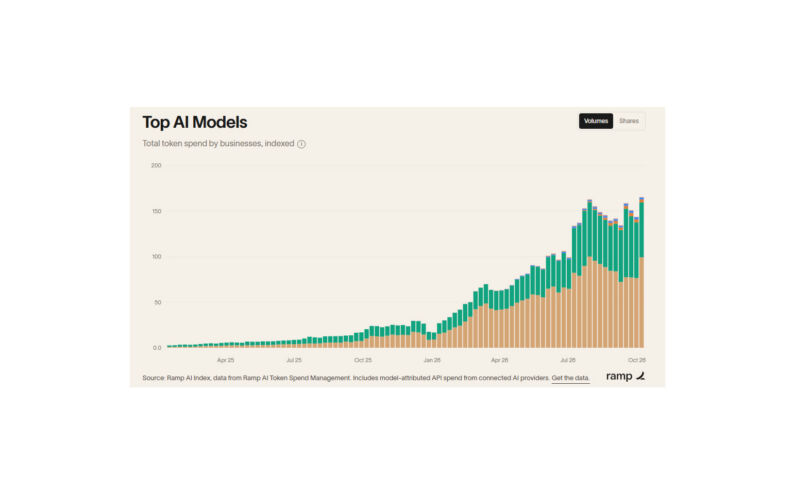
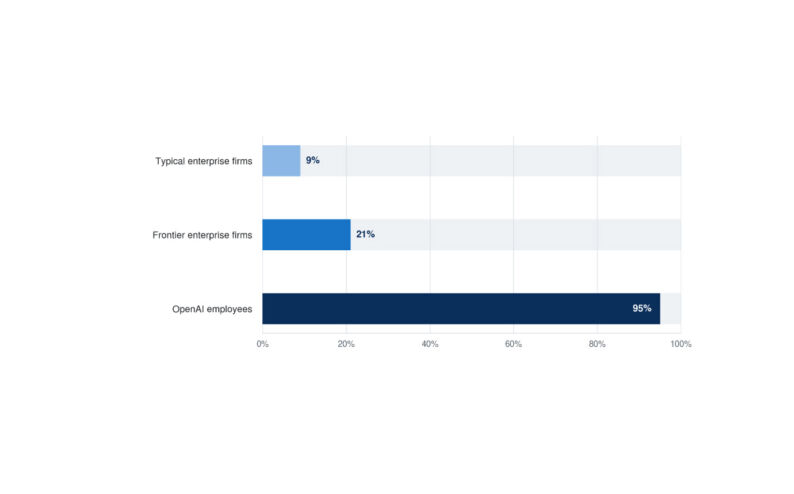
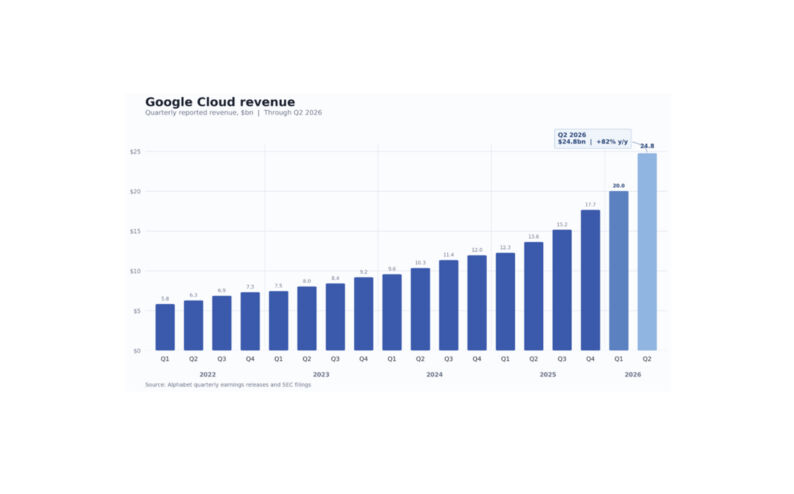
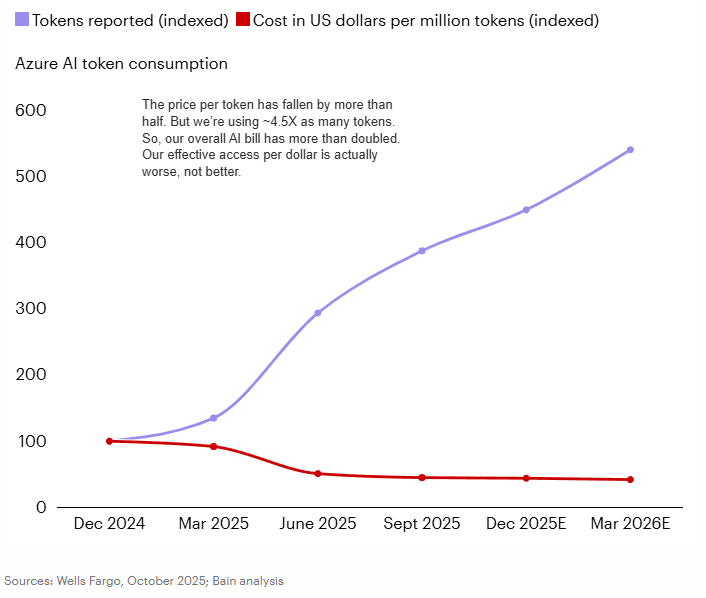
THE AI BOOM CAN BROADEN, EVEN AS THE RETURNS BECOME MORE UNEVEN. Cheaper, more capable intelligence expands the range of viable applications…but value can accrue to customers, businesses embedding AI into workflows and providers of compute and distribution, as well as model developers. Bain’s latest report highlights falling token prices being offset by more intensive usage and broader deployment…a useful demonstration of why cheaper intelligence need not mean a smaller compute bill. However, what is good for adoption can simultaneously be challenging for producers’ pricing power. In my mind, standalone frontier development remains harder to monetise sustainably than the broader compute complex…funding successive generations of development whilst competing with cheaper open-weight models is a demanding business. This is why I remain most bullish on hyperscalers, whose economics extend beyond selling access to a model. Microsoft provided a good illustration this week, expanding Copilot’s offering with new models from both OpenAI and Anthropic, integrated with customers’ existing organisational data and permissions…an example of how the intelligence underneath can change whilst the customer relationship endures. Its revised pricing structure also separates subscription-based everyday AI from usage-based agentic work, whilst automatic routing weighs accuracy, speed, and cost…giving Microsoft a means of matching the economics of delivery to the work being performed. Also, Google reports using Argon agents to improve datacentre memory efficiency…another example of how a model can support a larger business rather than carry the investment case itself. With an estimated one-third of hyperscaler capex debt-financed this year, the higher real cost of capital makes the timing and reliability of future cash generation more consequential. Existing cash flows, established distribution and multiple routes to monetisation therefore become more valuable competitive advantages…favouring integrated platforms in my view. Put simply, I remain bullish on the diffusion of intelligence…and owning the frontier and owning the economics of its deployment are two different propositions.
Legal Entities Disseminating this Material: This material is disseminated in the United Kingdom by Citadel Securities (Europe) Limited (“CSEL”) regulated by the Financial Conduct Authority (“FCA”) (Registered company number: 05462867); in the European Union by Citadel Securities GCS (Ireland) Limited (“CSGI”) and its Paris Branch regulated by the Central Bank of Ireland (“CBI”) (Registration Number: C173437); in Hong Kong by Citadel Securities (Hong Kong) Limited (“CDHK”) licensed by the Securities and Futures Commission of Hong Kong (“SFC”), in Japan by Citadel Securities Japan Co., Ltd (“CSJC”) registered as a Type 1 financial instruments business operator with the JFSA; and in the United States of America by Citadel Securities LLC (“CDRG”) registered with the Securities Exchange Commission (“SEC”) and Financial Industry Regulatory Authority (“FINRA”), Citadel Securities Institutional LLC (“CSIN”) registered with the SEC and FINRA or Citadel Securities Swap Dealer LLC (“CSSD”) registered with the SEC, Commodities Futures Trading Commission (“CFTC”), and National Futures Association (“NFA”). Unless governing law permits otherwise, you must contact a Citadel Securities entity in your home jurisdiction if you want to use our services in effecting a transaction in any financial instruments or securities, including derivatives.
FOR INSTITUTIONAL USE ONLY; FOR PROFESSIONAL CLIENTS AND ELIGIBLE COUNTERPARTIES ONLY. This material is not intended as and does not constitute investment research. Contents of this material will be strictly limited to non-specific, generic information (i.e. macro events/topics) and are not subject to the Markets in Financial Instruments directive (MiFID II) or FINRA research rules. This material does not constitute an offer, solicitation, invitation, or inducement to purchase, acquire, subscribe to, provide, or sell any financial instrument or otherwise engage in investment activity.
https://www.citadelsecurities.com/privacy/
Please see additional important disclosures, including disclosures that may be relevant to your country of residence or business at: https://www.citadelsecurities.com/disclosures/citadel-securities-fimm-sales-trading-disclosures/