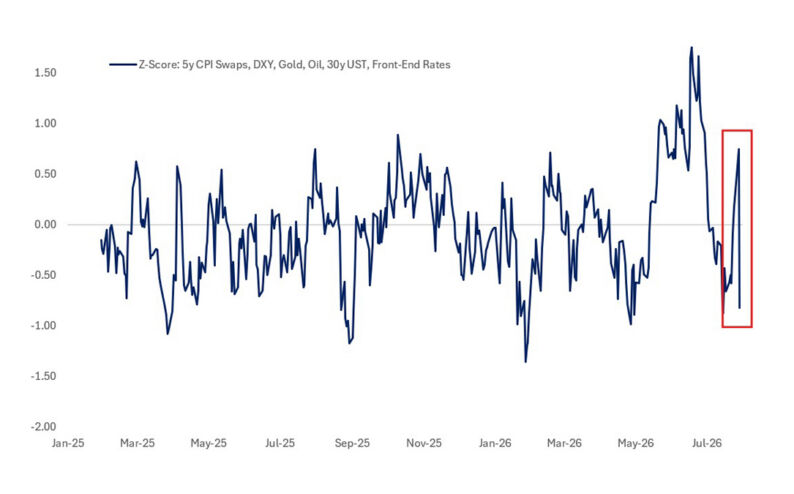
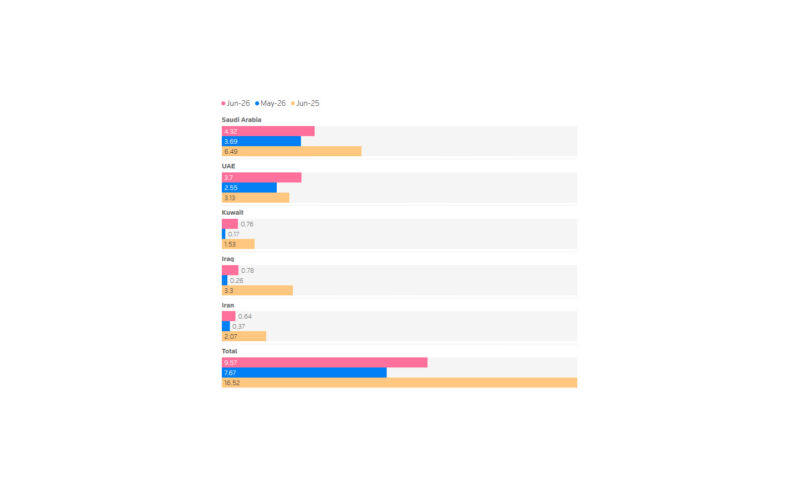
WAR WITH IRAN IS BACK. This week has seen a material escalation in kinetic activity, with sustained US strikes against Iranian coastal military sites, air defences, logistics infrastructure, maritime capabilities and, increasingly, transport and energy-related infrastructure deeper inside the country. Strikes around Bandar Abbas and southern Hormozgan suggest Washington is willing to move beyond purely military targets and pressure Iran’s ability to move people, goods, and energy along its southern corridor. In essence, the MoU and ceasefire framework have effectively collapsed. The Strait of Hormuz remains the central battleground, with POTUS having reimposed a naval blockade on Iranian ports that is now being actively enforced. Iran, in turn, is retaliating more broadly across the region…Tehran has resumed attacks on US allies and facilities, including in the GCC, and recent strikes suggest the risk to regional infrastructure is already beginning to materialise. Gulf energy infrastructure moving back into the line of fire is the key market risk. Iran has warned that regional infrastructure could become a target if its own infrastructure is hit, while the IRGC has threatened broader disruption of Middle East energy exports. Oil flows through Hormuz are likely near wartime lows…dark transits make this difficult to track, but the combination of US blockade enforcement, Iranian threats, attacks on shipping and reduced activity on the southern Omani route suggests flows have deteriorated meaningfully. There is also no obvious near-term off-ramp…President Trump appears more hawkish since the resumption of hostilities, even hinting at possible action against Iran’s deeply buried Pickaxe Mountain nuclear facility. The consequent rebound in front-month Brent to $85/bbl is a reminder that we now live in a more fragile world, exposed to repeated supply shocks and supply-chain disruption. The decline in oil prices after the initial stage of the conflict was not a genuine normalisation in physical balances; it was a reassessment of the likely duration and severity of the shock, helped by a series of offsets. Hormuz flows fell from ~20mb/d pre-war to an average of just 2.7mb/d in March-May, but Chinese crude imports also fell by ~4.6mb/d between February and May; coordinated emergency releases added ~2.5mb/d in May; US crude and product exports reached a record 13.1mb/d; Saudi exports through Yanbu rose from ~2mb/d to more than 5mb/d; the UAE restored exports through Fujairah; and storage drawdowns plus transponder-dark shipping along the Omani coast helped ease the immediate squeeze. By June, total Gulf exports had recovered by 6.5mb/d to 16.1mb/d…enough to break the extreme scarcity narrative, but still well below the pre-war level. The problem is that the system has not rebuilt much insulation…global stocks drew at ~3.8mb/d from the start of the conflict through May, and June’s apparent 21mn barrel build was almost entirely explained by oil on water; onshore inventories continued to fall. OECD stocks declined by a further 62mn barrels, China’s crude inventories fell by 41mn barrels, and the US SPR dropped by almost 100mn barrels from late February to mid-July. The market is therefore less able to absorb another disruption…emergency reserves have already been materially drawn down, commercial and Cushing inventories remain tight, Chinese demand has less room to fall again, and bypass routes still cannot fully replace normal Hormuz flows. Moreover, refined-product markets are even tighter…the recovery in Gulf exports has been overwhelmingly concentrated in crude and condensate, which accounted for 85% of the 6.5mb/d rebound by June and recovered to nearly three-quarters of pre-war levels, while refined products and LPG remained below half. With US gasoline and distillate inventories still around 8% and 11% below their five-year seasonal averages, and refinery utilisation already at 96.2%, the global system has limited spare capacity to turn improving crude supply into products. That keeps diesel, jet-fuel, and gasoline cracks – and therefore end-user prices – materially firmer than crude futures alone would imply. In short, markets should not treat the Iran conflict as a rear-view-mirror risk…it remains a persistent source of upside energy-price risk and financial-conditions tightening.
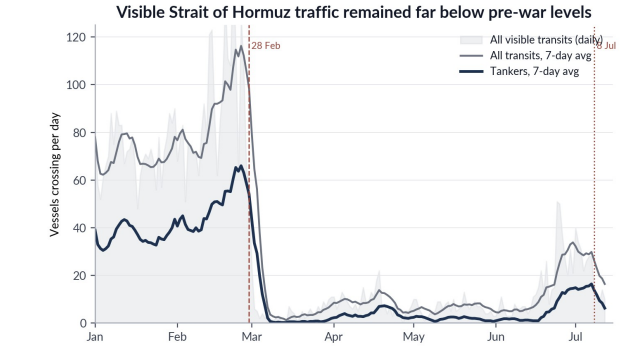
Source: IMF PortWatch
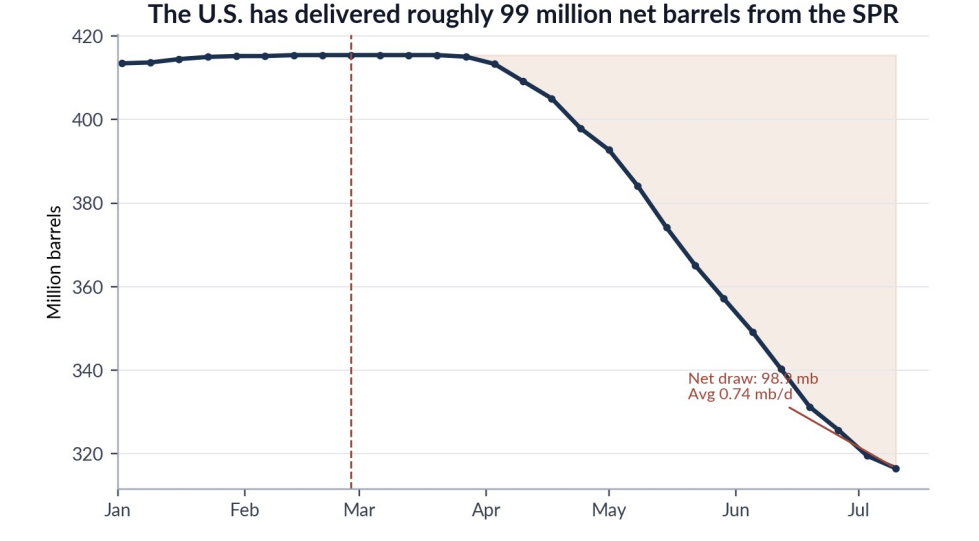
Source: IEA
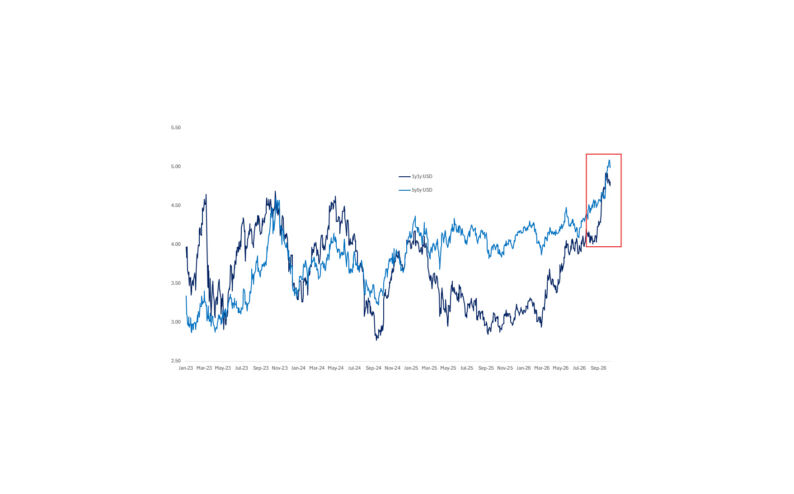
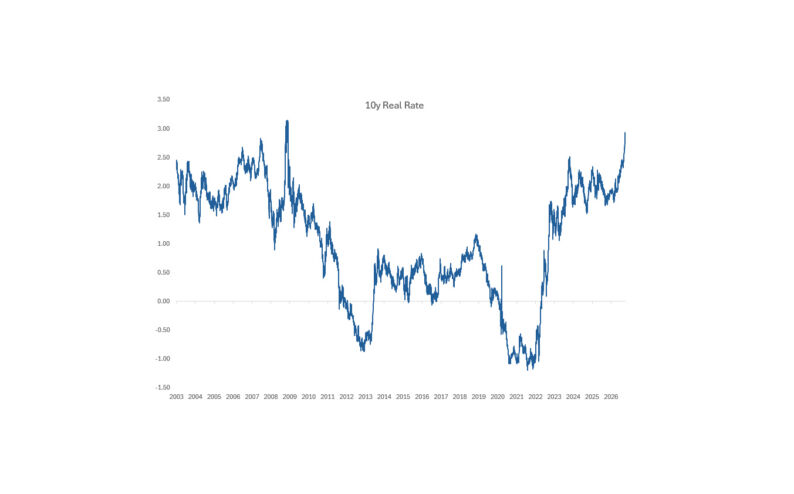
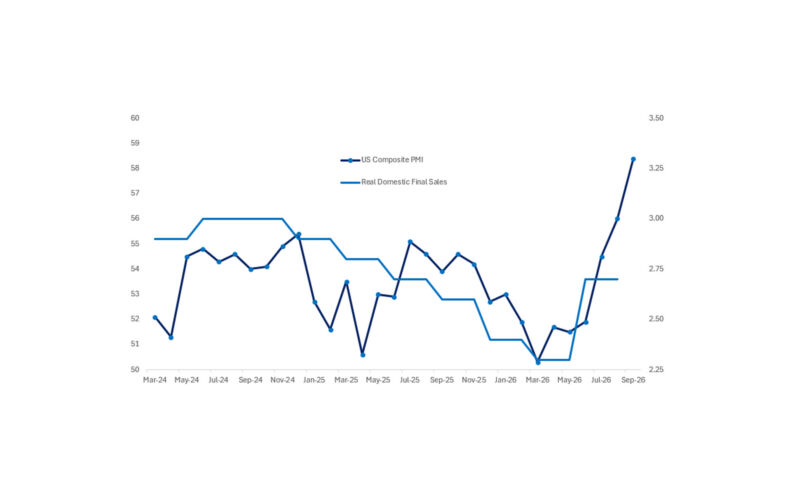
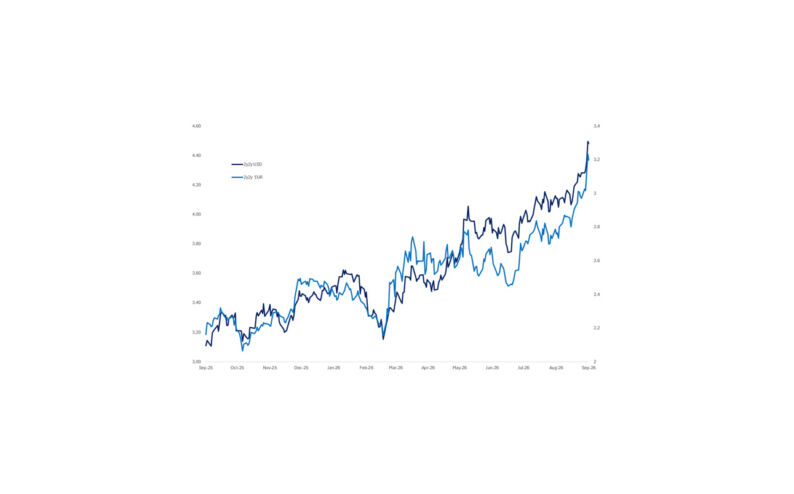
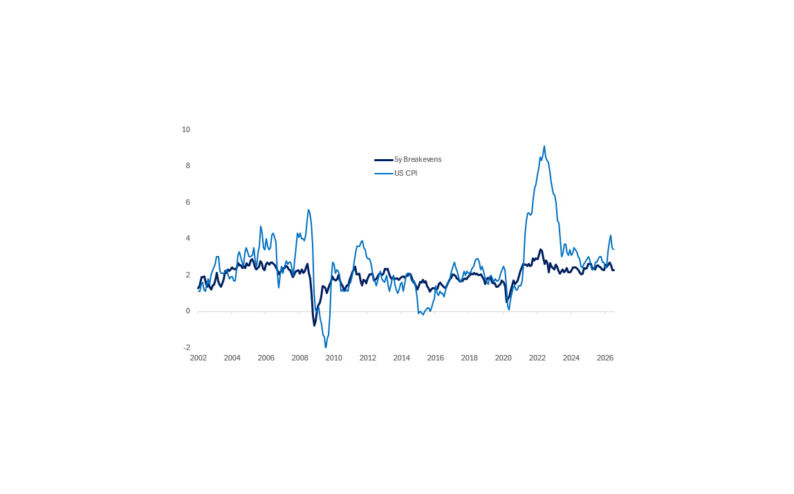
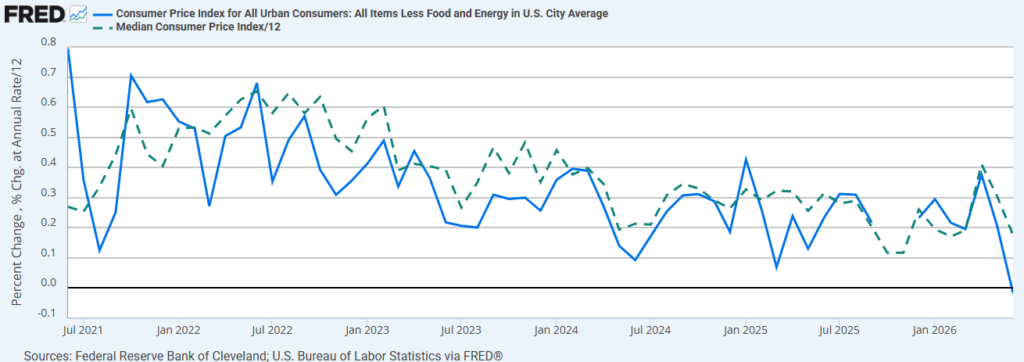
THIS WEEK’S INFLATION REPORT WAS SURPRISINGLY SOFT…after five uncomfortable core PCE prints in a row, with the read-through from a very weak core CPI suggesting a June core PCE increase of roughly 15-20bp MoM. Coming after a slightly softer NFP report, it likely takes the risk of a July hike off the table. However, markets should be careful about over-indexing to a single month of data, particularly this one. As a reminder, the hiring data appeared to contain some seasonal or World Cup-related distortions, with leisure and hospitality employment falling despite expectations for tournament-related demand. On the inflation side, the World Cup explanation is less clean…travel and event-sensitive categories were noisy rather than uniformly weak, with lodging away from home falling sharply, airfares only modestly higher, food away from home contained, and admissions/recreation services firmer. Moreover, the gap between median and core CPI looks like an outlier to the downside, with median CPI running closer to a 15-20bp MoM equivalent and therefore more aligned with the PCE read-through than the stone-cold core CPI print itself. My overall sense is that this was a softer print, but not quite as decisive as the core CPI reading implied. There was some good news in shelter disinflation, which finally showed up, although it will need to be repeated. Fed speak this week also leaned into the message of not over-indexing to one month of good data, a sentiment echoed across Chair Warsh’s testimony and speeches from Goolsbee and Williams. Committee bellwether Chris Waller also implied that it would take several consecutive months of benign inflation prints to keep the Fed on hold. Given the broad strength of the economy, the reacceleration in energy prices, still-elevated refined product prices and the lengths Warsh went to in his testimony to emphasise his intolerance of five years of above-target inflation, I still expect the September meeting to be live for the first of two or three FOMC rate hikes.
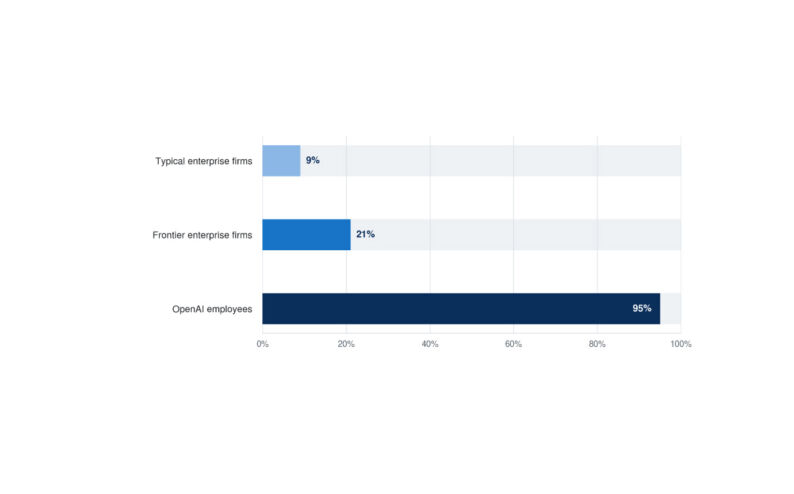
THE NEWS ON AI CONTINUES TO GET MORE COMPLICATED…Kimi K3 is not quite another DeepSeek moment, but it points in the same direction…the frontier is becoming more contested, more global, and potentially less proprietary. The risk is that frontier-level capability becomes harder to monetise at premium prices if Chinese open-weight models can keep closing the gap. This challenges the core assumption behind parts of the AI trade…that US labs retain a durable technology lead, pricing power remains intact, and ever-larger data-centre investment can be justified by access to uniquely scarce intelligence. It also makes regulation harder, not easier…national rules can slow domestic labs, but they cannot fully control the diffusion of capable open-weight models once the frontier starts to globalise. At the same time, the politics of AI are hardening…Demis Hassabis is now arguing for a US-led, FINRA-style standards body to test frontier models before release; Axios notes that Hassabis, Altman and Amodei are increasingly converging around independent testing, a single governing framework and US-led coordination; and Mira Murati’s Thinking Machines is making a related, but subtly different, case for AI that remains human-directed, customisable and distributed rather than centralised in a handful of labs. This is important for monetisation as well as governance…the enterprise use-case may increasingly be less about renting access to the single smartest general model, and more about owning, customising and fine-tuning models around proprietary workflows and data. President Xi is also pushing the language of global AI governance, calling for coordination on development strategies, rules, and technical standards. The direction of travel seems to suggest that the “move fast” phase of AI is giving way to a world of safety testing, geopolitical competition, standards-setting and regulatory bargaining. Finally, the physical constraint is not going away…AI’s energy needs are increasingly becoming a political and macro issue in their own right. Electricity demand is now one of the clearest measures of the scale of the AI buildout, but also one of its biggest bottlenecks: grid access, local opposition, power prices, and the need for reliable 24/7 energy are all becoming binding constraints. This is no longer just a capex issue; it is becoming a voter issue as well, as data-centre demand shows up in utility bills, permitting battles and state-level restrictions. Nor is efficiency necessarily a full escape route…even if models become cheaper to run, usage can rise faster than efficiency improves, leaving total power demand higher rather than lower. In sum, AI may still be a powerful growth story, but it is far from a clean one. It is a capital-intensive, energy-intensive, and politically contested infrastructure investment cycle…and that makes the distribution of winners and losers much less straightforward.
Legal Entities Disseminating this Material: This material is disseminated in the United Kingdom by Citadel Securities (Europe) Limited (“CSEL”) regulated by the Financial Conduct Authority (“FCA”) (Registered company number: 05462867); in the European Union by Citadel Securities GCS (Ireland) Limited (“CSGI”) and its Paris Branch regulated by the Central Bank of Ireland (“CBI”) (Registration Number: C173437); in Hong Kong by Citadel Securities (Hong Kong) Limited (“CDHK”) licensed by the Securities and Futures Commission of Hong Kong (“SFC”), in Japan by Citadel Securities Japan Co., Ltd (“CSJC”) registered as a Type 1 financial instruments business operator with the JFSA; and in the United States of America by Citadel Securities LLC (“CDRG”) registered with the Securities Exchange Commission (“SEC”) and Financial Industry Regulatory Authority (“FINRA”), Citadel Securities Institutional LLC (“CSIN”) registered with the SEC and FINRA or Citadel Securities Swap Dealer LLC (“CSSD”) registered with the SEC, Commodities Futures Trading Commission (“CFTC”), and National Futures Association (“NFA”). Unless governing law permits otherwise, you must contact a Citadel Securities entity in your home jurisdiction if you want to use our services in effecting a transaction in any financial instruments or securities, including derivatives.
FOR INSTITUTIONAL USE ONLY; FOR PROFESSIONAL CLIENTS AND ELIGIBLE COUNTERPARTIES ONLY. This material is not intended as and does not constitute investment research. Contents of this material will be strictly limited to non-specific, generic information (i.e. macro events/topics) and are not subject to the Markets in Financial Instruments directive (MiFID II) or FINRA research rules. This material does not constitute an offer, solicitation, invitation, or inducement to purchase, acquire, subscribe to, provide, or sell any financial instrument or otherwise engage in investment activity.
https://www.citadelsecurities.com/privacy/
Please see additional important disclosures, including disclosures that may be relevant to your country of residence or business at: https://www.citadelsecurities.com/disclosures/citadel-securities-fimm-sales-trading-disclosures/