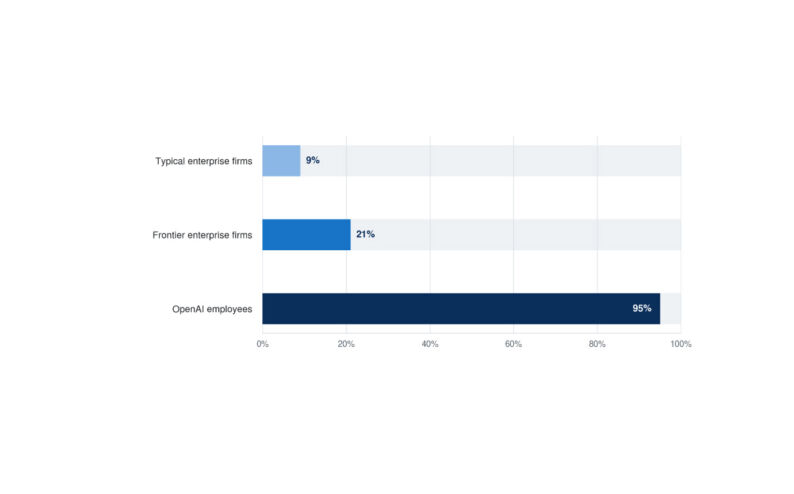
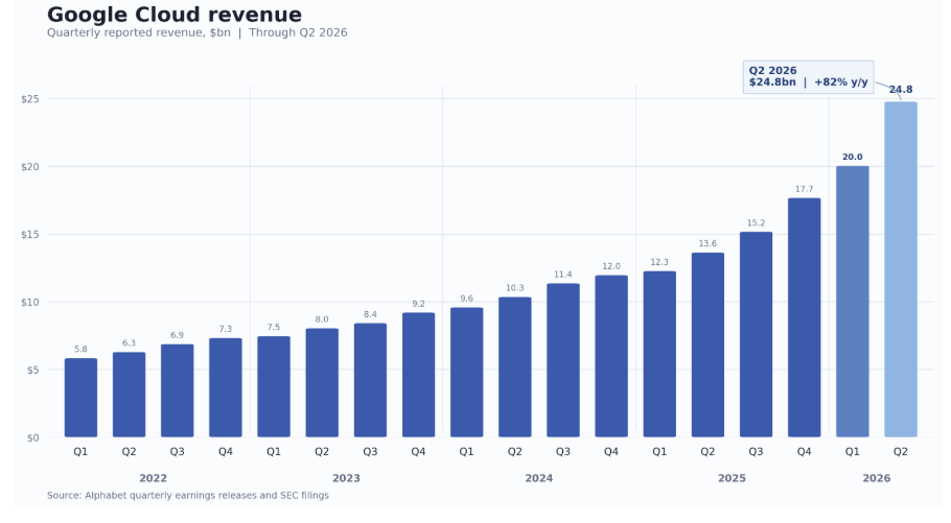
THE FRONTIER IS NOT FOR EVERYONE…AND IT MAY NOT EVEN BE WHERE THE BEST RETURNS ARE. Recent earnings reports from hyperscalers can be read as a signal that the objective function of these firms may be changing…the marginal dollar of AI investment (and the marginal unit of compute) is increasingly being asked to generate visible returns through cloud, inference and distribution today, rather than fund another, more uncertain attempt to move the frontier tomorrow. At the heart of this shift is a simple tension…the science still demands that every incremental dollar and unit of compute chase the next breakthrough, whilst the economics increasingly favour renting that compute to the entire ecosystem. AI infrastructure has a comparatively straightforward monetisation model: build the compute, fill it, and monetise it through cloud, inference, and broader enterprise relationships. Frontier model development is far more option-like: it requires enormous and recurring investment, models leapfrog one another, open-weight alternatives continually improve, and there is no guarantee that capability advantage converts into pricing power. In essence, infrastructure investment offers high potential returns with greater visibility; frontier model investment may offer equal or larger upside, but with substantially greater variance. This creates a bifurcation between pure-play frontier labs such as OpenAI and Anthropic, where intelligence itself is the product, and diversified hyperscalers such as Google and Microsoft, which can monetise the entire AI stack regardless of which model is momentarily the smartest…through infrastructure, enterprise distribution and embedding AI across their existing products. Put differently, the hyperscalers can become model-agnostic toll roads, whilst frontier labs have far less flexibility because their economics depend much more directly on sustaining a capability premium. The investment implications of all this are becoming clearer…the market has spent much of the AI cycle asking who will have the best model, but the more important question may now be who can convert AI capability into a durable return on capital. Hyperscalers can win even if model intelligence commoditises, because commoditisation increases usage and therefore demand for compute, inference, integration, and distribution. Frontier labs can win if the capability gap remains economically meaningful and a premium segment is willing to pay for it. And open-weight models can win the volume battle without necessarily winning the profit battle. It was not long ago that the market treated hyperscaler capex as an open-ended drag on free cash flow. Increasingly, that same spend is now being underwritten as productive infrastructure…as utilisation, revenue conversion and end-demand have become more visible. That re-rating can continue for as long as utilisation and monetisation validate the scale of the spend. The scientific winner, the usage winner and the financial winner may therefore be three different companies. The market has been pricing one AI race…in reality, the technological frontier, the usage frontier and the profit frontier are already beginning to diverge.
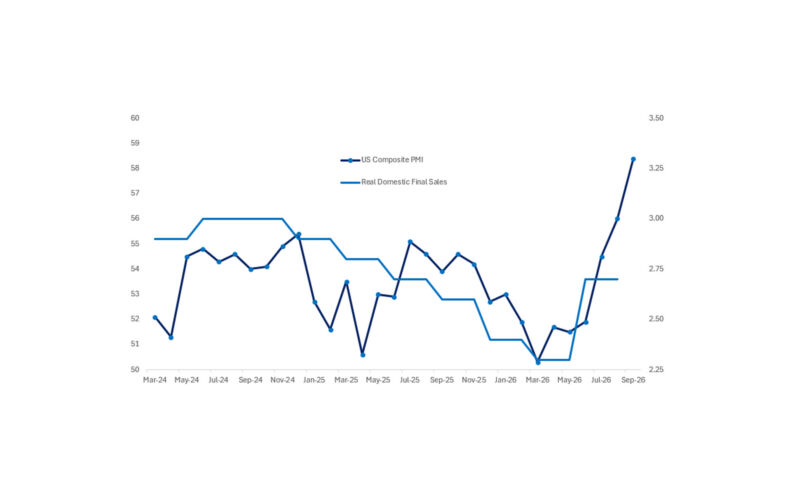
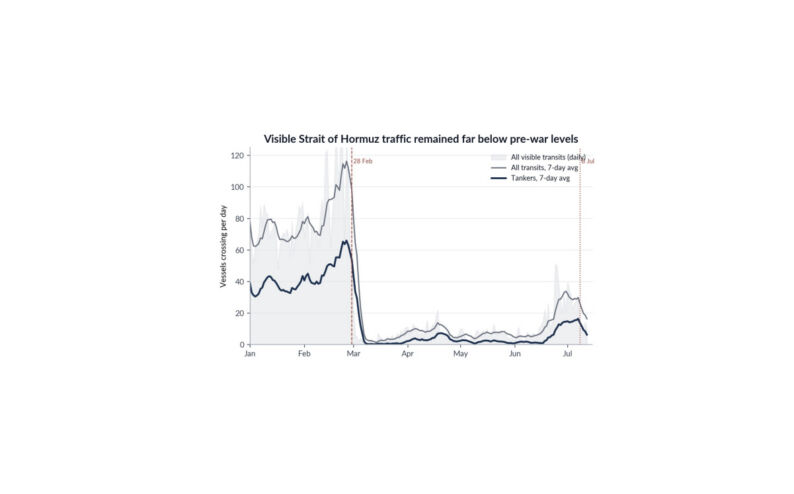
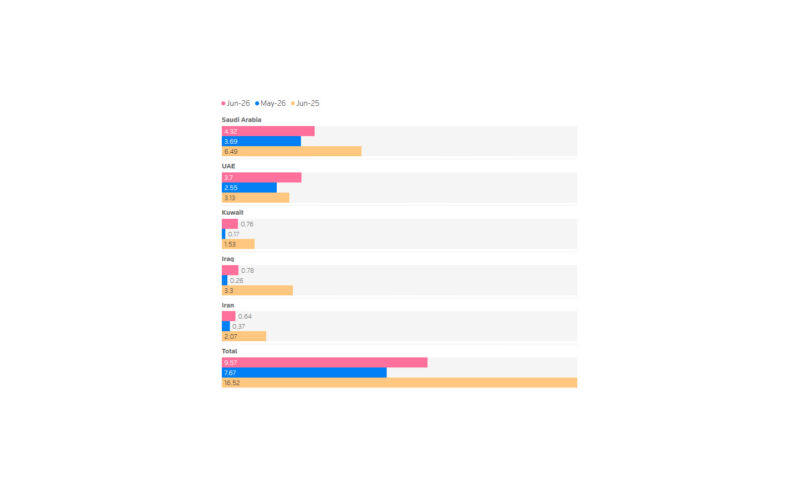
THE FED CAN BREATHE A LITTLE EASIER. The combination of a negative payrolls print, downward revisions to prior months, and two better inflation reports across June and July is likely a significant relief to the Fed…particularly given layoffs, claims and the unemployment rate all remain low. The July CPI report represented an expected rebound from the exceptionally soft June reading…however, the benign surface-level print does not look like an all clear. For instance, the diffusion of core goods inflation appears to be broadening, with more than 55% of the core goods basket now rising in price as the AI capex theme continues to spill into the pricing of technology goods. This matters for the composition of inflation required to run at target, as core goods essentially need to remain close to flat to offset generally stickier services inflation in a post-pandemic world. Additionally, World Cup-related distortions appear to continue weighing on the data…a large decline in hotel prices subtracted around 5bp from the core reading this month, which looks highly unlikely to persist as a source of downside pressure given the robust growth we continue to see in the US economy – the Atlanta Fed is currently tracking 4.3% SAAR for Q3 2026. Moreover, with progress on reopening the Strait of Hormuz remaining excruciatingly slow, it is entirely possible that airfares, which already rose 2.2% MoM, add further upside risk to core inflation over the coming months. The read-through to core PCE looks somewhat firmer than the core CPI print…likely in the mid-20bp range on a seasonally adjusted MoM basis, although a significant share of that strength comes from the volatile portfolio-management category, which will undergo methodological changes over the coming months. Market-based core PCE looks closer to 15bp MoM, which is clearly better news for the Fed. That said, I would be wary of cherry-picking the data to fit a bullish front-end rates narrative…inflation has been above target for most of the past five years, and whilst a high 2% annual pace may prove acceptable to the Fed, it leaves the inflation process with little to no breathing room in a world of constant supply shocks.
Source: Bloomberg, Citadel Securities
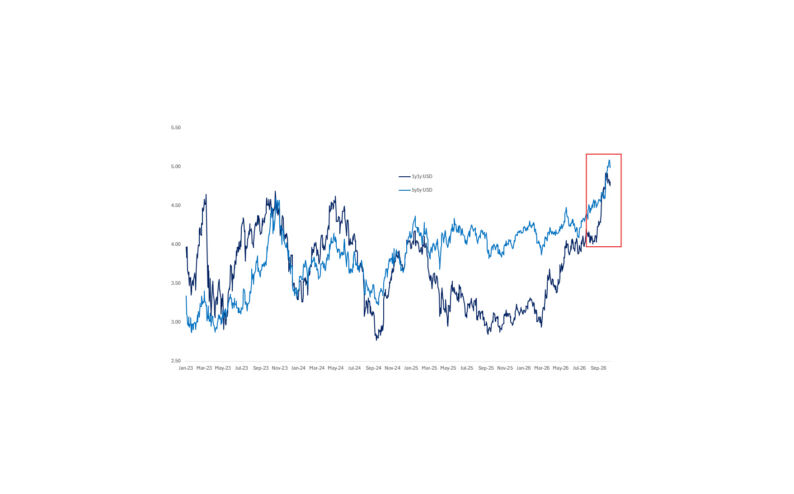
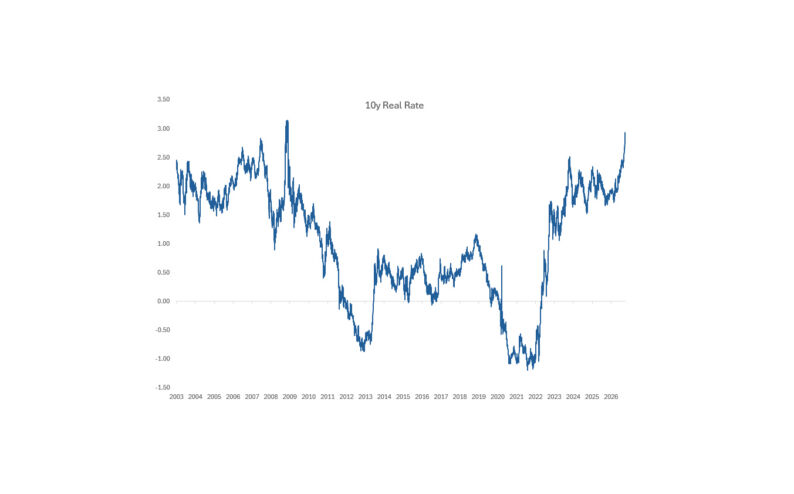
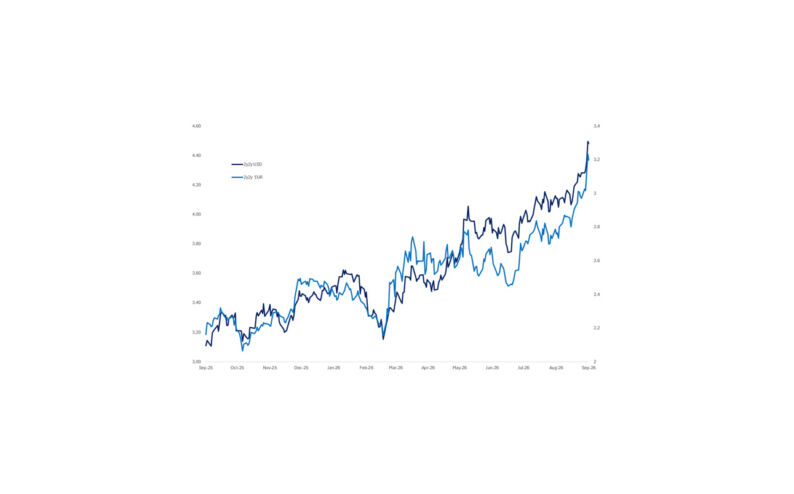
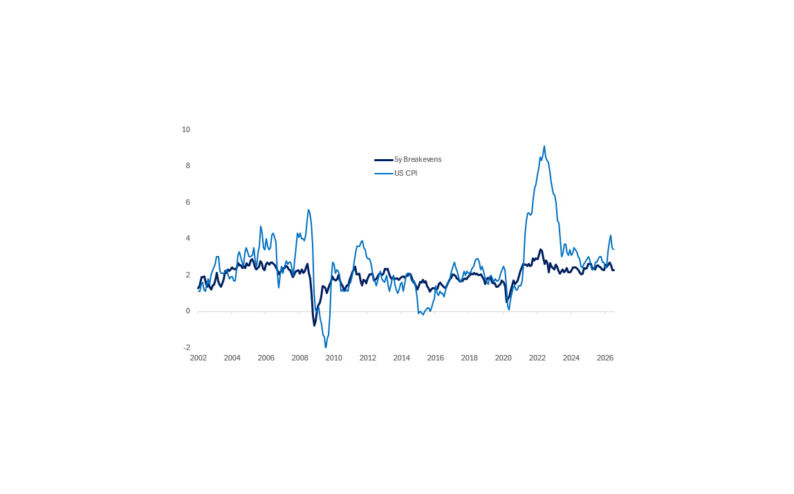
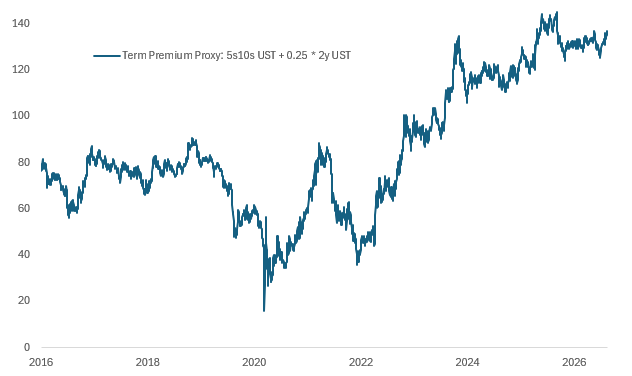
WHAT DOES THIS MEAN FOR THE FOMC? For September, it is a line-ball call. There have now been seven inflation prints this year: five have been bad, one has been good and, assuming the consensus CPI-to-PCE translation holds, one looks fine. That is not particularly dovish. But we have seen time and again that the Fed is willing to place considerable weight on recent improvements in inflation, even after a long run of above-target misses. This dynamic is not lost on the market, which has injected significantly more term premium into the rates curve. In simple terms, despite inflation breakevens trading within 50bp of the target across the curve, long-end yields remain close to cycle highs even though policy rates are 175bp below the cycle peak. In my mind, this reflects a market view that policymakers, both the Fed and fiscal authorities, tend to take the easier route when faced with difficult choices. Inflation is north of 3% and the economy is at full employment…yet any excuse not to hike appears to prevail. Similarly, growth is strong and the labour market is steady…yet we are amidst a fiscal expansion rather than consolidation, despite it being well acknowledged that US fiscal policy is on an unsustainable trajectory with debt outpacing economic growth. The inability of policymakers to make progress on fixing the roof while the sun is shining is a key reason long-end rates remain so stubbornly high. So long as this persists, it will remain a risk for markets more broadly.
Legal Entities Disseminating this Material: This material is disseminated in the United Kingdom by Citadel Securities (Europe) Limited (“CSEL”) regulated by the Financial Conduct Authority (“FCA”) (Registered company number: 05462867); in the European Union by Citadel Securities GCS (Ireland) Limited (“CSGI”) and its Paris Branch regulated by the Central Bank of Ireland (“CBI”) (Registration Number: C173437); in Hong Kong by Citadel Securities (Hong Kong) Limited (“CDHK”) licensed by the Securities and Futures Commission of Hong Kong (“SFC”), in Japan by Citadel Securities Japan Co., Ltd (“CSJC”) registered as a Type 1 financial instruments business operator with the JFSA; and in the United States of America by Citadel Securities LLC (“CDRG”) registered with the Securities Exchange Commission (“SEC”) and Financial Industry Regulatory Authority (“FINRA”), Citadel Securities Institutional LLC (“CSIN”) registered with the SEC and FINRA or Citadel Securities Swap Dealer LLC (“CSSD”) registered with the SEC, Commodities Futures Trading Commission (“CFTC”), and National Futures Association (“NFA”). Unless governing law permits otherwise, you must contact a Citadel Securities entity in your home jurisdiction if you want to use our services in effecting a transaction in any financial instruments or securities, including derivatives.
FOR INSTITUTIONAL USE ONLY; FOR PROFESSIONAL CLIENTS AND ELIGIBLE COUNTERPARTIES ONLY. This material is not intended as and does not constitute investment research. Contents of this material will be strictly limited to non-specific, generic information (i.e. macro events/topics) and are not subject to the Markets in Financial Instruments directive (MiFID II) or FINRA research rules. This material does not constitute an offer, solicitation, invitation, or inducement to purchase, acquire, subscribe to, provide, or sell any financial instrument or otherwise engage in investment activity.
https://www.citadelsecurities.com/privacy/
Please see additional important disclosures, including disclosures that may be relevant to your country of residence or business at: https://www.citadelsecurities.com/disclosures/citadel-securities-fimm-sales-trading-disclosures/