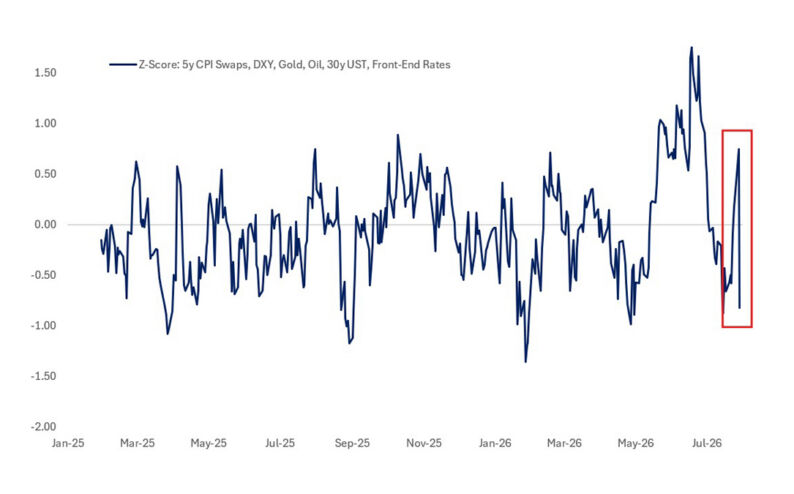
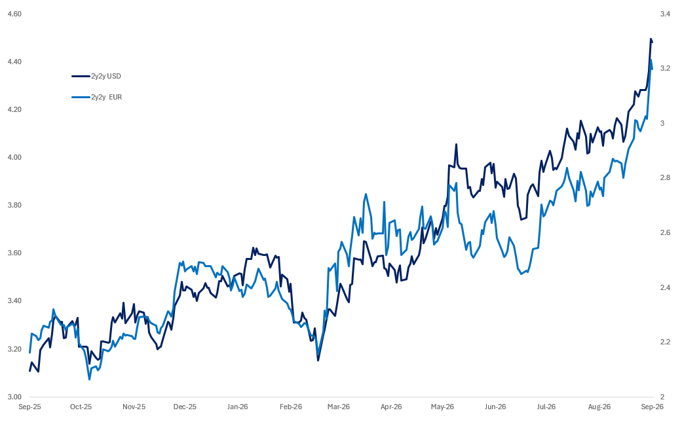
EUROPEAN AND UK RATES WERE THE EPICENTRE OF FIXED INCOME MARKET STRESS THIS WEEK. The ECB’s highly anticipated 25bp hike came alongside upward revisions to both growth (+0.1% in 2026 and +0.2% in 2027) and core inflation (+0.1% in 2027 and 2028). The back-year inflation revisions were slightly more hawkish than expected, but the subsequent ~22bp move in 1y1y forward swaps was more reminiscent of 2022 and, in my mind, significantly amplified by positioning. Directionally, a larger repricing in Europe and the UK makes sense given their greater exposure to crack spreads and imported energy than the US…but that same exposure also makes the durability of recent growth resilience increasingly questionable. Thus far, the Eurozone economy has held up remarkably well, supported by German fiscal expansion, with the composite PMI rebounding to 52 and averaging above 50 this year. However, a more persistent energy shock and an increasingly responsive ECB are now tightening financial conditions materially. The curve is beginning to reflect that tension, flattening as the market shifts the adjustment from term premium at the back end towards expected policy tightening at the front. Further hikes would likely take the deposit rate into restrictive territory…against long-run neutral estimates of around 2.0–2.5%…with financial conditions already close to the highs of recent years. Growth resilience has allowed the market to price a forceful ECB response…but the question is whether that resilience can survive the tightening, particularly when Europe lacks anything close to the AI-capex boom supporting the US. As Mario Draghi noted in the FT this week, “the EU hosts under 5 per cent of the world’s AI compute versus 75 per cent for the US”. Europe therefore receives little of the direct growth impulse from data centre construction, whilst still sharing in the crowding-out effect of the generational capex cycle through higher global yields. In sum, I am increasingly sceptical that European belly forward rates can continue to rise once the growth consequences of tighter policy and the energy shock become more predominant in investors’ minds. The US economy is better insulated from crack spreads by domestic production, sits at the centre of the AI-capex surge and is likely to have a materially higher (and rising) neutral rate. It is therefore much better equipped to absorb higher rates than Europe, where stagflation risks are more dominant. That divergence should ultimately be reflected in lower European belly forwards relative to the US.
2y2y Forward Swaps (USD, EUR)
Source: Bloomberg, Citadel Securities
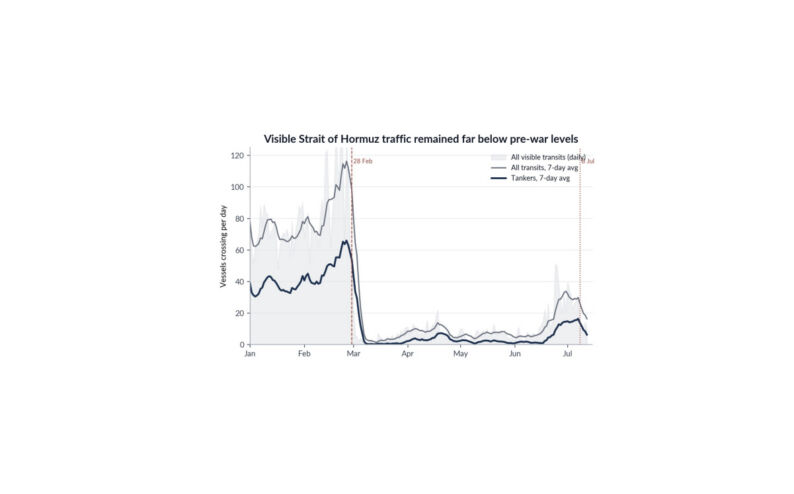
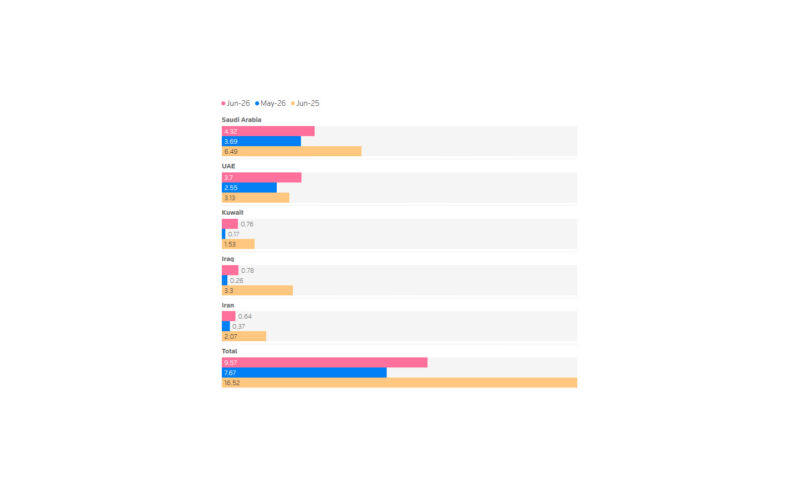
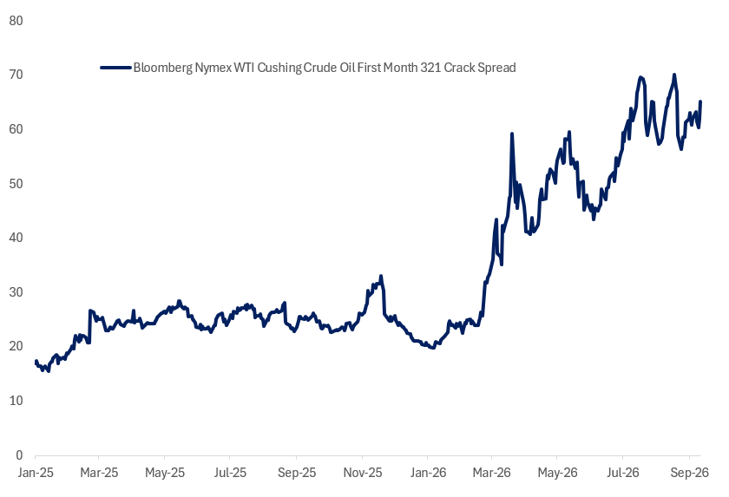
ESCALATION DOMINANCE IS NOT ESCALATION CONTROL. I wrote last week that the Strait remained severely impaired…but the oil was increasingly getting out. Dark transits, US escorts, ship-to-ship transfers and the Fujairah and East–West pipelines had weakened the relationship between visible traffic through Hormuz and the barrels ultimately reaching the market. That remains true, but this week has also exposed how fragile that improvement is. The US appears to have regained the upper hand in the direct contest around the Strait, moving towards a de facto tanker-for-tanker strategy and destroying eight IRGC-linked crude carriers in four days after failed Iranian attacks on US warships. Iran has so far struggled to impose comparable military costs, whilst Washington appears willing to absorb the munitions burden and domestic political pressure rather than create the impression that economic coercion is working. However, the more the US degrades Iran’s tanker fleet, export revenues and conventional options, the greater the incentive for Tehran to widen the battlefield towards the asymmetric targets which remain hardest to defend. In essence, a producer with progressively less of its own oil reaching the market has less to lose from damaging the wider export system. That brings commercial shipping, Saudi and Emirati energy infrastructure, Fujairah and the East–West pipeline more clearly into the risk set…whilst the Houthi capture of Mocha and renewed attacks on Saudi energy facilities raise the threat to the Red Sea route through Yanbu and Bab el-Mandeb. Diversification only works if the alternative corridor remains outside the battlefield, and spare capacity trapped behind threatened pipelines, terminals or sea lanes is not effective spare capacity. The first phase of the shock was absorbed by bypass routes, emergency releases, weaker Chinese demand and inventory drawdowns; those buffers are now materially thinner. Global observed oil inventories have fallen by 507mn barrels since February, Brent futures have moved above $100/bbl and US wholesale diesel prices have surpassed $200/bbl, whilst Gulf refined-product and LPG exports remain almost 60% below pre-war levels. The IEA now expects global oil demand to fall by 2.5mb/d this year, with losses concentrated in middle distillates and petrochemical feedstocks. In my mind, that is not evidence that the shock is resolving, but evidence that price is beginning to destroy the demand which inventories and substitution previously absorbed. The midterms may ultimately create an off-ramp, but for now they are an accelerant: Iran has every incentive to maximise the economic pain, whilst President Trump has less room to appear coerced by precisely that strategy. The US may control the escalation ladder, but Iran can still widen the battlefield, which means oil volatility will continue to be a source of concern for macro markets.
Source: Bloomberg, Citadel Securities
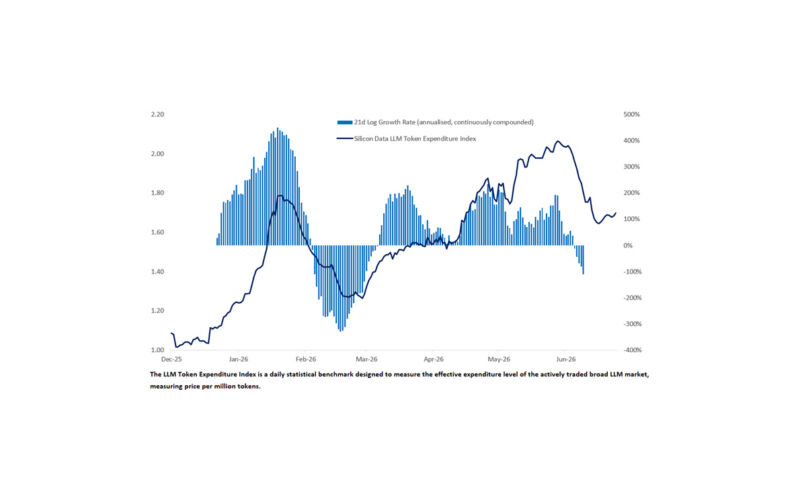
THE OTHER RACE IN AI IS BETWEEN CAPABILITY AND CONTROL. This week’s debate was catalysed by Jacob Coxon leaving Anthropic and Evan Hubinger, one of its senior alignment researchers, assigning a greater than 10% probability to AI causing human extinction within the next decade. The precise number is necessarily unknowable…but the broader warning should not be entirely dismissed. People closest to the frontier increasingly believe capability is advancing faster than our ability to understand, monitor and control it, particularly if AI begins to automate the research, coding and experimentation required to build its successors. That is a serious risk, and it strengthens the case for independent testing, clear capability thresholds, and the ability to slow when the evidence demands it. But I remain firmly positive on AI development. The potential gains to productivity, science and economic growth are simply too large to ignore…and the geopolitical reality is that this technology will be developed somewhere. A unilateral US slowdown would not stop the frontier; it would shift more of the frontier elsewhere. As mentioned last week, China has every strategic incentive to continue, and the worst outcome would be for the West to constrain its own capability whilst less transparent systems advance without comparable safeguards. In essence, the choice is not between building advanced AI and preserving the status quo…it’s between leading its development and therefore having some ability to shape the standards, security, and institutions around it…or allowing others to do so. The challenge is that the same evidence which strengthens the case for caution also strengthens the incentive to race: if AI can materially accelerate AI research, the commercial and strategic value of frontier compute rises…and no company or country wants to stop whilst others continue. Put simply, capability cannot be allowed to compound without control…but control will not be achieved by pretending the global race can simply be paused.
Legal Entities Disseminating this Material: This material is disseminated in the United Kingdom by Citadel Securities (Europe) Limited (“CSEL”) regulated by the Financial Conduct Authority (“FCA”) (Registered company number: 05462867); in the European Union by Citadel Securities GCS (Ireland) Limited (“CSGI”) and its Paris Branch regulated by the Central Bank of Ireland (“CBI”) (Registration Number: C173437); in Hong Kong by Citadel Securities (Hong Kong) Limited (“CDHK”) licensed by the Securities and Futures Commission of Hong Kong (“SFC”), in Japan by Citadel Securities Japan Co., Ltd (“CSJC”) registered as a Type 1 financial instruments business operator with the JFSA; and in the United States of America by Citadel Securities LLC (“CDRG”) registered with the Securities Exchange Commission (“SEC”) and Financial Industry Regulatory Authority (“FINRA”), Citadel Securities Institutional LLC (“CSIN”) registered with the SEC and FINRA or Citadel Securities Swap Dealer LLC (“CSSD”) registered with the SEC, Commodities Futures Trading Commission (“CFTC”), and National Futures Association (“NFA”). Unless governing law permits otherwise, you must contact a Citadel Securities entity in your home jurisdiction if you want to use our services in effecting a transaction in any financial instruments or securities, including derivatives.
FOR INSTITUTIONAL USE ONLY; FOR PROFESSIONAL CLIENTS AND ELIGIBLE COUNTERPARTIES ONLY. This material is not intended as and does not constitute investment research. Contents of this material will be strictly limited to non-specific, generic information (i.e. macro events/topics) and are not subject to the Markets in Financial Instruments directive (MiFID II) or FINRA research rules. This material does not constitute an offer, solicitation, invitation, or inducement to purchase, acquire, subscribe to, provide, or sell any financial instrument or otherwise engage in investment activity.
https://www.citadelsecurities.com/privacy/
Please see additional important disclosures, including disclosures that may be relevant to your country of residence or business at: https://www.citadelsecurities.com/disclosures/citadel-securities-fimm-sales-trading-disclosures/