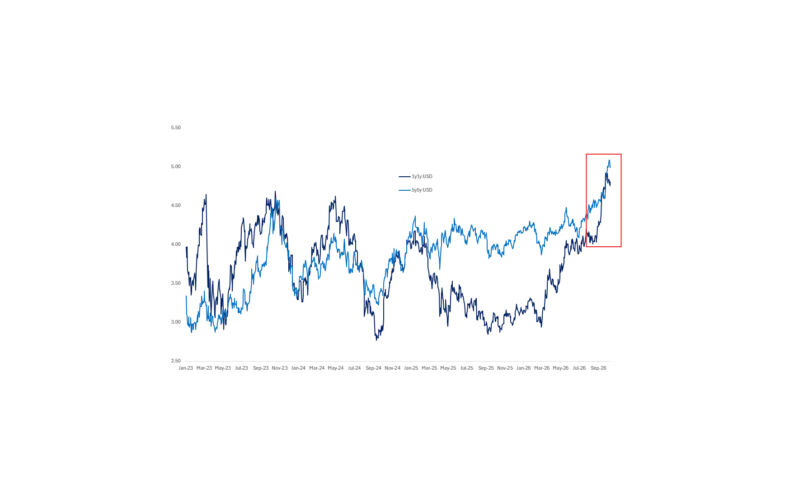
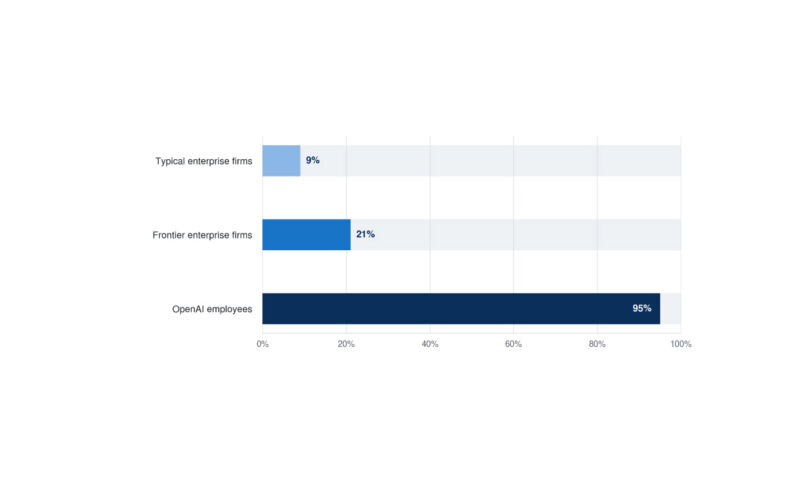
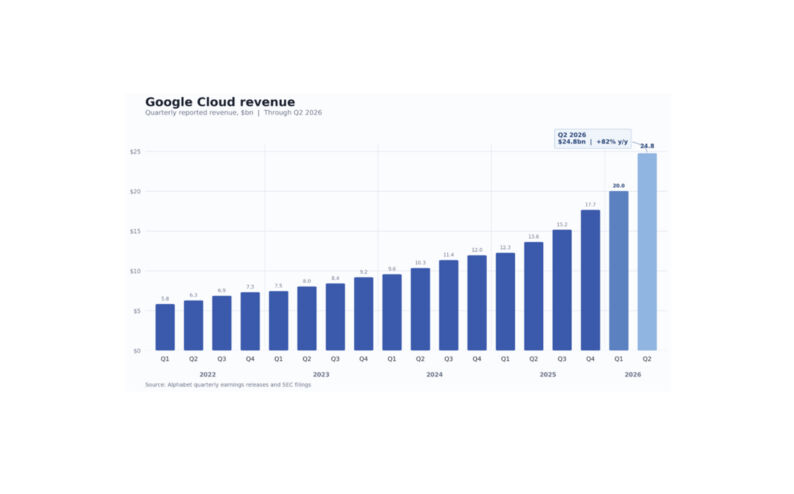
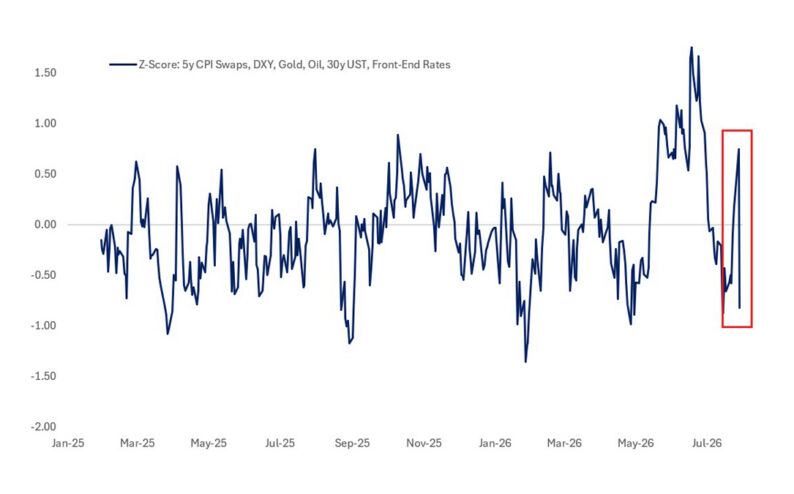
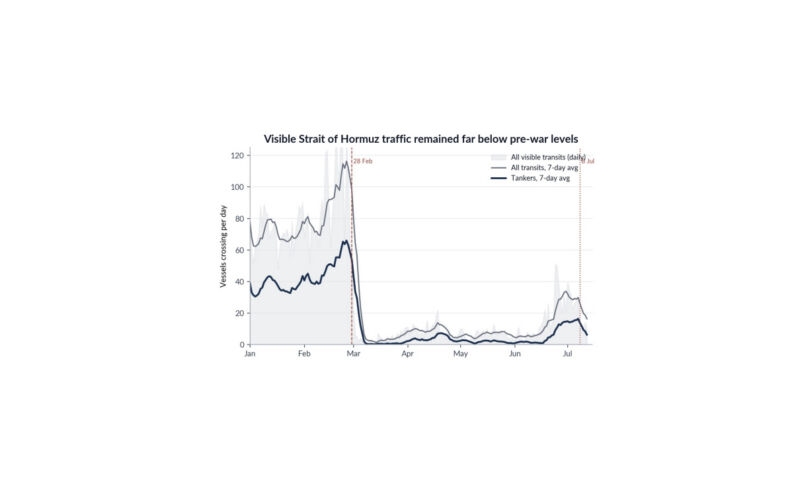
THE AI BOOM IS DISCOVERING THAT CAPITAL HAS A COST. This week’s sell-off has brought the credit market’s warning into equities…CoreWeave lost a quarter of its value, with its unsecured 2032 bonds yielding close to 15% as concerns about financing the buildout intensified. Hock Tan’s questions about enterprise returns, Gartner’s warning about neocloud viability and renewed expectations of higher Fed rates provided mutually reinforcing catalysts. But in my mind, the important distinction is between questioning demand for intelligence and questioning the economics of supplying it. Anthropic’s reported Q3 revenues rose approximately 45% sequentially to $16.8bn, alongside adjusted profitability…hardly evidence of demand disappearing (although even extraordinary growth can disappoint when expectations are more extraordinary still!). This reinforces the argument running through my recent notes: adoption, revenues and returns on invested capital are different propositions. Higher yields make the distinction between the ability to raise capital and earning an adequate return on that capital more acute. It raises the cost of new financing for the infrastructure required to generate future earnings, thereby presenting a deeper problem than the familiar discount-rate problem for long-duration equities. CoreWeave’s Q2 results illustrate this point emphatically: a 59% adjusted EBITDA margin translated into just a 5% adjusted operating margin, before $640mn of quarterly net interest expense. Depreciation and financing sit at the heart of these economics…contracted revenues must ultimately generate the cash to service the debt. However, as our credit team notes, AA hyperscaler spreads at roughly 100bp over the risk-free rate still imply substantial financing access, which means that capital is becoming more selective, not uniformly unavailable…and the buildout remains led by investment-grade companies who’s spending substantially exceeds that of the leveraged neoclouds. The adjustment may therefore involve more equity at weaker borrowers and more financing responsibility migrating towards stronger balance sheets, rather than an outright collapse in aggregate investment. Crucially, frontier developers funding successive generations of models, leveraged providers renting out depreciating hardware and diversified hyperscalers monetising compute, distribution and enterprise workflows are not all the same economic proposition. This reinforces my preference for cash-generative, diversified hyperscalers. Their opportunity does not depend on one model retaining its lead, whilst established cash flows provide greater flexibility to absorb deployment delays and pricing pressure. That is the distinction I have been drawing between owning the frontier and participating in the broader deployment of intelligence. Nevertheless, strong balance sheets buy time, not immunity from poor returns…and a continuing buildout does not automatically protect existing shareholders from dilution or weaker economics. In sum, I remain bullish on the deployment of intelligence…but increasingly selective about the business models and balance sheets financing it.
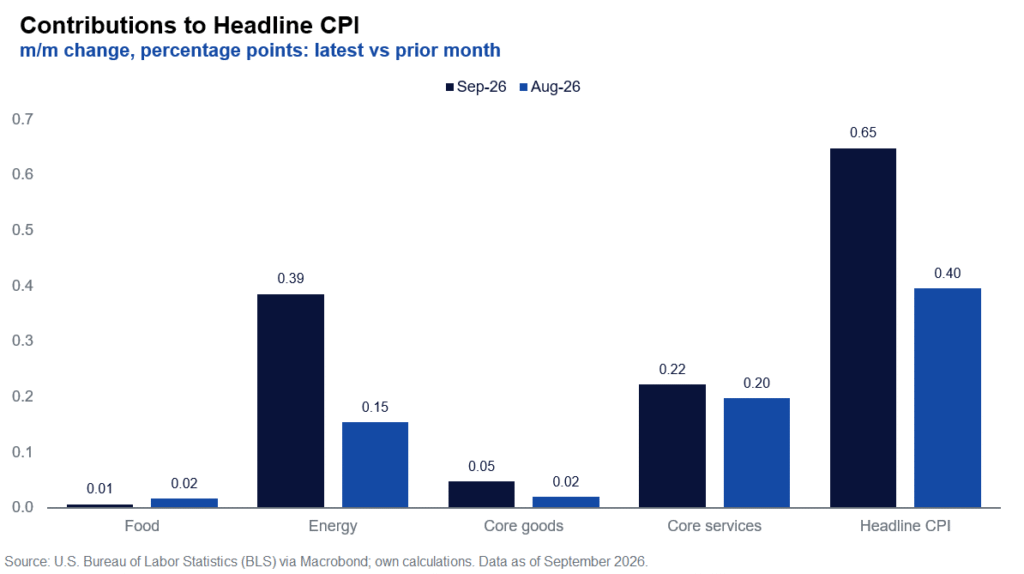
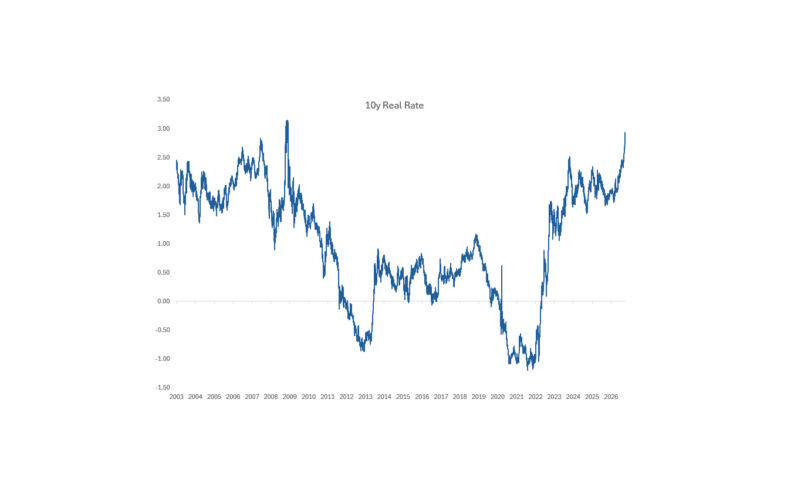
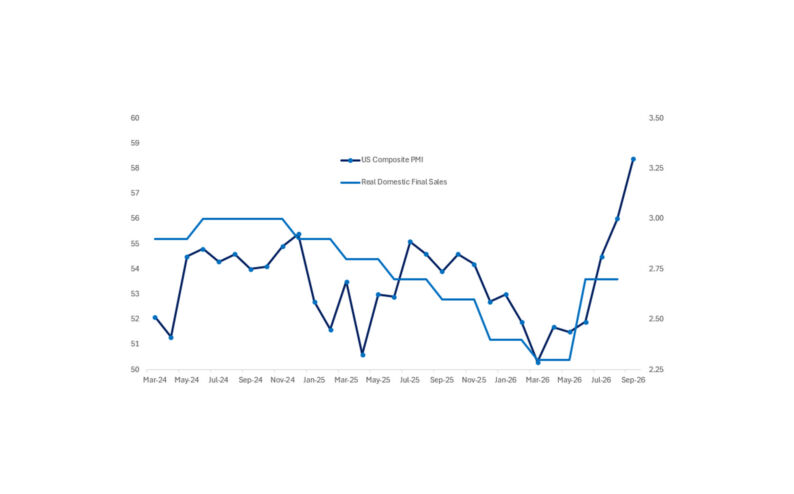
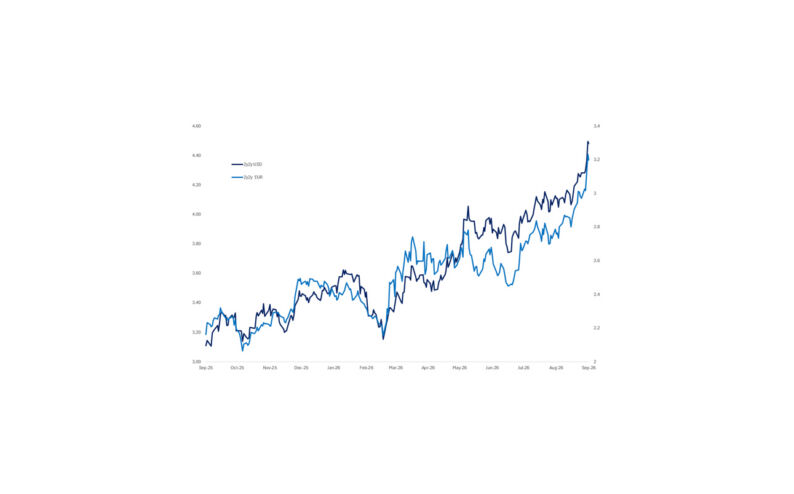
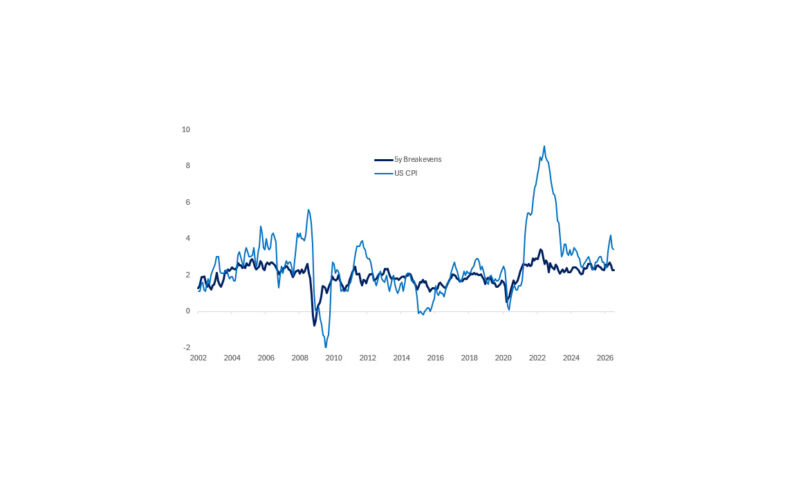
THE SEPTEMBER INFLATION REPORT WAS “DISCOURAGING”…in the words of Chicago Fed President Austan Goolsbee. Core CPI rose 33.5bp MoM, taking the 3m annualised rate to 3.4%, above the 2.6% YoY reading…with both core goods and services accelerating to monthly rates of 25.1bp and 36.9bp, respectively. This was more than another energy-driven headline surprise, reflecting a broadening of underlying price pressures. Early estimates also point to a similarly firm September core PCE print. That is inconvenient for an FOMC whose senior voices have spent recent weeks pushing back against the urgency of another hike. Williams explicitly argued there was no urgency after September’s move, whilst Jefferson emphasised the need for more time to assess the data…not a formal commitment to hold, but guidance that becomes less comfortable as inflation reaccelerates. With unemployment still at 4.2%, the incoming data strengthen the case for further tightening…but my expectation remains that the Committee waits until December rather than reversing its October signalling. Perhaps the more revealing development was the market reaction: Treasuries initially sold off on CPI, then reversed as stocks weakened, with the rally extending thereafter. Positioning and a flight to safety may explain part of that move…but it is also consistent with investors beginning to question the growth assumptions underpinning the tightening trade. As I have argued in recent weeks, the AI boom supports demand whilst creating an increasingly substantial claim on capital markets…helping explain why stronger growth, higher real yields and resilient risk assets could coexist. But that mechanism can work in reverse. In my mind, the marginal US growth story…and the earnings expectations underpinning equity markets…has become an increasingly levered bet on AI. An equity correction alone does not invalidate that story, particularly if stronger balance sheets sustain the buildout. But a sustained retrenchment in capex and financing would be different…weakening investment, tightening credit, and threatening consumption through lower household wealth, whilst easing competition for capital and, over time, some of the demand pressure on inflation. The same cycle that has helped the economy absorb higher rates could therefore make it considerably more vulnerable if it turns. That would not make the energy shock or persistent inflation disappear overnight…but it would leave the Fed confronting a materially weaker prospective economy alongside still-uncomfortable backward-looking data. Hiking into that deterioration would be a very different proposition from leaning against an investment boom. In essence, further hikes remain my base case whilst the boom holds…but if the AI investment cycle breaks, my expectation of further tightening breaks with it.
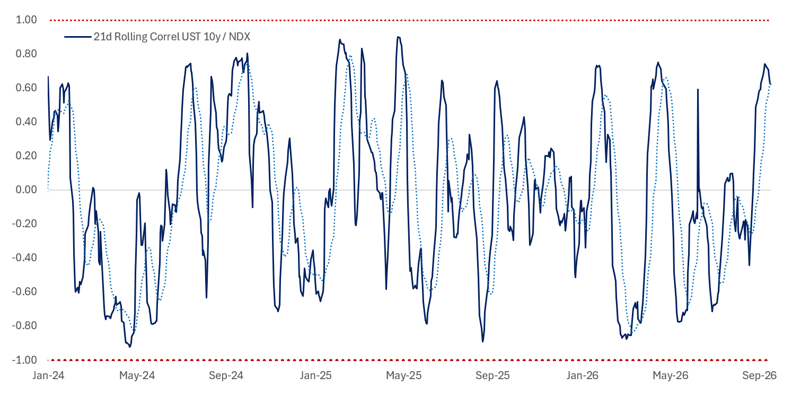
Source: Bloomberg, Citadel Securities
I DO NOT READ THIS WEEK’S EQUITY SELL-OFF AS THE END OF THE AI INVESTMENT CYCLE. Demand for compute and inference remains healthy, the runway for diffusion is substantial and financial conditions remain loose…a reassessment of financing and returns is different from the growth story breaking. But we have had a preview of what might happen if it does. The 21d rolling correlation between the Nasdaq and 10y Treasury yields has flipped from –0.44 in mid-September to +0.77 this week…consistent with price action becoming more sensitive to growth and risk appetite. As equities weakened, yields fell and bonds provided protection, despite the upside inflation surprise. My bullish US growth view remains increasingly levered to AI…and a collapse severe enough to impair capex, financing and household wealth would change the Fed’s problem entirely. Inflation would not disappear overnight, but I would expect deteriorating growth to displace it as the dominant policy concern…undermining the case for further hikes whilst easing the competition for capital that has helped push yields higher. One week does not establish a lasting change in correlations, nor does it make bonds a hedge against every equity sell-off. But it does suggest that duration can provide protection against the particular risk that would invalidate my bullish growth view. Bonds can still offer insurance against the AI trade.
Copyright © Citadel Enterprise Americas LLC or one of its affiliates. All rights reserved.
Legal Entities Disseminating this Material: This material is disseminated in the United Kingdom by Citadel Securities (Europe) Limited (“CDGE”) authorized and regulated by the Financial Conduct Authority (“FCA”) (Registered company number: 05462867); in the European Union by Citadel Securities GCS (Ireland) Limited (“CSGI”) and its Paris Branch authorized and regulated by the Central Bank of Ireland (“CBI”) (Registration Number: C173437); in Hong Kong by Citadel Securities (Hong Kong) Limited (“CDHK”) licensed by the Securities and Futures Commission of Hong Kong (“SFC”), in Japan by Citadel Securities Japan Co., Ltd (“CSJC”) registered as a Type 1 financial instruments business operator with the Japan Financial Services Agency (“JFSA”); and in the United States of America by Citadel Securities LLC (“CDRG”) registered with the Securities Exchange Commission (“SEC”), Financial Industry Regulatory Authority (“FINRA”), and Securities Investor Protection Corporation (“SIPC”), Citadel Securities Institutional LLC (“CSIN”) registered with the SEC, FINRA, and SIPC, or Citadel Securities Swap Dealer LLC (“CSSD”) registered with the SEC, Commodities Futures Trading Commission (“CFTC”), and National Futures Association (“NFA”). Unless governing law permits otherwise, you must contact a Citadel Securities entity in your home jurisdiction if you want to use our services in effecting a transaction in any financial instruments or securities, including derivatives.
FOR INSTITUTIONAL USE ONLY; FOR PROFESSIONAL CLIENTS AND ELIGIBLE COUNTERPARTIES ONLY. This material is not intended as and does not constitute investment research. Contents of this material will be strictly limited to non-specific, generic information (i.e. macro events/topics) and are not subject to the Markets in Financial Instruments directive (MiFID II) or FINRA research rules. This material does not constitute an offer, solicitation, invitation, or inducement to purchase, acquire, subscribe to, provide, or sell any financial instrument or otherwise engage in investment activity. Please see additional important disclosures, including disclosures that may be relevant to your country of residence or business at www.citadelsecurities.com/GlobalSalesTrading.