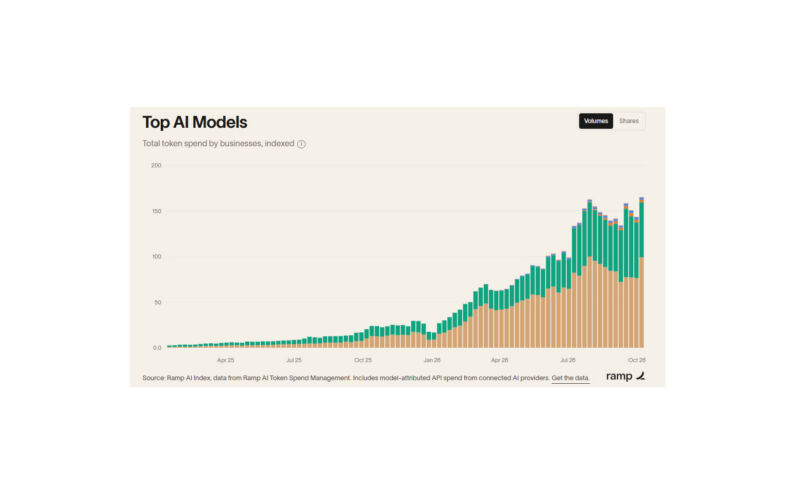
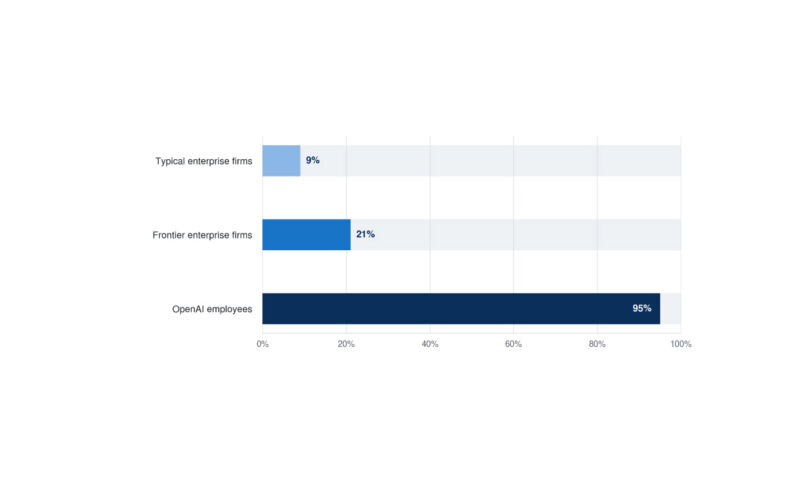
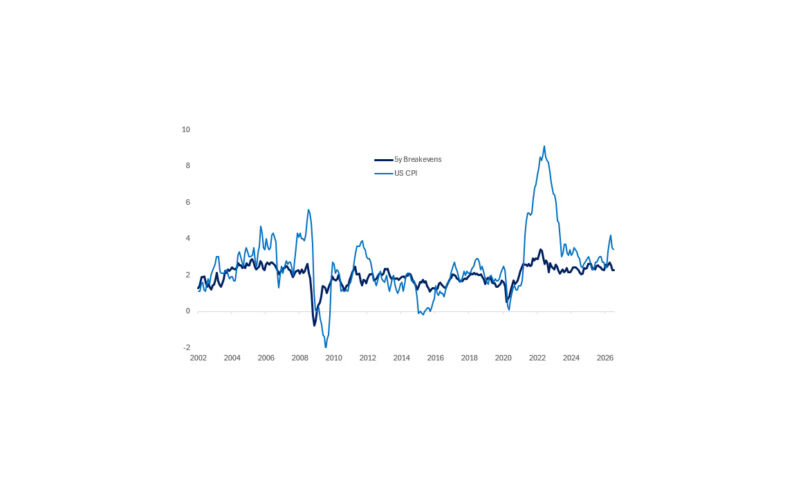
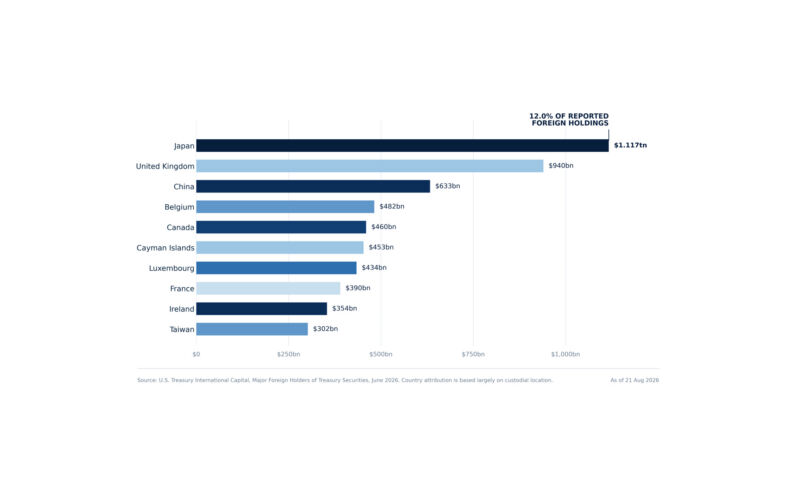
THIS IS WHAT A NARROW MARGIN OF SAFETY LOOKS LIKE. Last week I warned that a market increasingly dependent on the AI narrative had precious little room for disappointment. Capex itself has become a two-sided risk…spend too much and investors question the returns; pull back and they question the demand. This week’s sharp technology sell-off has exposed that vulnerability…extraordinary growth is offering diminishing protection when delivering it consumes ever more cash. Free cash flow is becoming a dividing line, with investors penalising cash burn and deteriorating cash-generation prospects. For Alphabet, even a doubling of cloud revenues could not offset concerns about search monetisation and the financing demands of the buildout. In my mind, the market is becoming increasingly defensive…giving greater weight to threats to existing profit pools than the promise of future growth. In essence, the burden of proof is rising just as the financial commitments become harder to reverse. Anthropic’s S-1 illustrates the tension…H1 revenues surged to $16.3bn from $1.2bn a year earlier, with Q2 delivering $974mn of operating profit. Compute and infrastructure expenses fell from 251% of revenues in Q1 2025 to 48% in Q2 2026, as revenue growth outpaced the committed cost base and model efficiency improved. Yet the next buildout brings compute costs online ahead of the revenues they support…a mismatch Anthropic warns can squeeze margins even as the underlying economics improve. The competitive arithmetic remains demanding…as Frank Flight’s latest note highlights, consumption-weighted token prices have roughly halved over six months, token volumes have increased around fivefold and B200 rental rates have risen 27.5%. Cheaper intelligence is stimulating substantial usage, whilst scarce compute is becoming more expensive. Combining those price and rental changes implies a 2.55-fold increase in throughput merely to preserve the compute-related serving-margin percentage…an illustrative calculation, rather than an estimate of any individual lab’s profitability. The question is how much of each efficiency gain producers can retain before competition passes it through to customers. Locking in compute costs can reduce exposure to rising spot prices but creates an obligation to keep that capacity productively employed…the risk shifts towards future utilisation and pricing. Damodaran’s framework is useful for the same reason…it makes explicit how much the ANT investment case depends on premium positioning, durable margins and the reinvestment required to sustain growth.
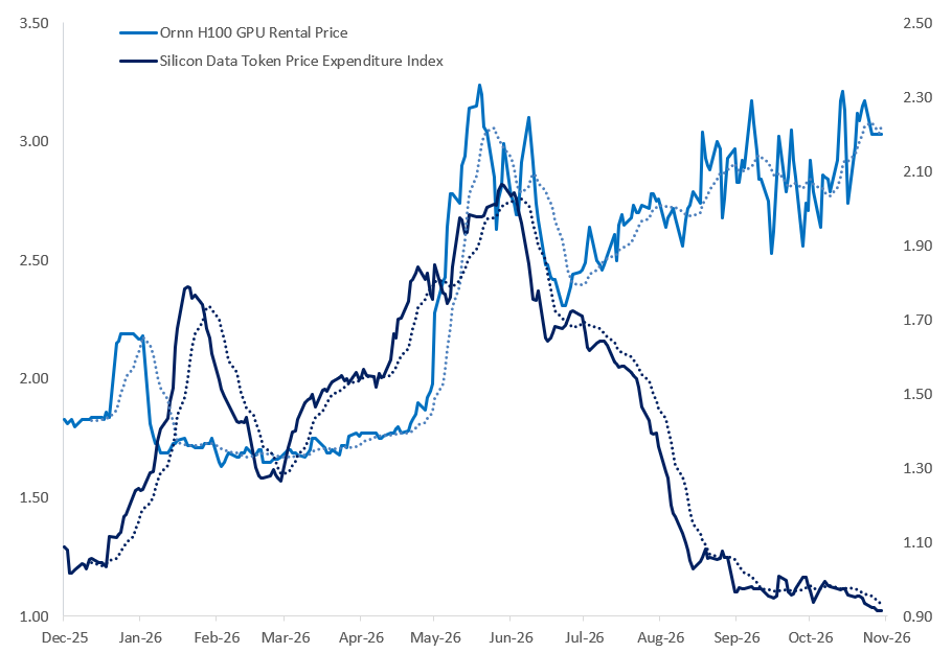
Source: Ornn, Silicon Data, Citadel Securities, data as of Oct 2026. Figures are for illustrative purposes only. Past performance does not guarantee future returns
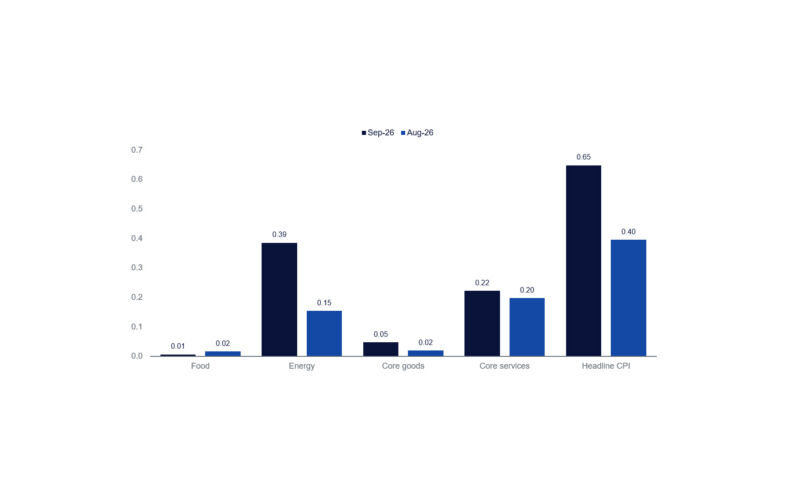
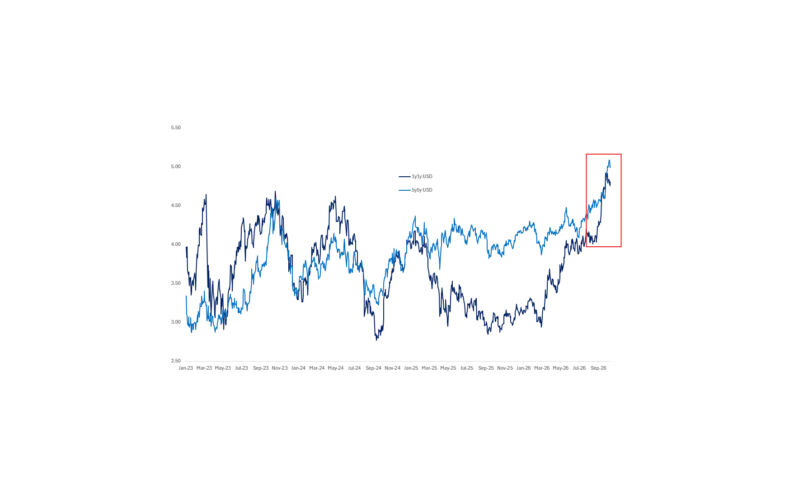
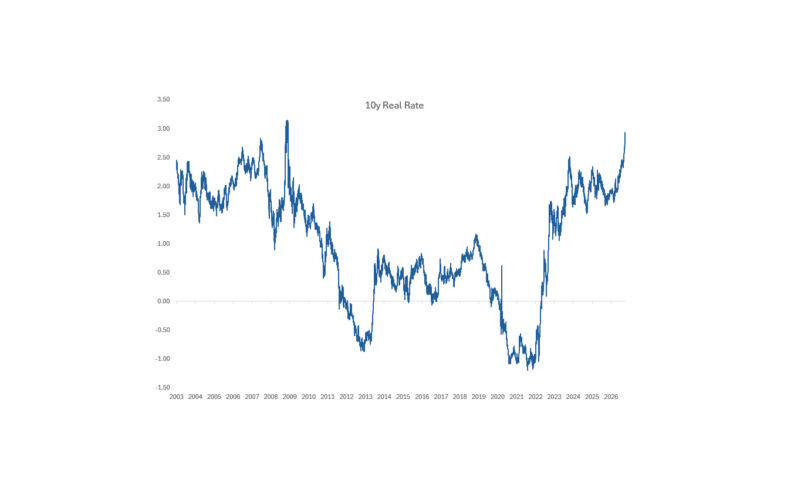
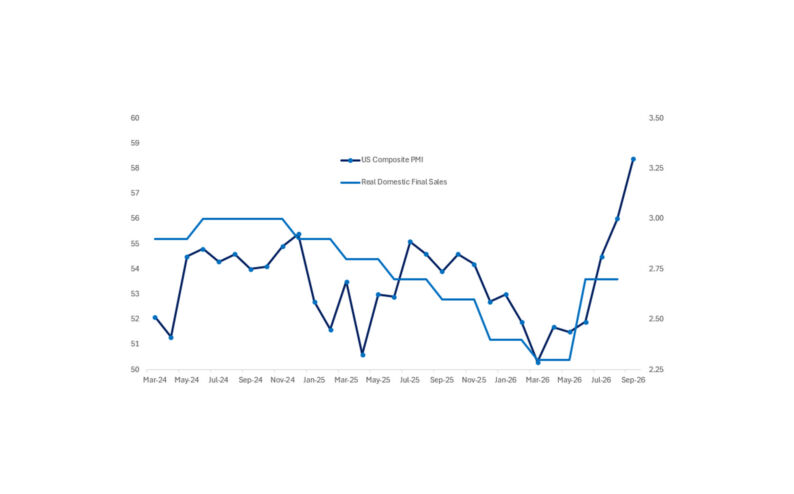
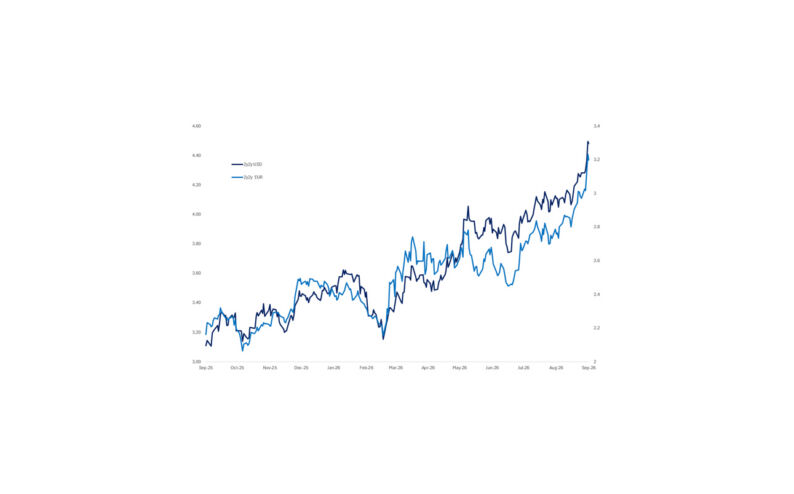
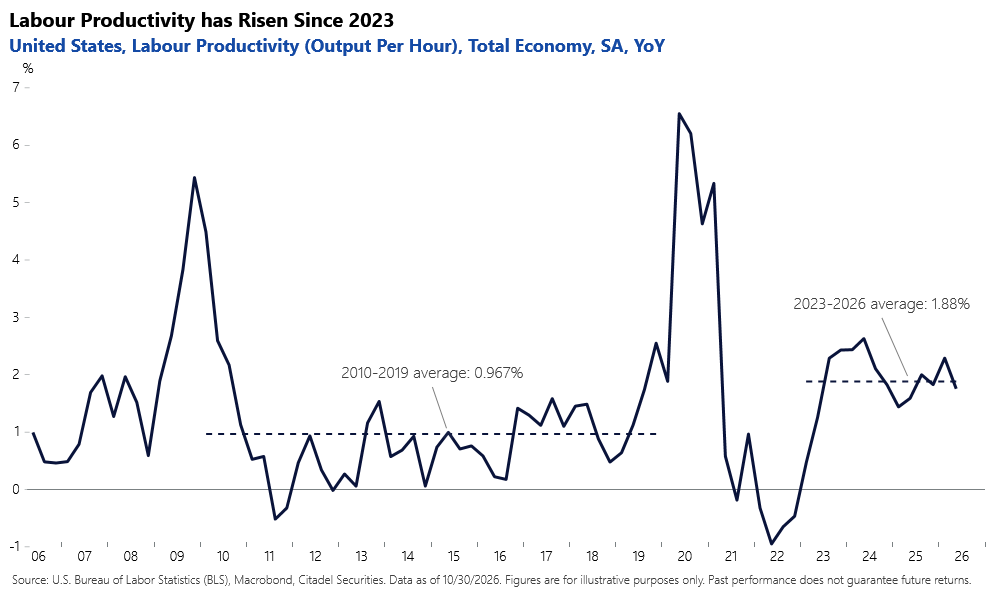
THE FED’S DECISION TO LEAVE RATES UNCHANGED AT 3.75–4%, with Cook and Hammack dissenting in favour of another 25bp hike suggests the direction of travel for policy rates remains intact as the Fed follows other central banks into what looks like an every-other-meeting cadence. Thursday’s data (Sep Core PCE +0.32%; Q3 GDP +3.4%; private domestic demand +4.9%) is a reminder that growth remains resilient and inflation is still elevated…a combination that provides little reason to declare the adjustment complete. Indeed, Chair Warsh remains “unwilling and unable” to call financial conditions tight, broadly welcoming tighter credit and more discerning capital allocation as an expected outcome of Fed action. That said, the Fed is clearly watching transmission through markets…this isn’t necessarily hawkish or dovish but implies that policy rate decisions are endogenous to broad FCI…so the more work the market does, the less the Fed needs to do and vice versa. There were also changes to the schedule: it looks like the October meeting will become a strategy meeting with no statement or policy decision, implying Warsh is making some incremental changes to the Fed’s modus operandi. I don’t read this as particularly relevant for the policy direction and expect another 25bp hike in December, provided growth remains resilient and financial conditions avoid a disruptive tightening. Ultimately, with nominal GDP growth still close to 6%, returning inflation sustainably to target requires tighter financial conditions. The question for markets is how much further FCI must tighten before the Fed considers them restrictive enough. In the long term, productivity is the critical release valve…allowing more growth with less inflationary pressure, whilst expanding the tax base and improving the longer-term fiscal arithmetic. This is why the AI boom matters well beyond technology stocks…its investment impulse is already supporting demand, whilst the scale and timing of a sustained AI-led acceleration in aggregate productivity remain uncertain. The mismatch in timing of the macroeconomic costs (inflation) versus the payoff (productivity) is likely to keep policy tight until we see clearer evidence of productivity in the economic data…which history tells us takes time.
THE BULLISH NARRATIVE IS STRUGGLING TO ABSORB AN INCREASING NUMBER OF RISKS. A Democratic sweep of Congress seems increasingly plausible, with the latest Ipsos survey showing a nine-point advantage among likely voters on the generic congressional ballot, whilst prediction markets put the chances above 90% for the House and 70% for the Senate. I would be wary of assuming that divided government automatically delivers fiscal restraint or a quieter policy environment…it could equally make a durable fiscal settlement harder to achieve. Meanwhile, Israel’s deadlocked election keeps Netanyahu in office during coalition negotiations, with pressure for further action against Iran likely to persist. Reports point to preparations for a possible multi-day US campaign after the mid-terms, pending President Trump’s final decision. A 3-to-10-day exchange largely contained to military targets is one scenario…but it requires both sides to keep accepting the other’s definition of a proportionate response. Israeli strikes or assassinations could induce Iranian attacks on energy infrastructure, turning a supposedly limited operation into a much more consequential economic shock. Ukraine’s reported strike on a Russian refinery also ends a two-week pause in attacks…another reminder of how fragile restraint around energy infrastructure remains. Moreover, the Binance hack adds to investor anxiety around cyber risk, coming just a week after warnings that AI is accelerating the exploitation of software vulnerabilities. AI involvement in this particular attack remains unconfirmed, but the incident arrives as concerns about AI-enabled threats to the financial system are growing. This is where the risks begin to reinforce one another. Renewed disruption to oil supply could weaken real incomes and sustain inflation, complicating the Fed’s reaction function further just as the AI complex needs ever greater access to capital. Within AI, falling token prices and rising compute costs increase the importance of maintaining inference-efficiency gains; a slowdown in those gains would make the margin assumptions much harder to defend. Remember, technological progress can coexist with disappointing investment returns. In sum, the strength of the AI narrative has so far overshadowed mounting political, geopolitical, and financial risks…but as these proliferate, any loss of confidence in AI returns leaves the economy and markets with very little margin for error.
Copyright © Citadel Enterprise Americas LLC or one of its affiliates. All rights reserved.
Legal Entities Disseminating this Material: This material is disseminated in the United Kingdom by Citadel Securities (Europe) Limited (“CDGE”) authorized and regulated by the Financial Conduct Authority (“FCA”) (Registered company number: 05462867); in the European Union by Citadel Securities GCS (Ireland) Limited (“CSGI”) and its Paris Branch authorized and regulated by the Central Bank of Ireland (“CBI”) (Registration Number: C173437); in Hong Kong by Citadel Securities (Hong Kong) Limited (“CDHK”) licensed by the Securities and Futures Commission of Hong Kong (“SFC”), in Japan by Citadel Securities Japan Co., Ltd (“CSJC”) registered as a Type 1 financial instruments business operator with the Japan Financial Services Agency (“JFSA”); and in the United States of America by Citadel Securities LLC (“CDRG”) registered with the Securities Exchange Commission (“SEC”), Financial Industry Regulatory Authority (“FINRA”), and Securities Investor Protection Corporation (“SIPC”), Citadel Securities Institutional LLC (“CSIN”) registered with the SEC, FINRA, and SIPC, or Citadel Securities Swap Dealer LLC (“CSSD”) registered with the SEC, Commodities Futures Trading Commission (“CFTC”), and National Futures Association (“NFA”). Unless governing law permits otherwise, you must contact a Citadel Securities entity in your home jurisdiction if you want to use our services in effecting a transaction in any financial instruments or securities, including derivatives.
FOR INSTITUTIONAL USE ONLY; FOR PROFESSIONAL CLIENTS AND ELIGIBLE COUNTERPARTIES ONLY. This material is not intended as and does not constitute investment research. Contents of this material will be strictly limited to non-specific, generic information (i.e. macro events/topics) and are not subject to the Markets in Financial Instruments directive (MiFID II) or FINRA research rules. This material does not constitute an offer, solicitation, invitation, or inducement to purchase, acquire, subscribe to, provide, or sell any financial instrument or otherwise engage in investment activity. Please see additional important disclosures, including disclosures that may be relevant to your country of residence or business at www.citadelsecurities.com/GlobalSalesTrading.