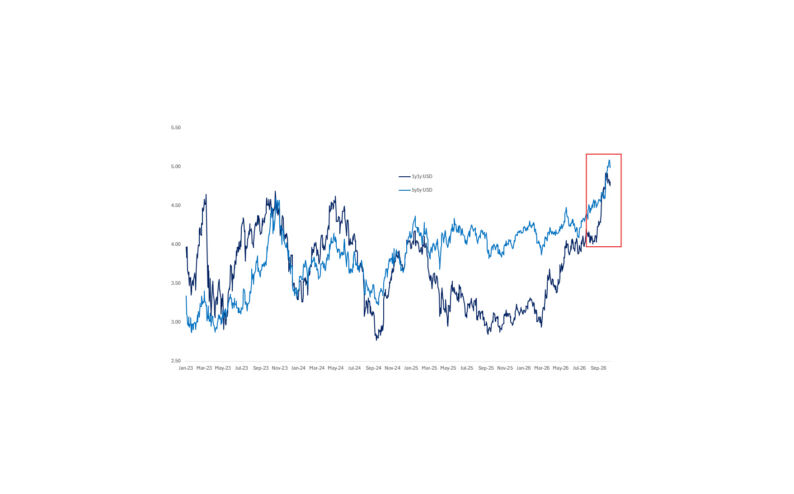
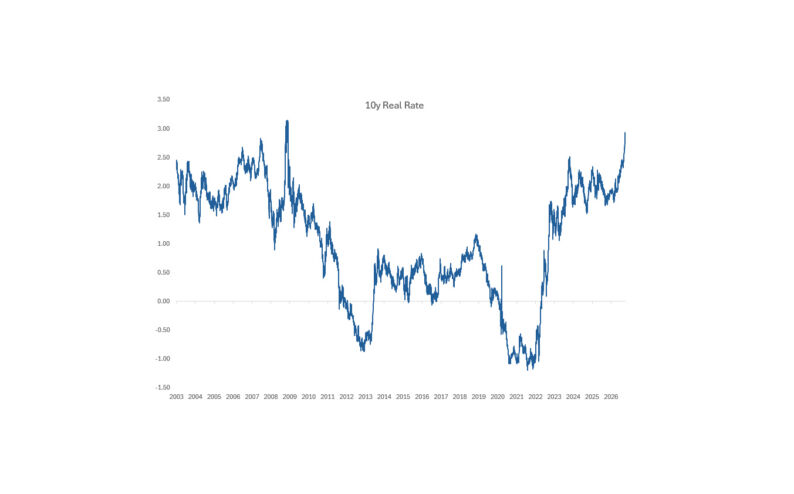
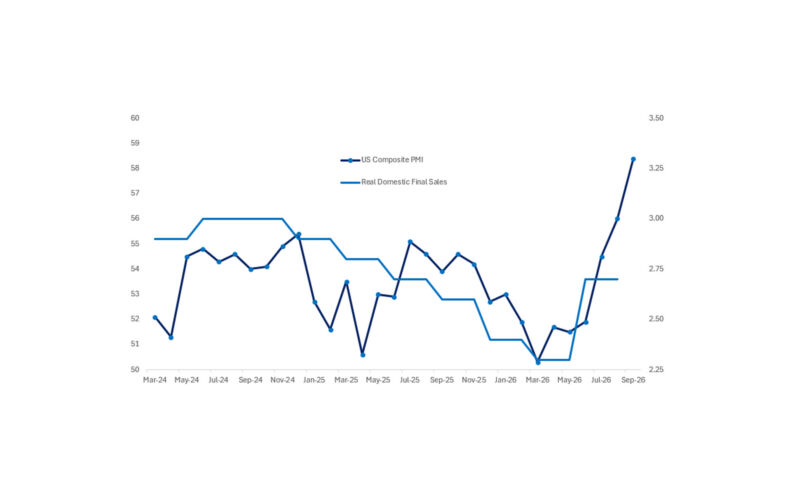
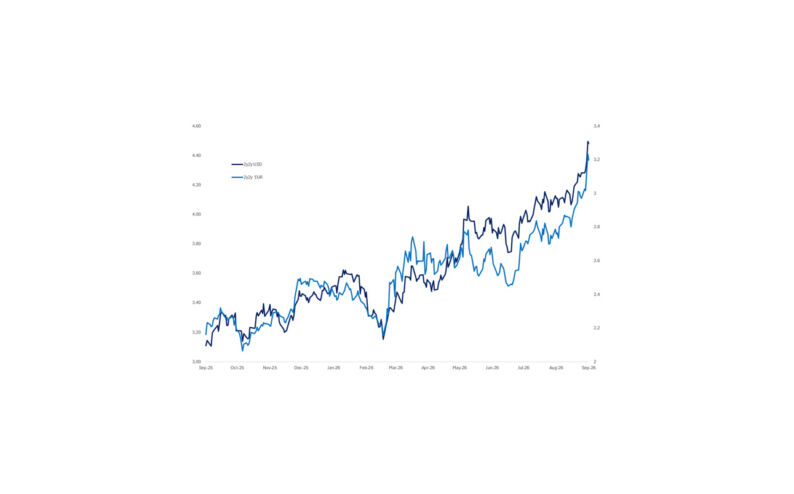
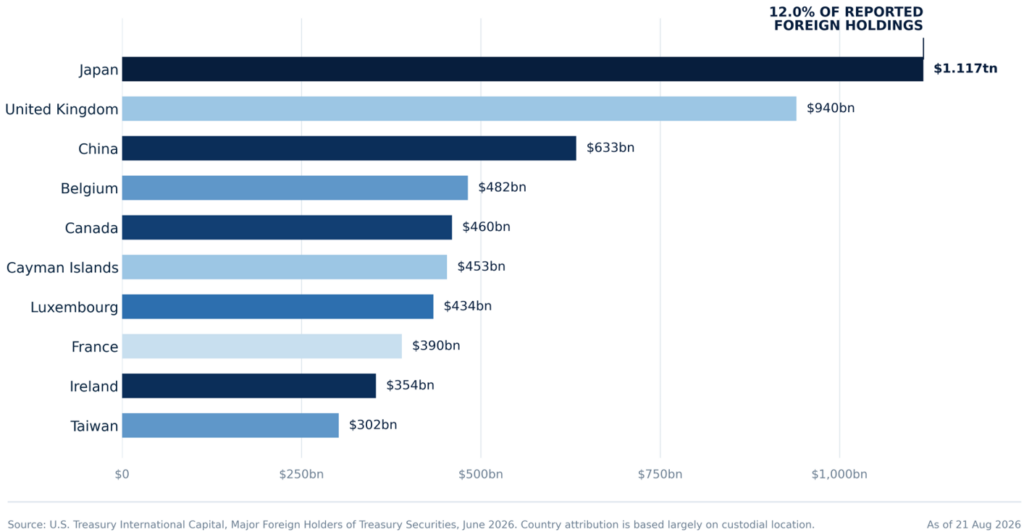
SECRETARY BESSENT’S INTERVENTION IN THE LONG END IS ANOTHER REMINDER THAT BOND MARKETS REMAIN THE PRESSURE POINT FOR GOVERNMENTS GLOBALLY. Treasury will at least double the cap on 10–30y liquidity-support buybacks from $2bn to $4bn per operation through November 4. On the existing published schedule, seven relevant operations remain, implying at least $14bn of incremental buyback capacity…equivalent to around 13% of expected quarterly 20y and 30y issuance. There has been considerable debate over whether this amounts to QE, how much it matters for the long end and whether it is sustainable. It’s worth going back to basics. Treasury is purchasing off-the-run bonds from dealers, but those purchases must be financed through issuance elsewhere. With coupon auction sizes stable and bills/CMBs remaining Treasury’s financing shock absorber, the most likely offset is additional short-dated issuance. This is therefore not QE in the conventional sense…the overall stock of government debt does not decline, and system liquidity need not increase. The cleanest framing is a Treasury-led Operation Twist…broadly liquidity neutral, but nowhere close to duration neutral. Treasury is effectively replacing long-duration debt held by the private sector with short-duration paper, reducing the amount of duration the market must absorb and, all else equal, flattening the curve. The signalling effect may matter as much as the flow. Whatever the formal language around market liquidity, the intervention suggests that the Administration is uncomfortable with long-end yields and willing to use debt-management policy to lean against them. The timing alongside US participation in the JPY intervention is also notable. Japan remains the largest foreign holder of Treasuries, with around $1.12tn…roughly 12% of reported foreign holdings. A weaker yen alongside higher JGB yields increases the incentive for Japanese investors to repatriate capital or reduce unhedged Treasury exposure, whilst direct currency intervention can itself create a need for dollar liquidity. Limiting the risk of forced Treasury sales was therefore plausibly one consideration behind Bessent’s willingness to support the Japanese MoF. Seen through that lens, the two interventions are connected…one reduces the amount of duration reaching the private market, whilst the other helps contain a potential source of long-end selling. More broadly, this amounts to financial repression at the margin…policymakers attempting to suppress the market signal rather than resolve the underlying contradiction of procyclical easing in the middle of a generational capex cycle at full employment. The bond market’s message is straightforward: fiscal or monetary policy should be tighter. Preventing Treasuries from clearing at lower prices does not eliminate that pressure…it merely shifts it elsewhere. If the adjustment is constrained in bonds, it is more likely to appear through the exchange rate; a weaker dollar then eases financial conditions and adds to inflation through stronger nominal demand and imported prices. Households may ultimately pay for policymakers’ unwillingness to fix the roof whilst the sun is shining. The durable solution is not repeated intervention, but harder choices on fiscal policy and central banks willing to get ahead of inflation…including, if necessary, by hiking rates.
Foreign Holdings of USTs
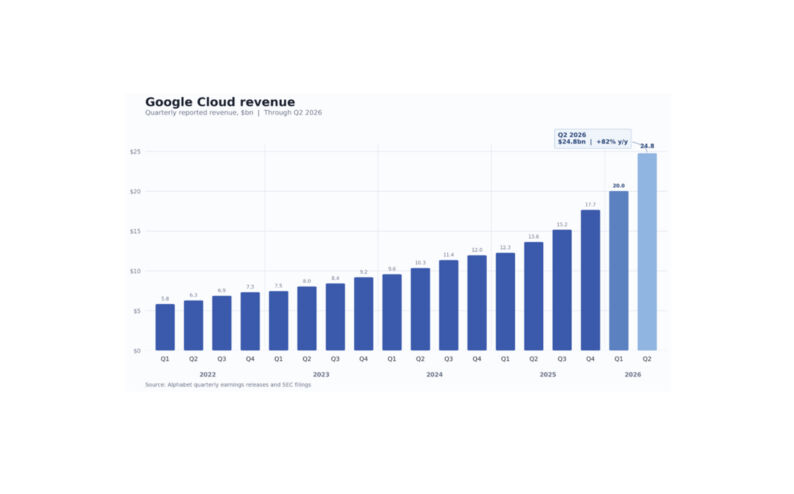
THE AI BOTTLENECK REMAINS PHYSICAL. As I wrote last week, AI is bifurcating between pure-play frontier labs such as OpenAI and Anthropic, where intelligence itself is the product, and diversified hyperscalers such as Google and Microsoft, which can monetise the entire stack regardless of which model wins. The reason is simple: demand for compute remains insatiable, while supply remains constrained. But “compute” is not just GPUs…it is GPUs plus power, data-centre space, memory, networking, cooling, and the expertise to run them. The real scarce asset is therefore not a chip sitting in a warehouse…it is energised, ready-to-use compute. Firm rental pricing, including for older GPUs, suggests capacity is still being absorbed even as investors focus on the scale of the build-out. Put simply, supply is rising…but demand is arriving faster, and with grid connections and permitting measured in years, even vast capex programmes cannot close the gap overnight. AI is not being constrained by a lack of users…it is being constrained by the amount of compute that can actually be switched on. For the hyperscalers, that scarcity may mean current cash flow understates the earning power of the installed base. As Gavin Baker recently highlighted much of today’s capacity was contracted in 2024 and 2025, before the strength of demand was clear; as those contracts roll off, existing infrastructure can reprice higher whilst utilisation improves on a largely fixed cost base. The spend comes first…the pricing, utilisation, and cashflow follow. This is not to say every dollar of AI capex will earn an attractive return, but the market may be recognising the cost immediately whilst underestimating the operating leverage still to come. Nor are falling token prices necessarily bearish. Cheaper intelligence makes more use cases economic, whilst agents amplify consumption: one human instruction can trigger dozens or hundreds of model calls, so the cost per token can fall even as the compute consumed per task rises. The relevant variable is therefore not price alone…it is elasticity. If volumes grow faster than unit prices decline, lower prices expand the market rather than shrink it; the bearish outcome is not cheaper tokens, but cheaper tokens without materially higher usage. This reinforces the bifurcation…frontier models may retain the highest-value tasks (planning, reasoning, coding, and orchestration) whilst cheaper or open-weight models handle high-volume execution. Frontier labs may therefore capture premium economics on a smaller share of tokens, whilst hyperscalers and inference providers benefit from both layers because every workload still requires chips, memory, networking, and power. In essence, premium models plan, cheaper models execute…and the owners of energised compute capture the economics of both.
Compute Forward Curves
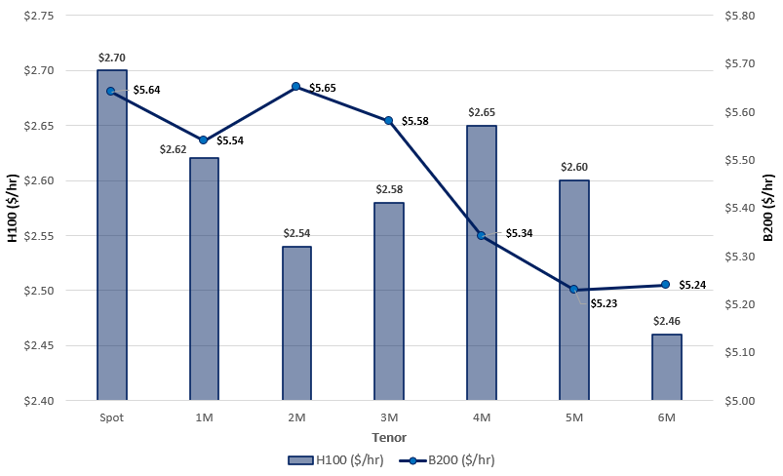
Source: Silicon Data
THE AI RACE IS GLOBAL, BUT THE VETO IS LOCAL. As I have written before, AI may feel weightless at the point of use…but its physical footprint is becoming impossible to ignore. Washington sees data centres as strategic infrastructure in the race with China; local communities see higher electricity bills, water consumption, giant warehouses and relatively few permanent jobs. That gap is rapidly becoming political. New York has paused incomplete permit applications for large data centres, while Pennsylvania is requiring developers to secure local support, fund the infrastructure they need and provide tangible community benefits. Even pro-growth Texas has now hit the brakes…Governor Greg Abbott has ordered the state’s utility regulator and ERCOT to audit every data-centre project advancing through the grid-connection process before any can move forward. ERCOT is considering more than 474GW of connection requests (over five times its record peak demand!) with data centres accounting for approximately 90% of them. This is important because Texas is hardly a Democratic Socialist laboratory…the backlash is becoming bipartisan. Candidates on both sides are discovering that the benefits of AI are national, dispersed and often years away, while the costs of building it are local, concentrated, and immediate. The central question is therefore shifting from “What can AI do?” to “Who pays to make it run?”. Increasingly, developers will be expected to bring or fund their own power, pay for grid upgrades, limit water use, and give host communities a visible share of the upside. For the industry, this creates another bottleneck…and potentially another moat. A site with power, permits and public consent becomes more valuable, while the largest hyperscalers are better placed to finance dedicated generation, absorb delays and negotiate community agreements. The irony is that restrictions intended to restrain Big Tech may ultimately entrench it by making already-permitted, energised compute even scarcer. To be clear, I remain a firm believer that competitive markets provide the most efficient allocation of scarce resources, but one cannot ignore the political reality. Markets operate within rules set by voters and governments…and those rules are becoming more restrictive. The next compute bottleneck may not be silicon, or even electricity…it may be permission.
Legal Entities Disseminating this Material: This material is disseminated in the United Kingdom by Citadel Securities (Europe) Limited (“CSEL”) regulated by the Financial Conduct Authority (“FCA”) (Registered company number: 05462867); in the European Union by Citadel Securities GCS (Ireland) Limited (“CSGI”) and its Paris Branch regulated by the Central Bank of Ireland (“CBI”) (Registration Number: C173437); in Hong Kong by Citadel Securities (Hong Kong) Limited (“CDHK”) licensed by the Securities and Futures Commission of Hong Kong (“SFC”), in Japan by Citadel Securities Japan Co., Ltd (“CSJC”) registered as a Type 1 financial instruments business operator with the JFSA; and in the United States of America by Citadel Securities LLC (“CDRG”) registered with the Securities Exchange Commission (“SEC”) and Financial Industry Regulatory Authority (“FINRA”), Citadel Securities Institutional LLC (“CSIN”) registered with the SEC and FINRA or Citadel Securities Swap Dealer LLC (“CSSD”) registered with the SEC, Commodities Futures Trading Commission (“CFTC”), and National Futures Association (“NFA”). Unless governing law permits otherwise, you must contact a Citadel Securities entity in your home jurisdiction if you want to use our services in effecting a transaction in any financial instruments or securities, including derivatives.
FOR INSTITUTIONAL USE ONLY; FOR PROFESSIONAL CLIENTS AND ELIGIBLE COUNTERPARTIES ONLY. This material is not intended as and does not constitute investment research. Contents of this material will be strictly limited to non-specific, generic information (i.e. macro events/topics) and are not subject to the Markets in Financial Instruments directive (MiFID II) or FINRA research rules. This material does not constitute an offer, solicitation, invitation, or inducement to purchase, acquire, subscribe to, provide, or sell any financial instrument or otherwise engage in investment activity.
https://www.citadelsecurities.com/privacy/
Please see additional important disclosures, including disclosures that may be relevant to your country of residence or business at: https://www.citadelsecurities.com/disclosures/citadel-securities-fimm-sales-trading-disclosures/